
Sea Trutle Nests In California for the First Time in Recorded History
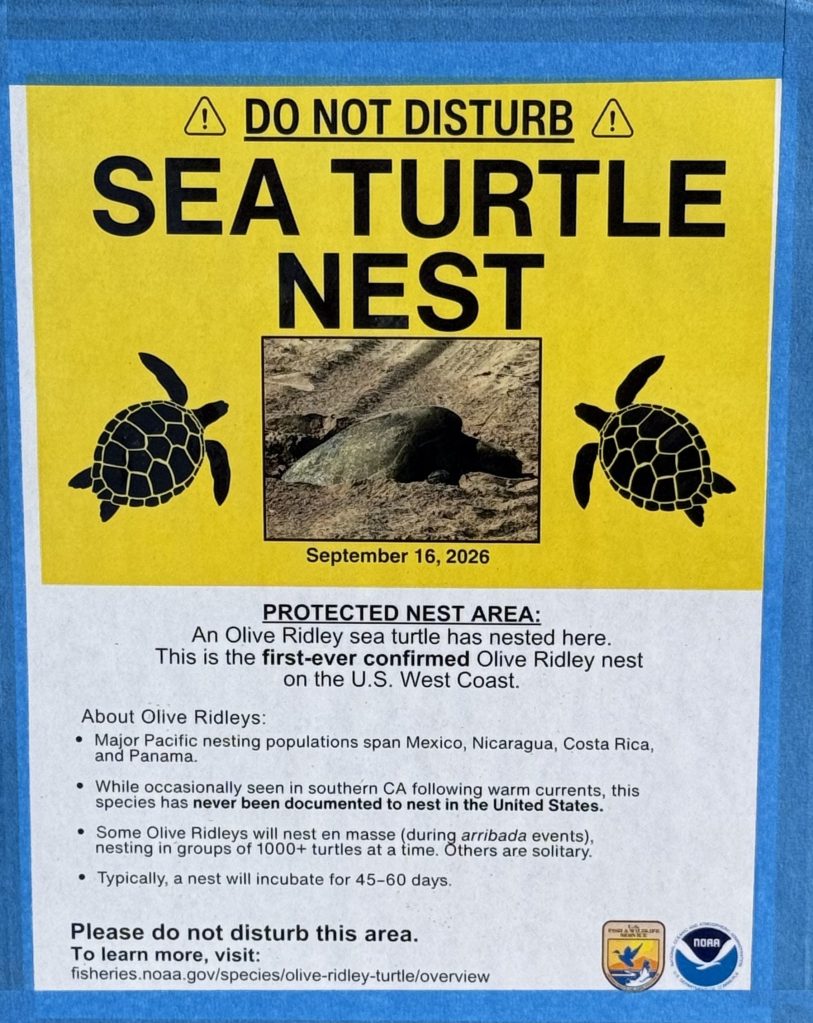
Last week, for the first time in recorded California history, a sea turtle has nested on our beaches.
While you might be accoustumed to seeing sea turtles while tidepooling and beachgoing in the tropics, seeing one on the shores of Calfifornia is rare, although they are sometimes spotted. In all my years tidepooling, I’ve only ever seen one in California waters. Though these sightings have persisted for some times, last week was the first recorded instance of sea turtles nestings on our shores .
On September 16, 2026, on Seal Beach, and again three days later at Huntington Beach, an olive ridley’s sea turtle was reported hauled up on the shore. Both these instances resulted in nests with eggs, which are buried in the sand during incubation. It is not currently know if this was the same turtle or two different individuals.
The species responsible for the nests is the olive ridley’s sea turtle (Lepidochelys olivacea), one of the smallest in the world, only reaching about 2.5 to 3.0 ft in length and weighing about 100 pounds. Nesting populations exist in Mexico, Peru, and Costa Rica, but they are an endangered species worldwide and critically imperialed in the United States.
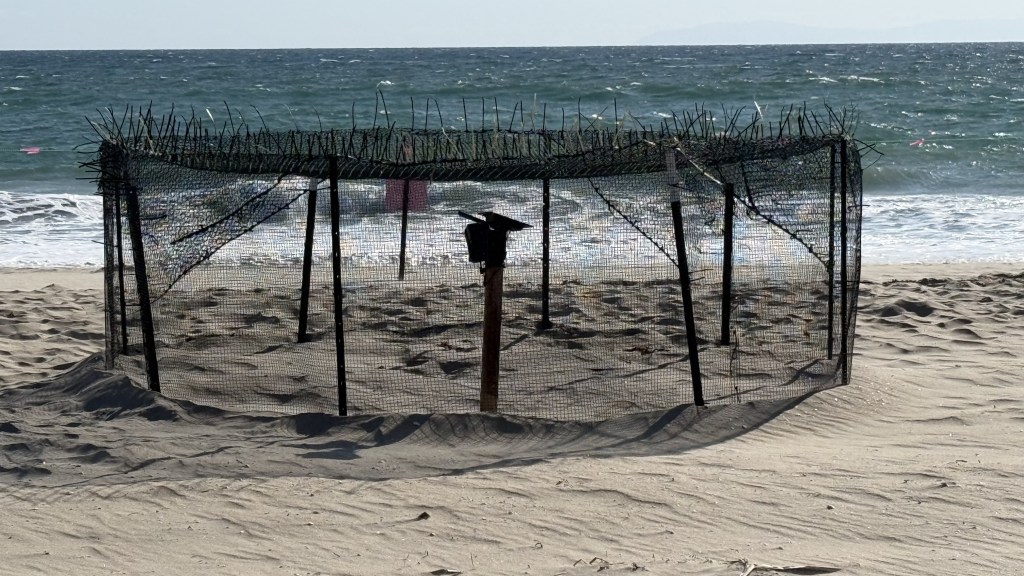
Authorities have put up barriers, nets, and interpretive signs to mark the sea turtle nests and urge beach goers to keep their distance and not disturb the area. They are monitoring the sites for activity with cameras; sea turtle incubation is usually from 45 to 60 days.
This unprecenented event comes in the wake (or before the wake, depending on how you look at it) of a super El Niño, a Pacific warm water event that impacts climate globally. Althogh El Niño (warmer water) and La Niña (colder water) alternate in the Pacific, this year we are posied to see elevated water tempertures, and thus more rain inland, than normal El Niño years. The warm water is likely what brought the sea turtles to our shores, though nesting on our beaches was never expected.
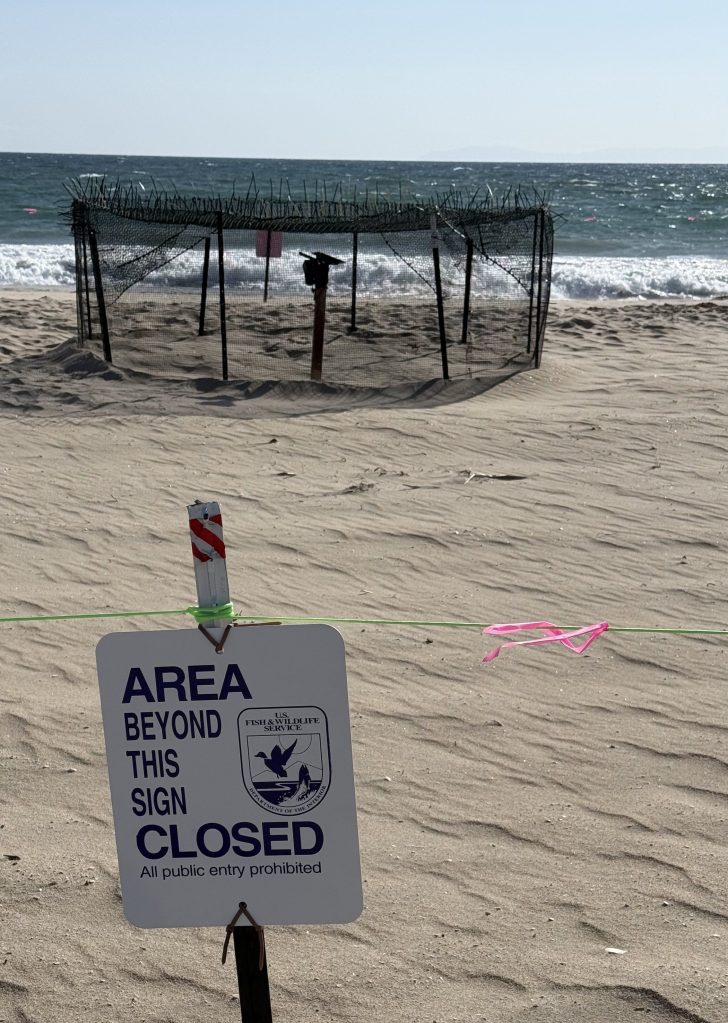
The nesting sites on Seal Beach and Huntington Beach are clearly marked if you are close to them. Even though you won’t see any sea turtle babies, it’s well worth it to go on a tide pooling excursion to see the nest sites. Remember to observe the barriers and signage and not to disturb the area. Hopefully, temperatures will remain warm enough for the eggs to hatch and for baby turtles to be make it to the ocean.
This post will be updated as the situation develops.

Categories
tags
Subscribe to the blog
Sign up to receive weekly emails with tide pooling information and guides so you never miss a post!


Leave a comment