
Tide Pooling Log: Moss beach
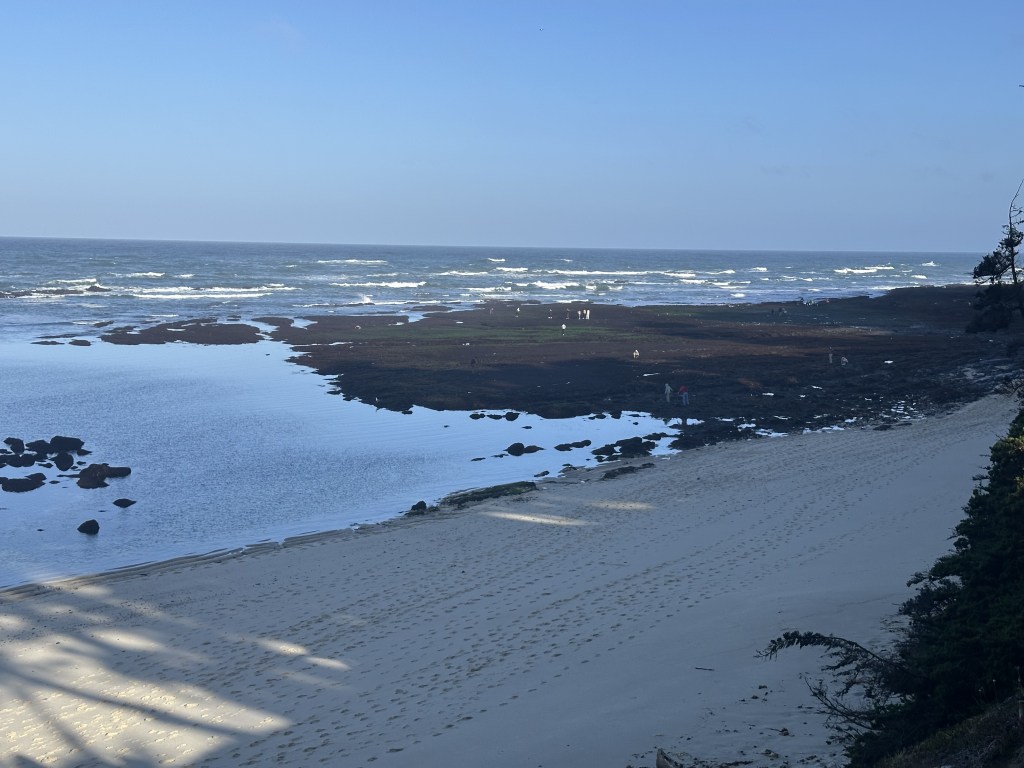
Recently, I was privileged to get to travel up north a little ways and do some tide pooling on the Central Coast. We spent two days in the Half Moon Bay area, and I got to tide pool at Moss Beach twice. I’ve combined my finds into this one post, but don’t forget that it took me two days to get all these guys. Although some of my target mollusks eluded me, I was really happy with what I found, considering I was tide pooling on my own these few days, and I found several species that don’t extend to our southern waters.
Let’s begin with what it seems is everyone’s favorite: the sea slugs. Moss Beach didn’t disappoint in slugs, especially in size, even if I didn’t find the targets I was looking for.
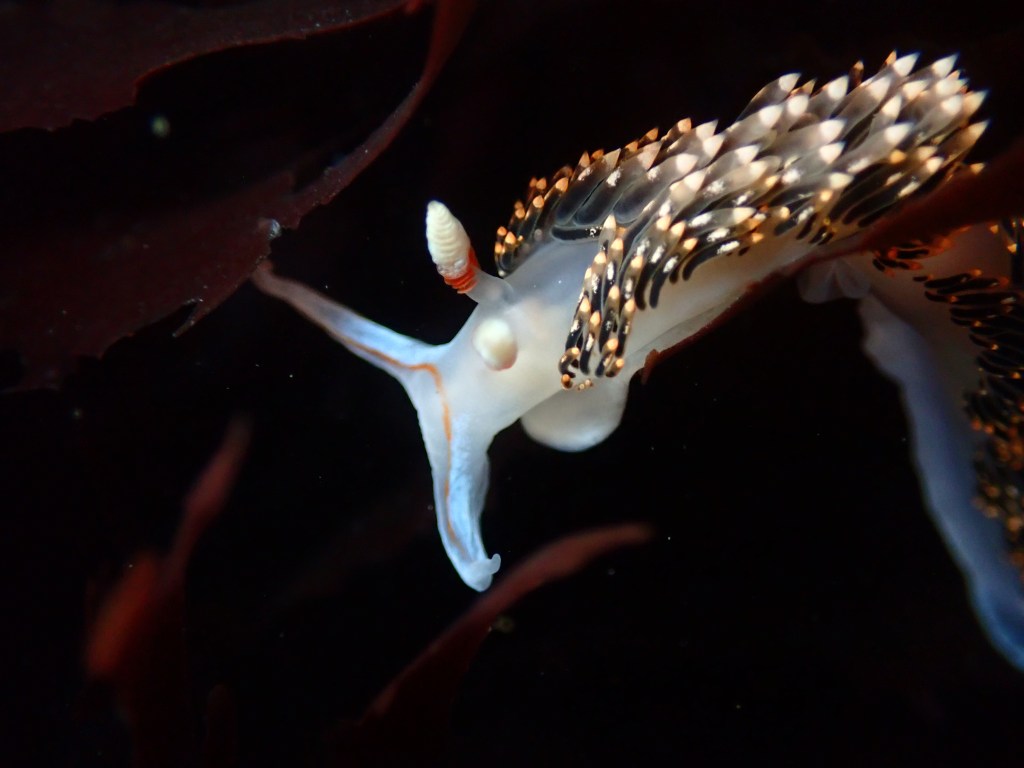
Almost immediately after I had gotten to the low intertidal around 7 am, I found several large slugs near another. These animals were mostly in the several-inch range, which is far bigger than the typical animals at my usual haunts in SoCal. This Hilton’s aeolid (Phidiana hiltoni) was by far the largest I had ever seen, and I saw two more between the two mornings that were also large.
Sometimes when you’re tide pooling in different areas, you’ll see a typical species from back home that is uncommon in the spot you’ve vacationed to. Perhaps not your favorite way to find a rare slug, but still fun. Such was the case with a San Diego dorid, but I was certainly impressed again with its large size at about three inches long.
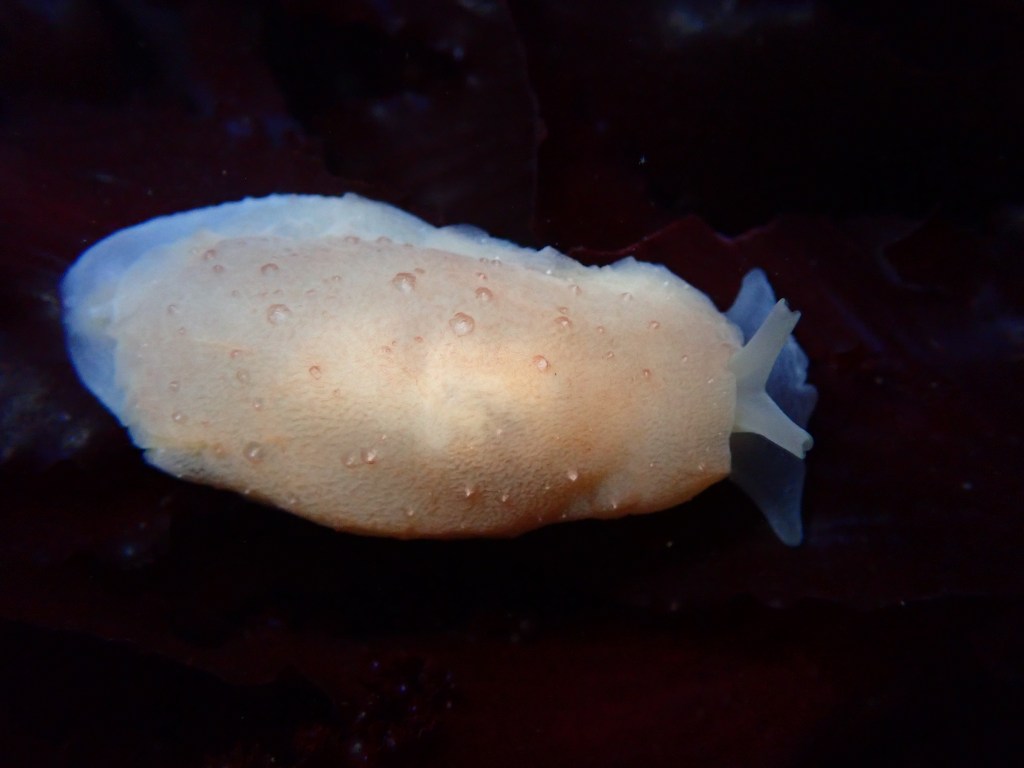
I also spied this Strong’s sidegill (Pleurehdera strongi). I had only ever seen two before and both were pretty small and hidden, so this 3-inch individual out in the open was a treat.
A baba’s festive aeolid (Babakina festiva) was nearby too. Although this slug wasn’t as big as the others, it was still large for this species at about an inch.
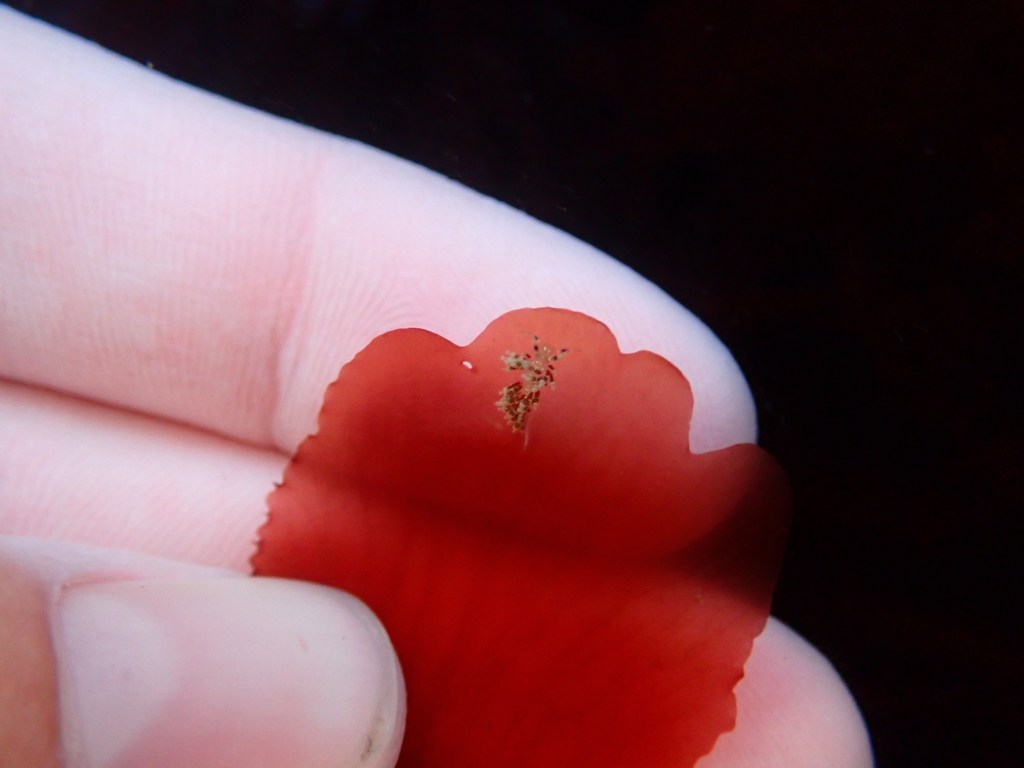
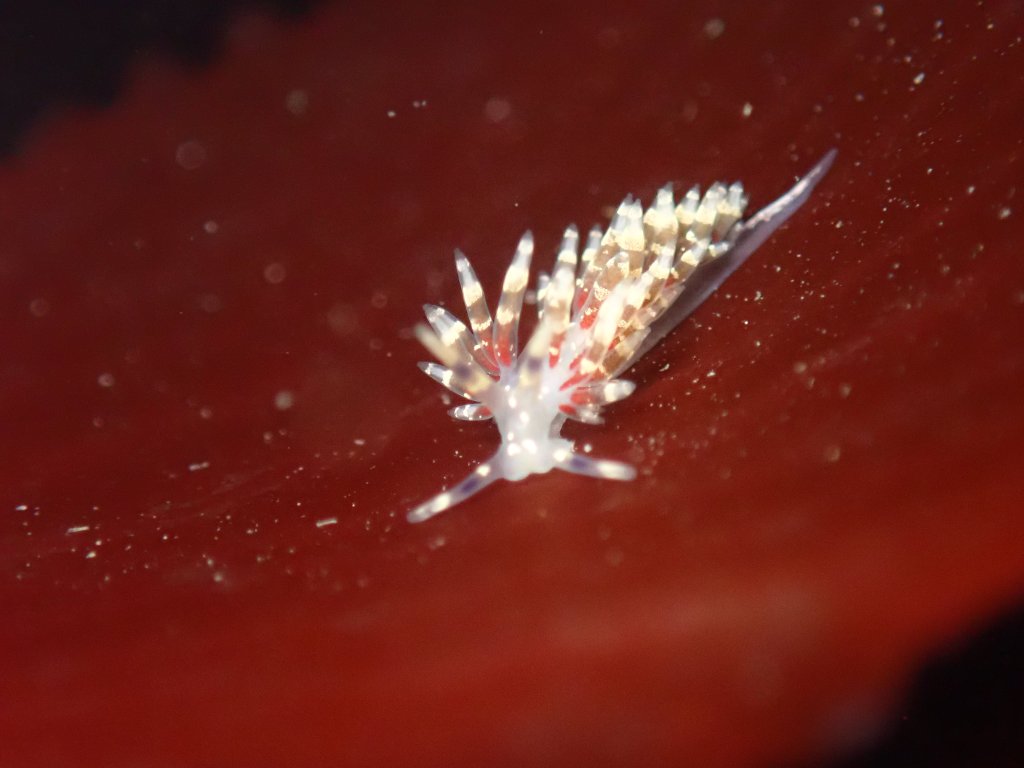
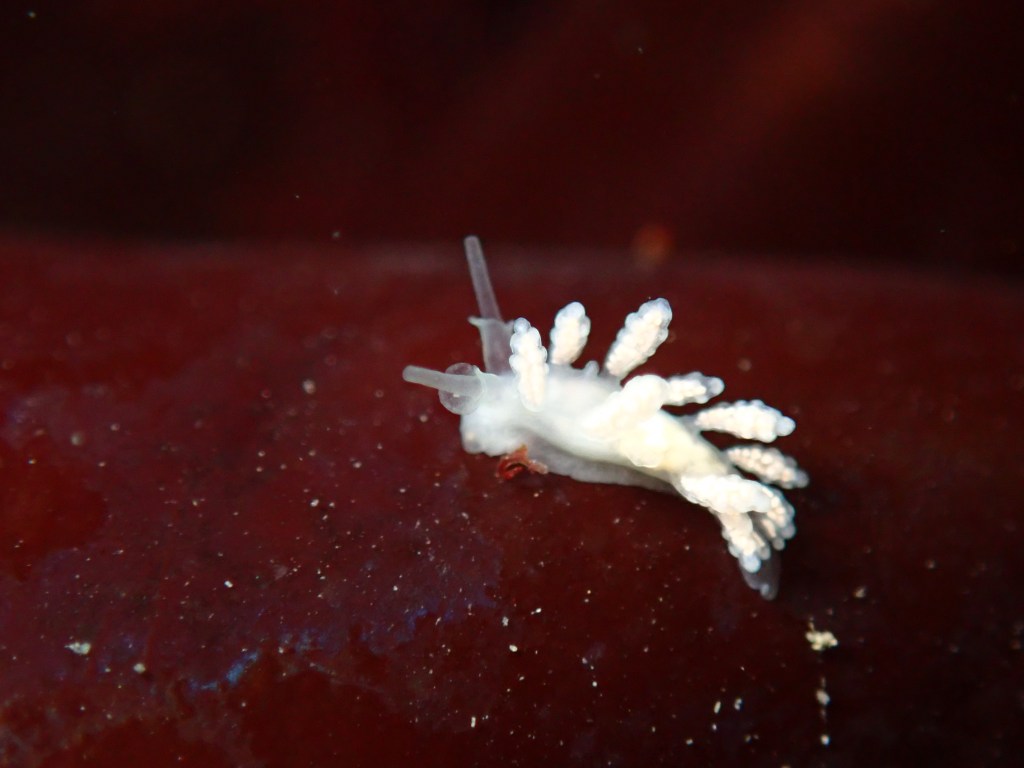
Among the many spotted dorids and other species that I found quite a few of at this beach, I got two lifers. The first was this elegant aeolid (Abronica abronia), and it was tiny. Although we have these in SoCal, I hadn’t gotten a chance to see one yet as they aren’t very common. Much more typical up here, I was glad to have spotted it, despite it’s the 5-6 mm in size. I was also glad to find this hammerhead doto (Doto amyra), another minuscule one. I wasn’t sure on the ID here, but got it confirmed later on iNaturalist.
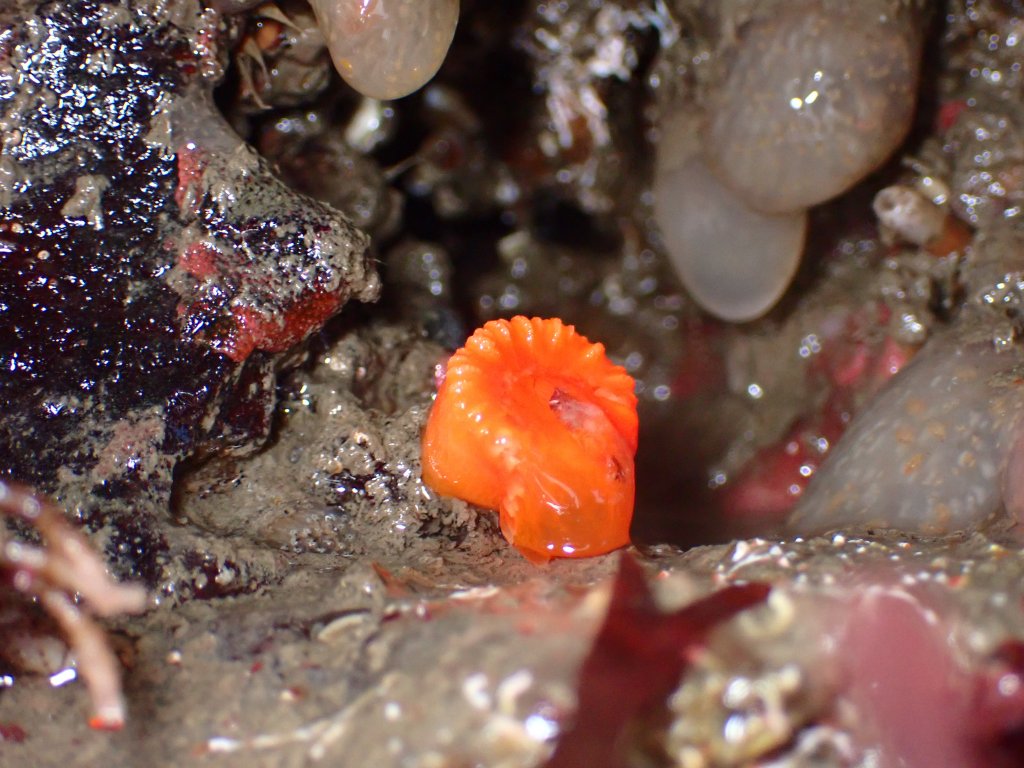
Looking for snails and slugs in the overhangs (which wasn’t too fruitful for mollusks at this beach), I saw several of these orange cup corals (Balanophyllia elegans), an unusual chance to see stony corals growing in the intertidal.
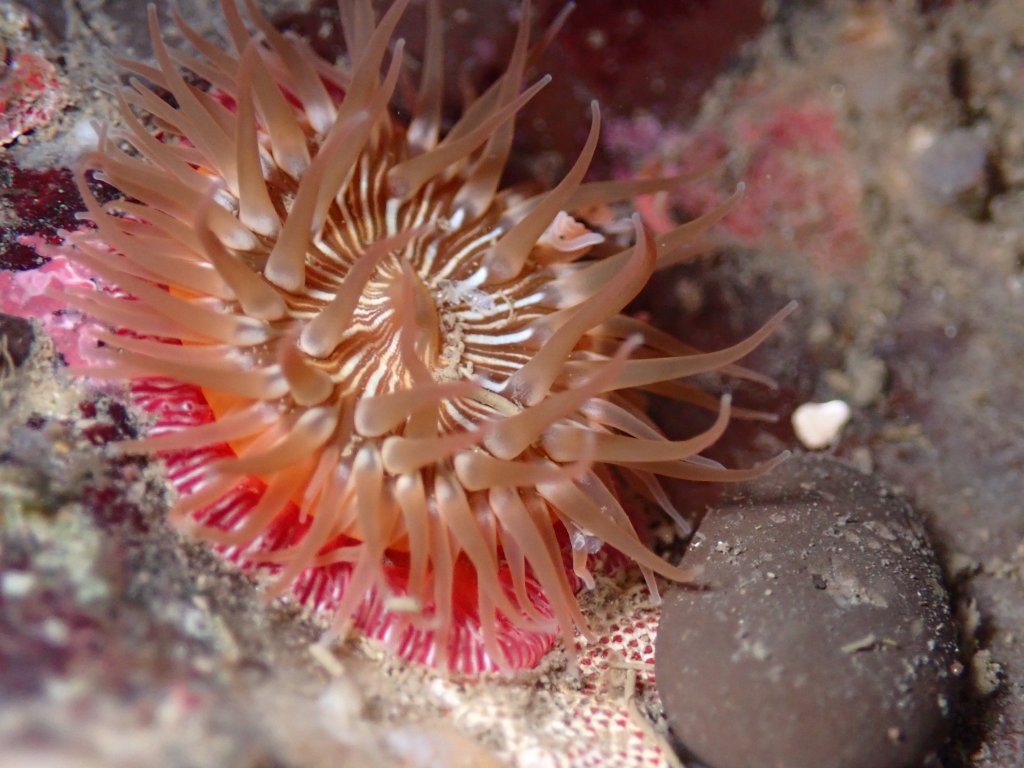
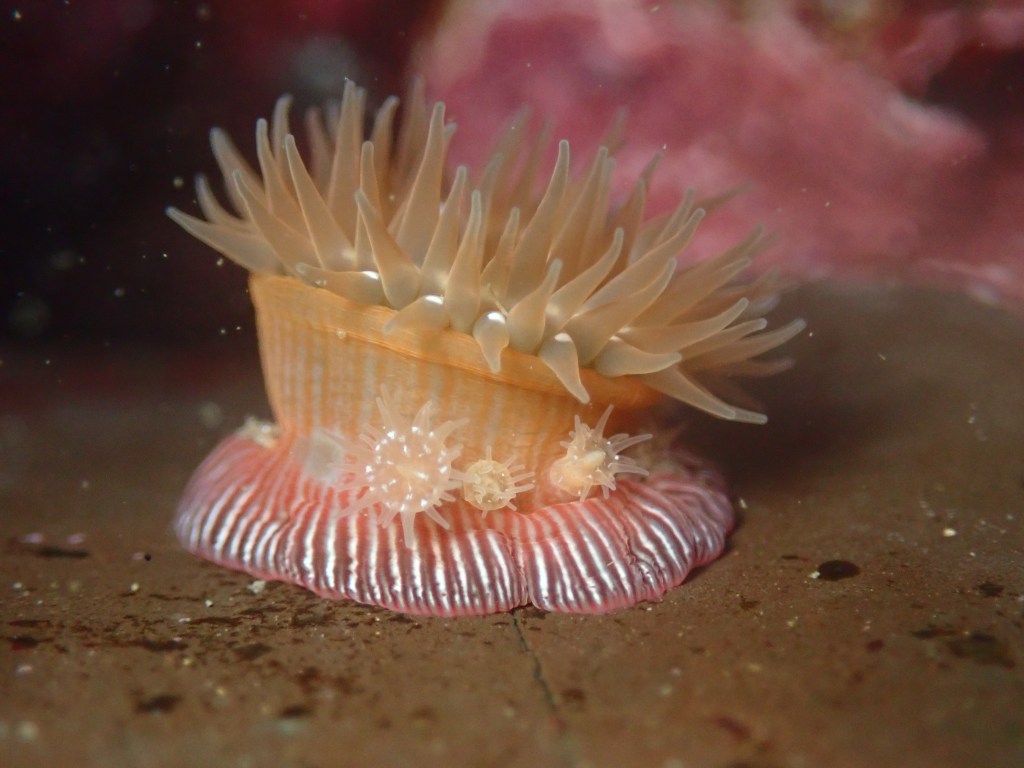
In other cnidarian news, I saw some gorgeous moonglow (Anthopleura artemisia) and brooding (Epiactis prolifera) anemones.
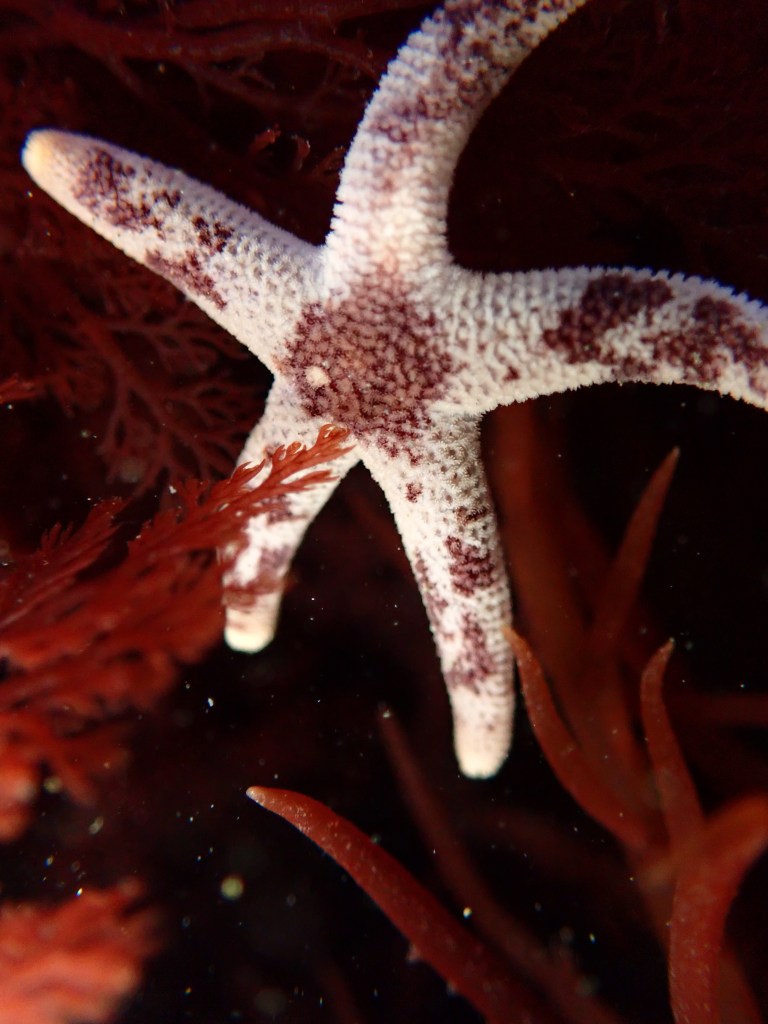
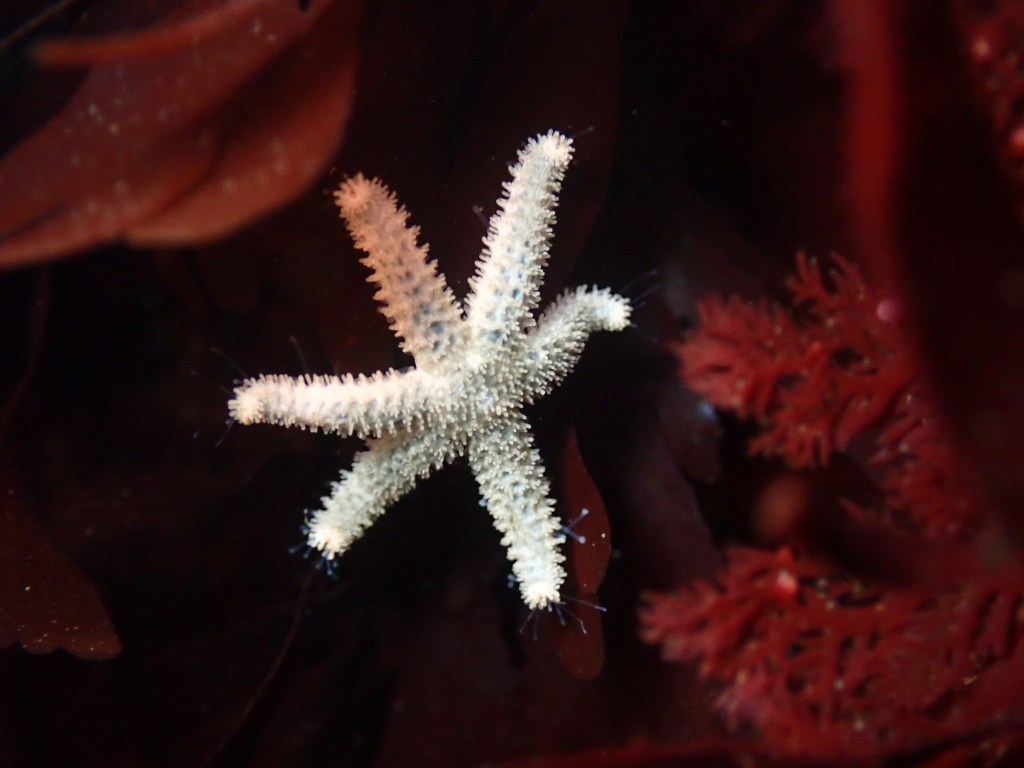
The echinoderms didn’t disappoint either. There were young stars in many of the pools, and I got two lifers, a dwarf mottled henricia (Henricia pumila) and a six-rayed star (Leptasterias hexactis), along with a sighting of a leather star, which I have only seen a few times before.
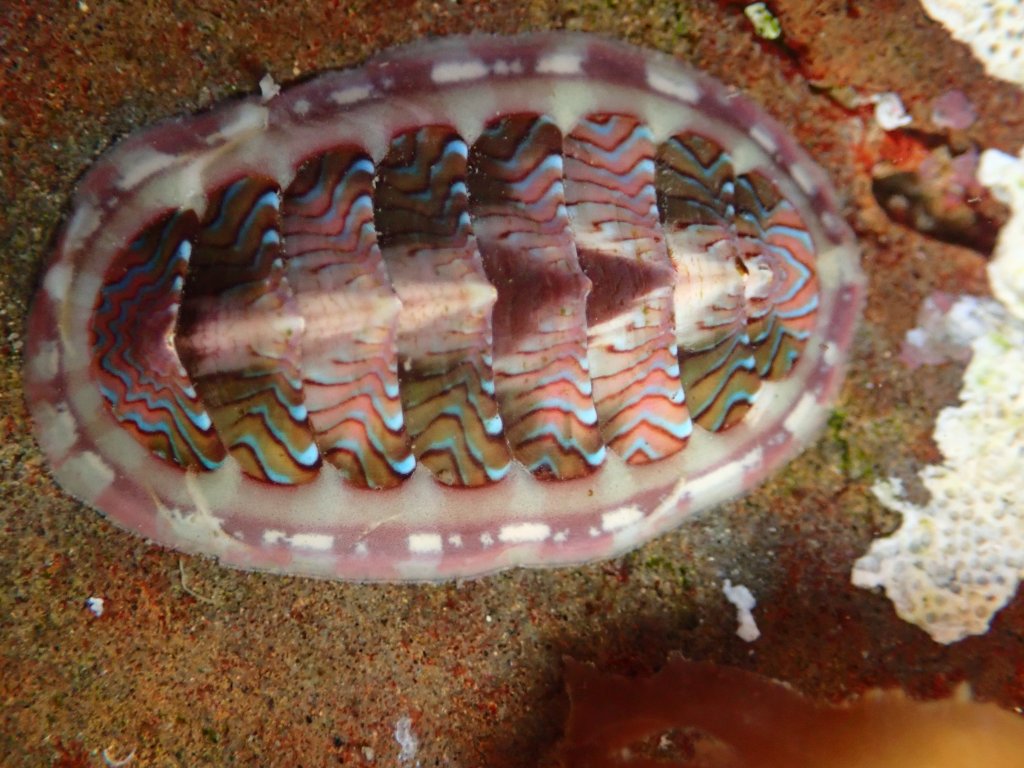
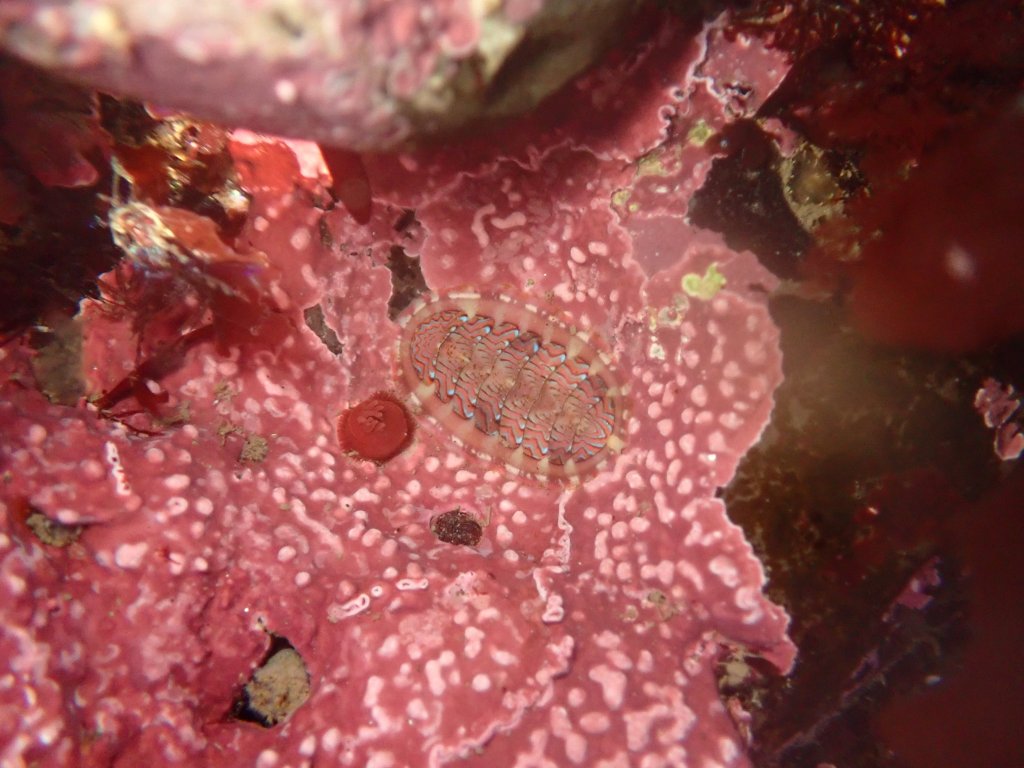
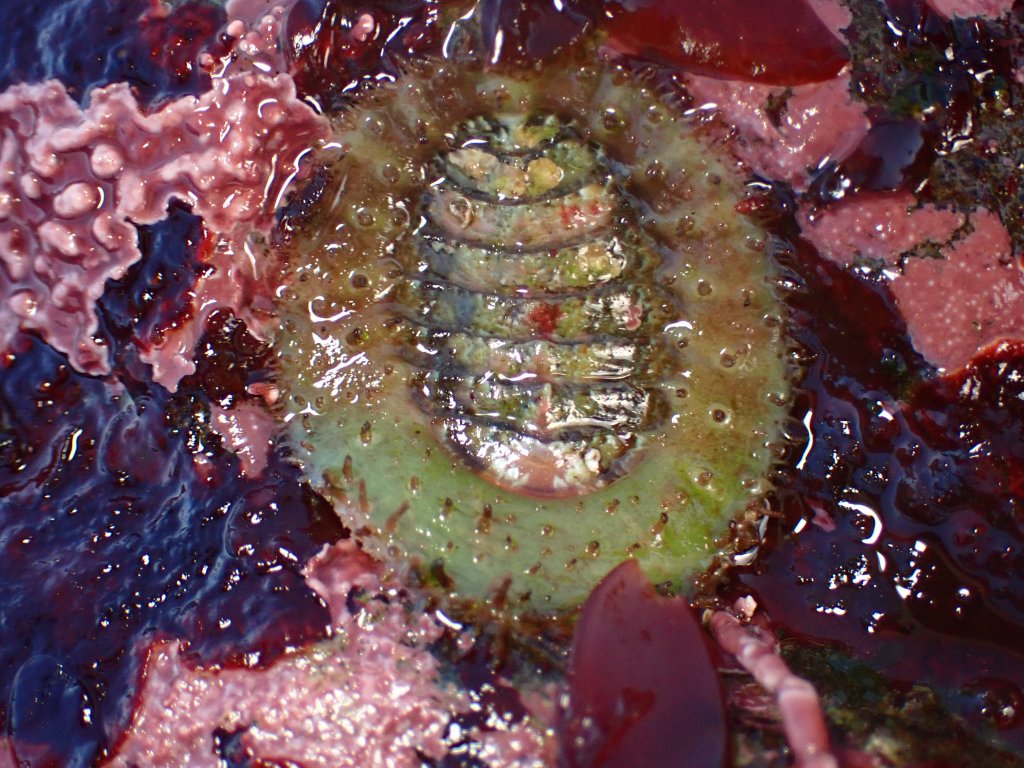
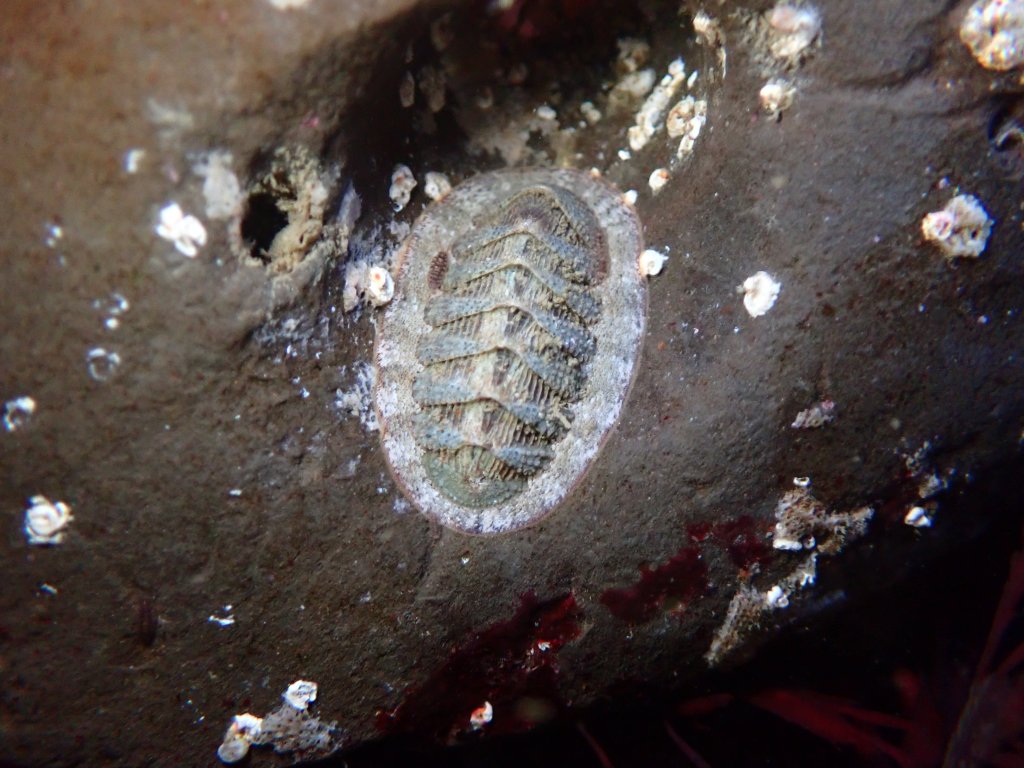
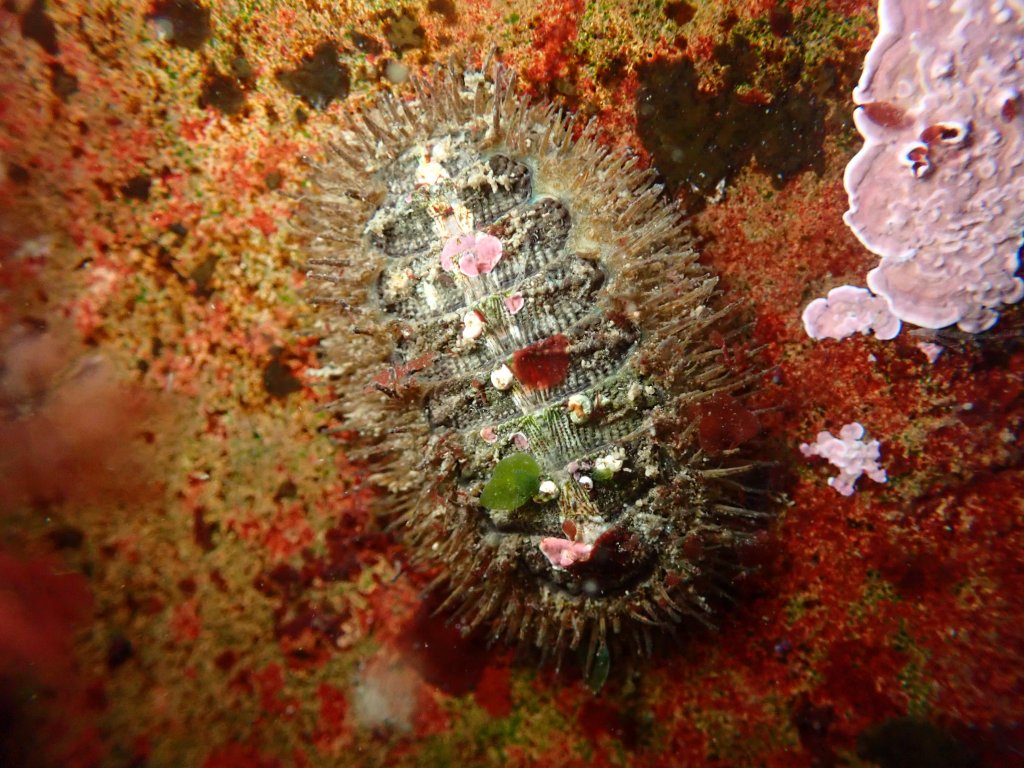
As I made my way across the exposed reef, most of the flat stone was exposed, but there were small indentations and shallow pools scattered throughout. After a minute of searching these areas, I came across a couple of flame-lined chitons (Tonicella lokii). You’d never think that these animals were camouflaged, but against their coralline algae food source, they blend in perfectly. Their intricate markings are stunning in photos but even more beautiful in person. I also got a lifer veiled chiton (Placiphorella velata) this trip, along with beautiful mossy chitons (Mopalia muscosa) and likely a Cooper’s chiton (Lepidozona cooperi).
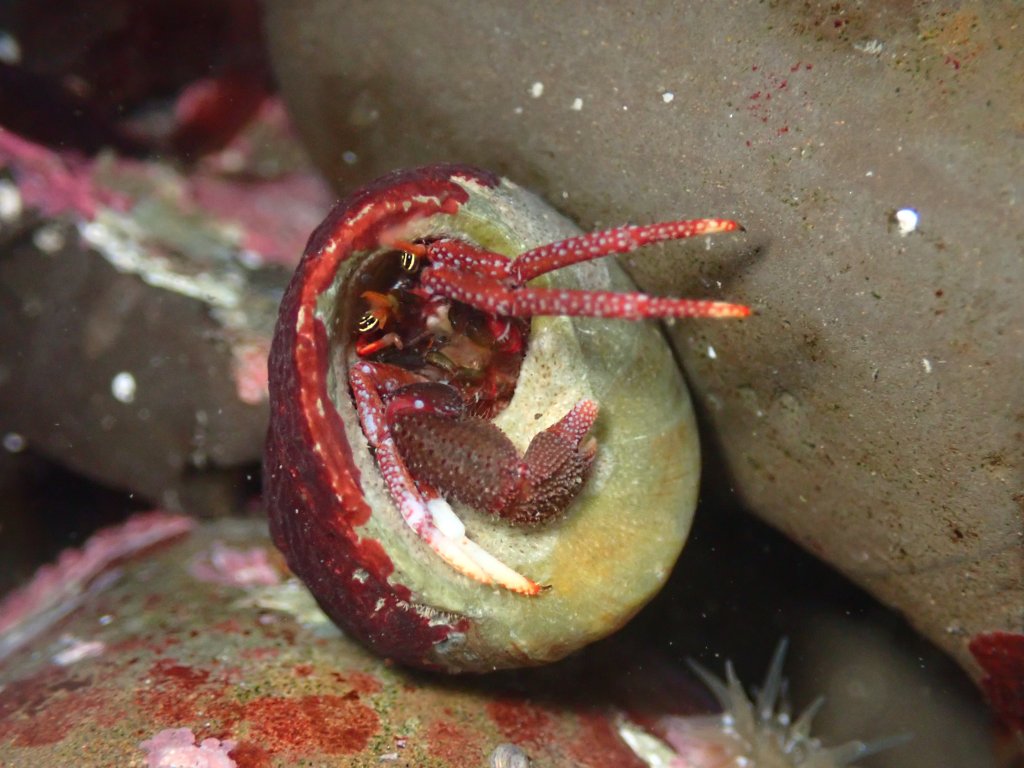
There were several crustaceans out and about these mornings too! A few large northern kelp crabs (Pugettia producta), Pacific rock crabs (Romaleon antennarium), and maroon hermit crabs (Pagurus hemphilli), which were a lifer for me.
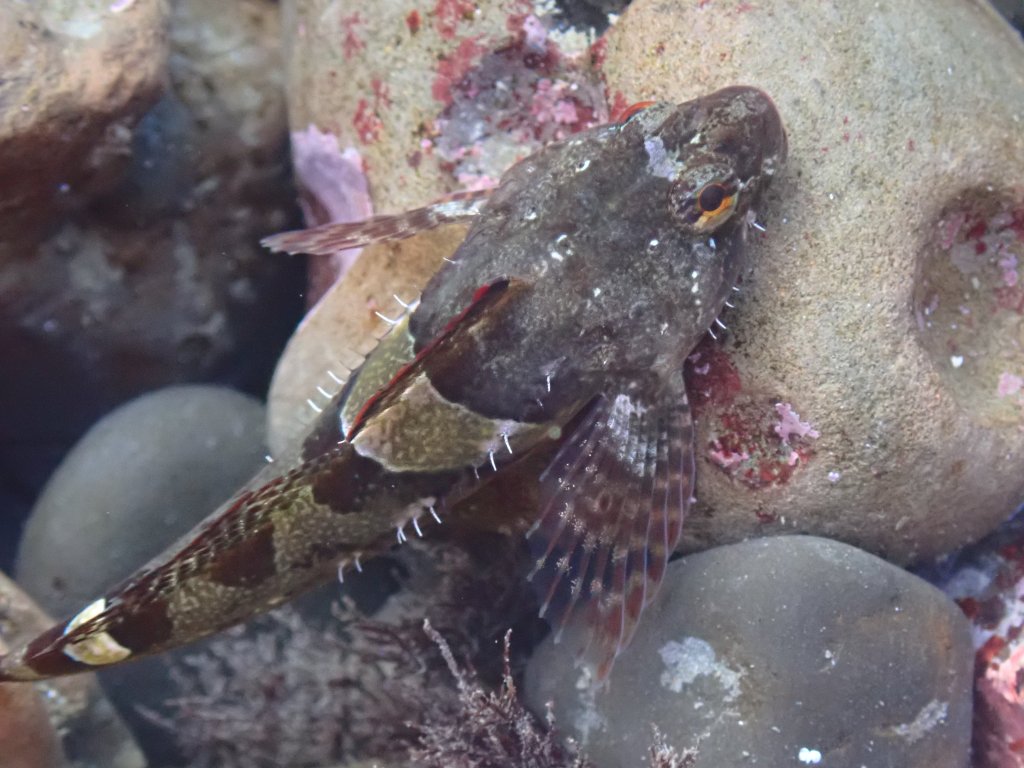
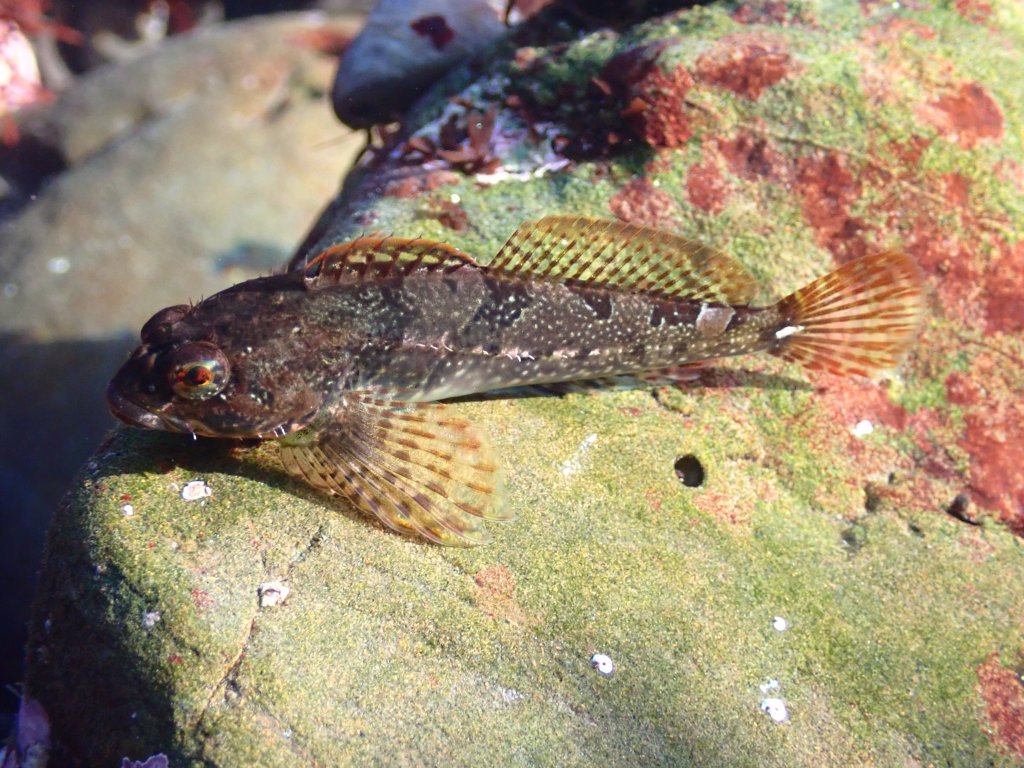
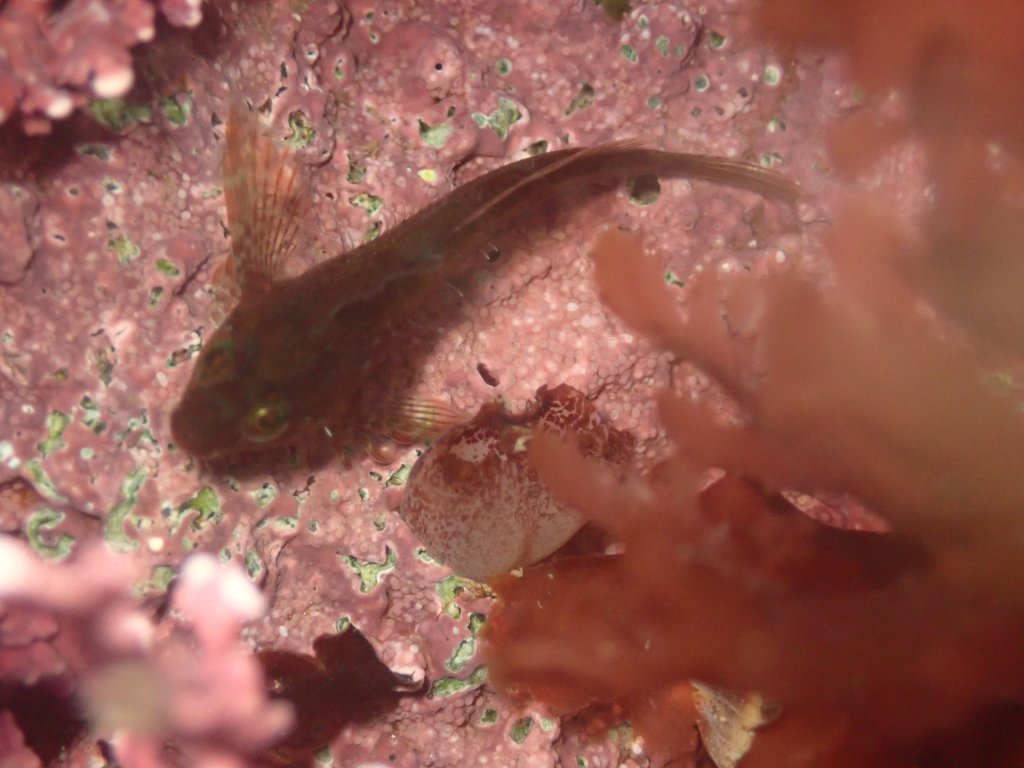
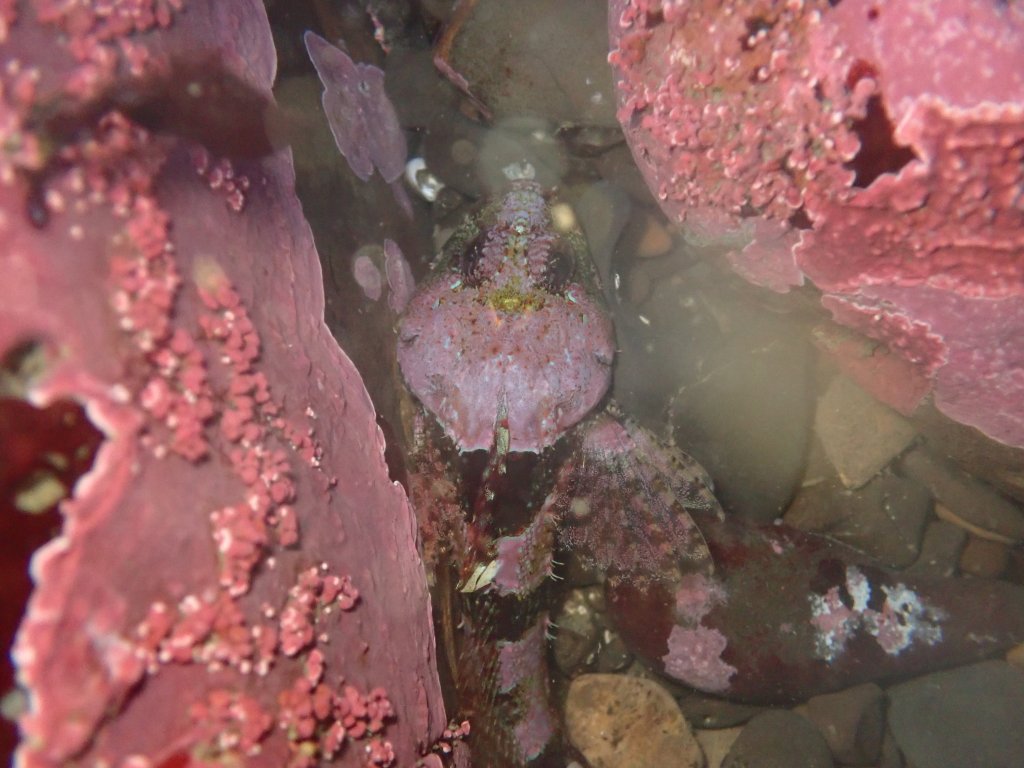
I also spotted some larger sculpin in these pools. I have recently acquired a field guide to fishes in the eastern Pacific and had been hoping to see some sculpin that are out of range for SoCal. I wasn’t disappointed. I managed to get a photo of this large smoothhead sculpin (Artedius lateralis) before it swam off like its smaller and more skittish friends. I also saw many fluffy (Oligocottus snyderi) and tidepool sculpin (Oligocottus maculosus).
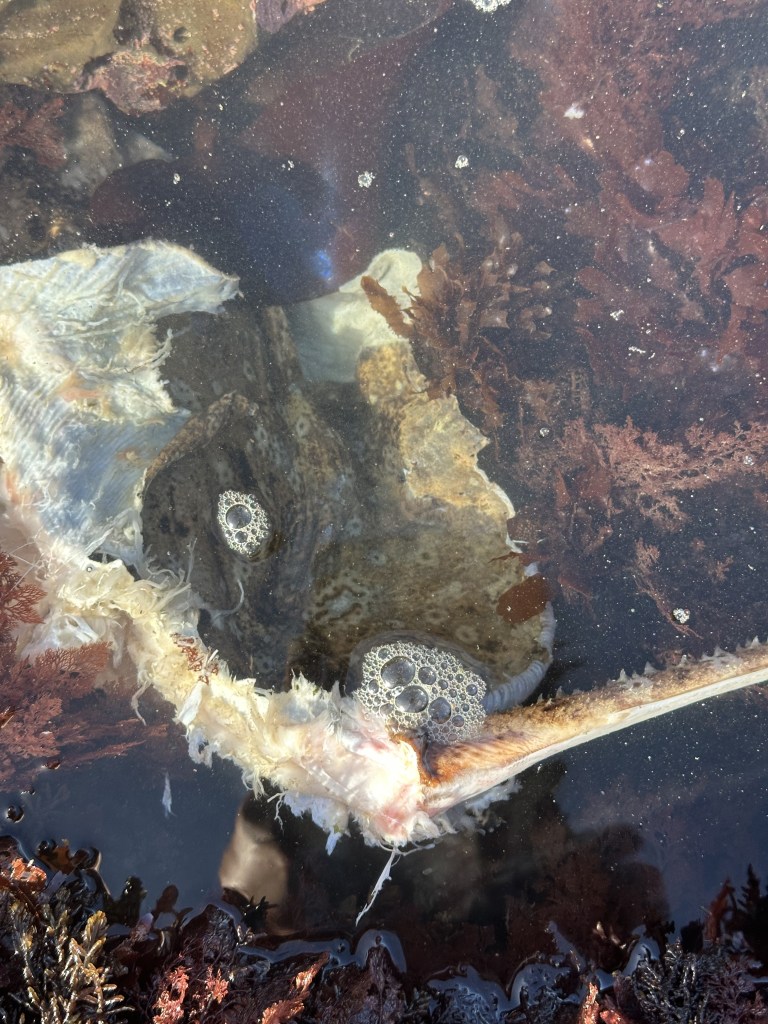
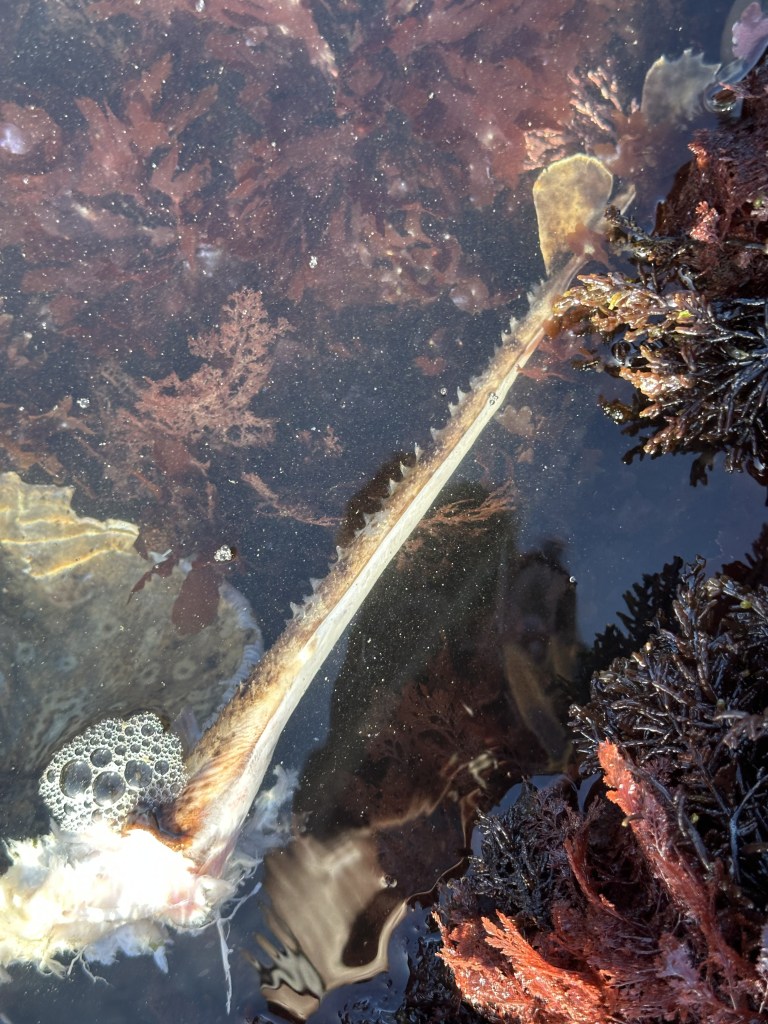
Looking up, I saw a gull picking at something in a large pool where the tide was making headway inland. When I went to investigate, this large Starry Skate Caliraja stellulata was washed up dead on the rocks. Dead lifers aren’t my favorite, but it was interesting to see this animal up close and how other animals were feeding on it.
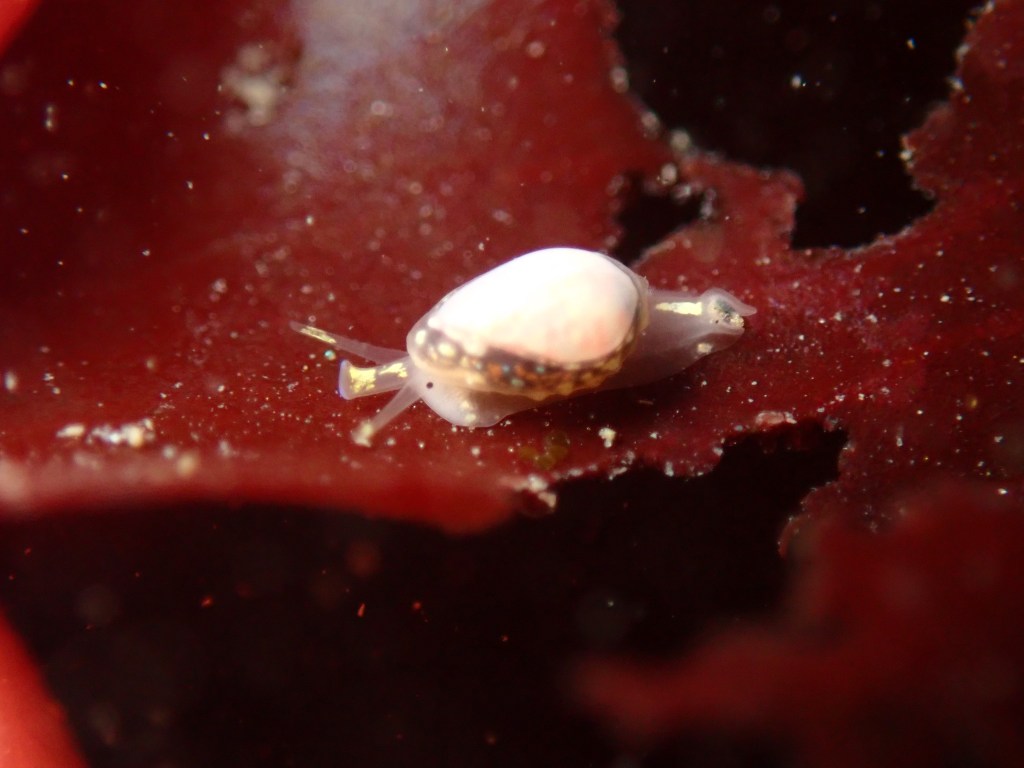
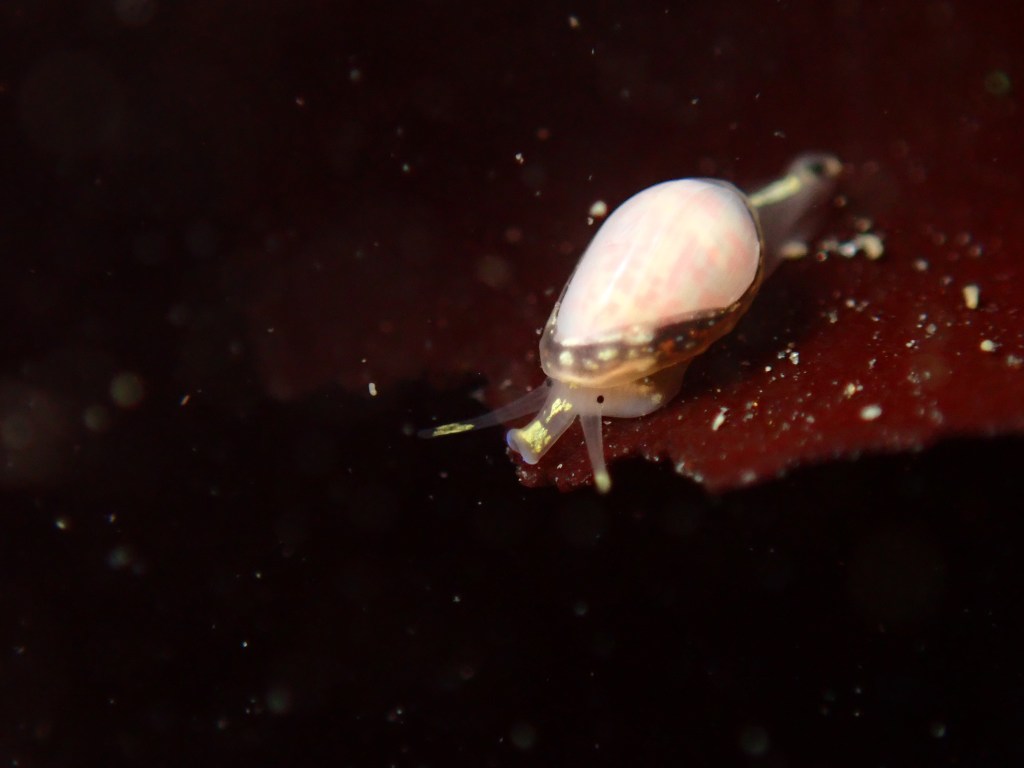
Perhaps my favorite finds at this beach were the pear marginellas (Granulina margaritula). On the first day I went out, I recognized the minuscule (maybe 4 millimeters?) snail on a kelp leaf, tried to move to a better position, and lost it. Turns out these snails do not like having their photos taken. Unlike other snails that hang onto the substrate no matter what, these guys simply let go and fall into the water column! This was very frustrating the first day, but luckily I found several more the second day that I managed to get photos of before they let themselves fall into the algae abyss. These little guys look a lot like trivia and eratos, but they’re in a different family with the very common California marginella (Volvarina taeniolata). I did, however, see a beautiful Appleseed erato (Hespererato vitellina).
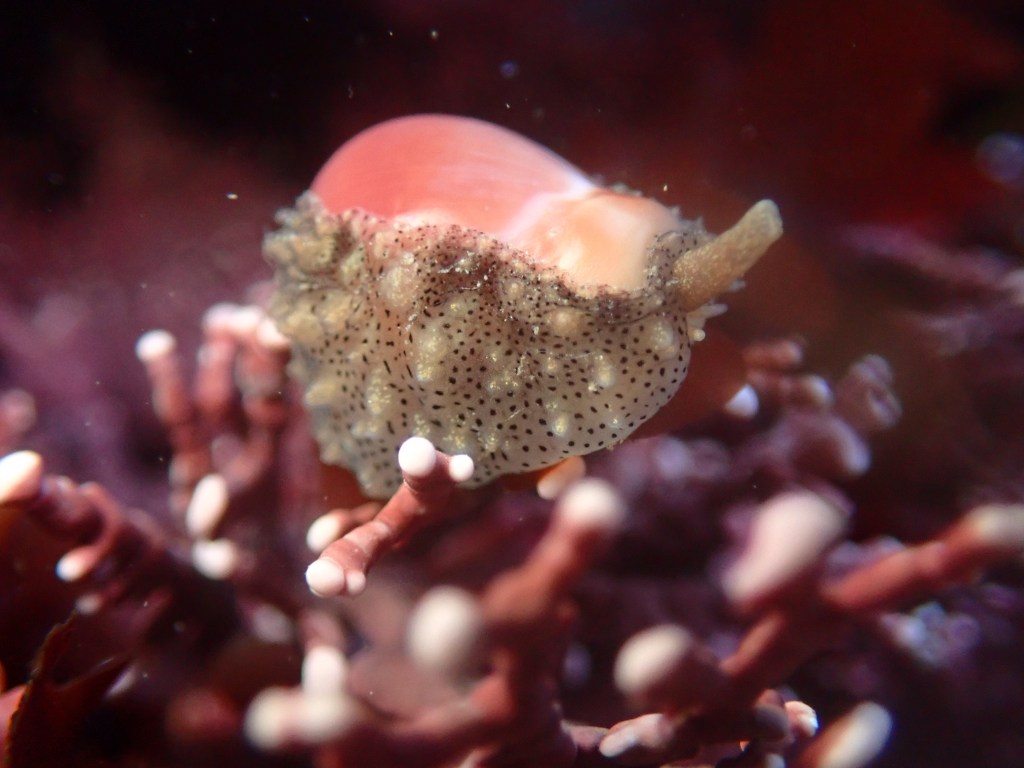
I was also intrigued by this limpet that was moving about and had most of its foot exposed. I didn’t get a definite ID on it, but it was still very cool since I rarely see limpets moving around in this way.
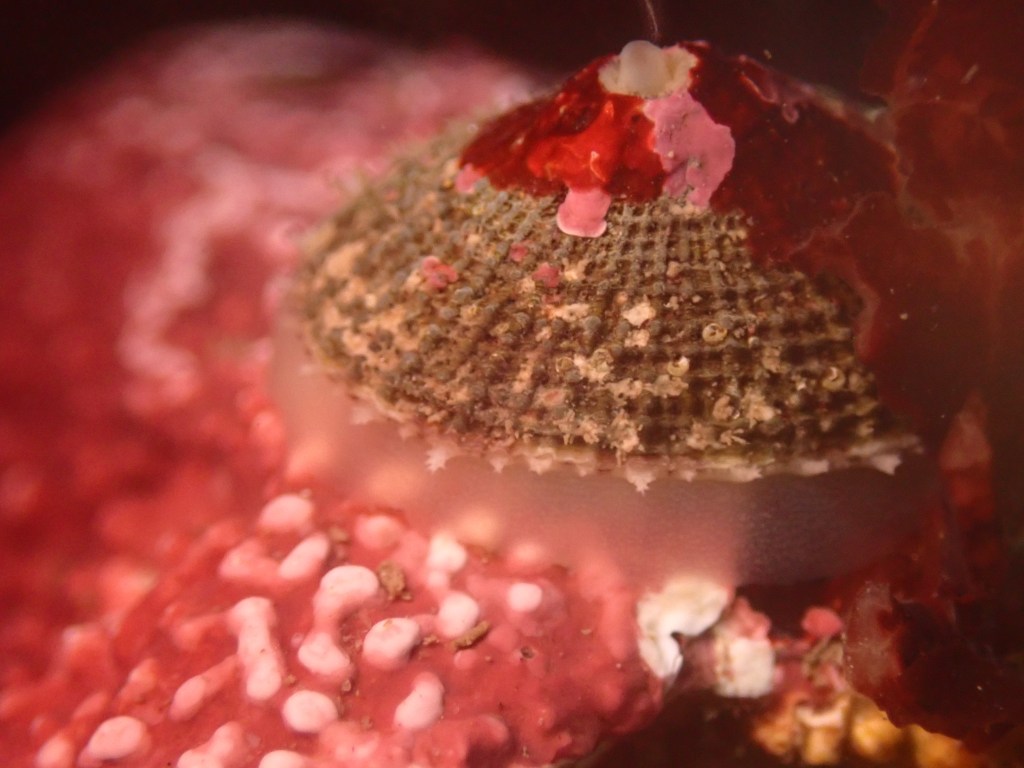
After tidepooling, we walked along the bluff trail among the Monterey cypress and searched the intertidal zone from above for birds. Since part of the beach was closed for harbor seal pupping, we saw several of these animals, along with a variety of gulls, terns, pelicans, and herons. My favorites were the black oyster catchers I saw from the beach and from the bluff, one of my favorite intertidal birds.

Categories
tags
Subscribe to the blog
Sign up to receive weekly emails with tide pooling information and guides so you never miss a post!


 The Tide Is Out
Leave a comment