
The Red Rock Flipper
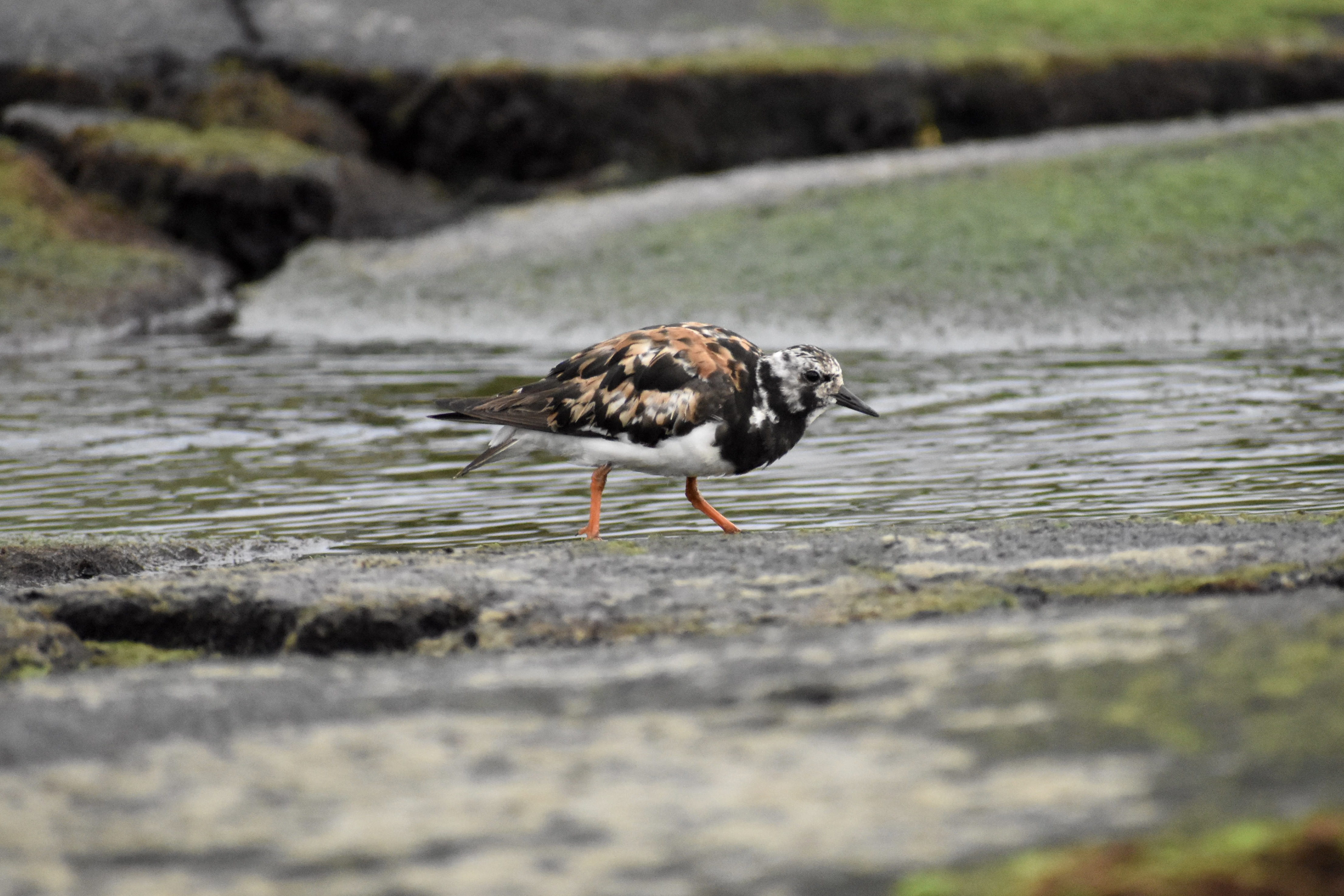
Across most of the world’s coasts in the winter, you might spot plump little birds with a dove-like appearance but boasting longer legs and quicker steps. Nimble and gregarious, these birds are called ruddy turnstones and are some of the most fun birds to encounter in the intertidal. The first word of their name reflects their breeding plumage, while the second reflects their foraging habits; we’ll talk about both here.
Appearance
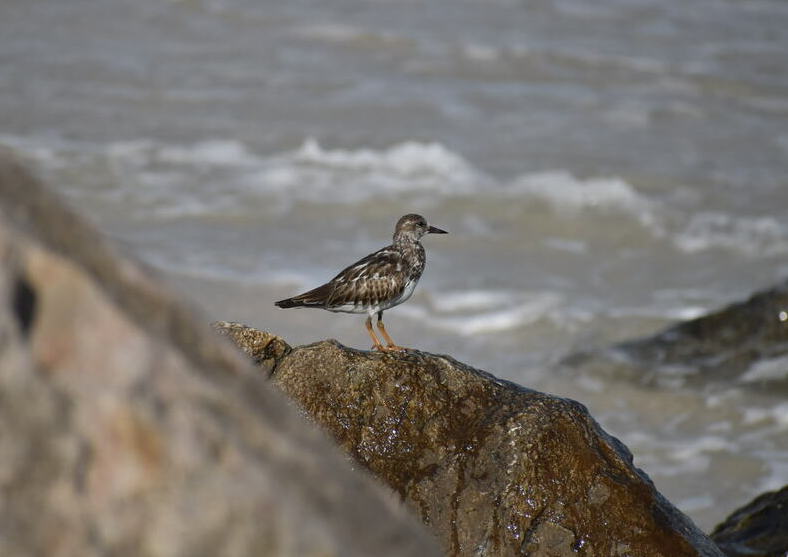
The ruddy turnstone (Arenaria interpres) is a stocky little shorebird, above the size of a dove, with longer legs and bill. All birds in the species have white bellies and a mottled black and brown calico plumage above, sometimes flecked with rufous and red, from which they get the first part of their name. The head boasts a harlequin pattern of black and white. Orange legs are particularly helpful in identification during the non-breeding season and for immature birds, as plumage is much less striking at these times. Rather similar to black turnstones in body shape and habits, the ruddy turnstone always has some brown in its feathers and those distinctive orange legs.
This species also has a striking wing pattern when in flight, with a bold white stripe along the back and thinner white stripes running down both wings. The rump is white, but the tip of the tail is dark brown or black.
Diet
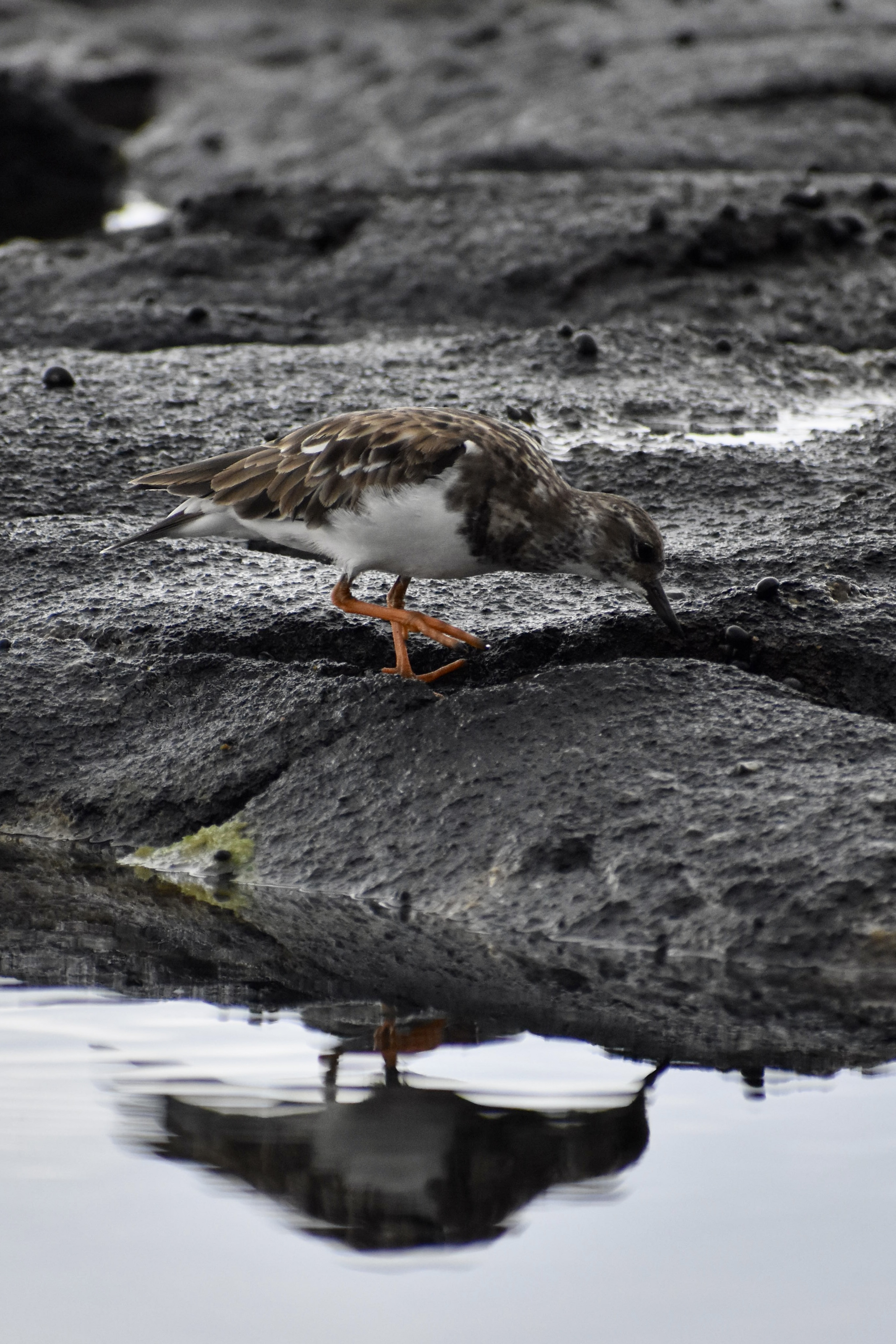
Ruddy turnstones are opportunistic feeders and primarily take intertidal invertebrates during the wintering season. But they also take a variety of other food from carrion to human trash. During the breeding season, they feed mostly on small flies.
Turnstones are known for their habits of flipping objects while foraging. Unlike other birds named after traits you can barely see when the bird is alive (don’t get me started on ring-necked ducks), whoever gave the turnstone its common name was observing the bird alive, not naming it from a shot specimen. Their charming and descriptive name comes to life when you watch them along the coast, turning over everything they can manage with their small size. You’ll often seen then flip small rocks, seaweed, and even larger items with their adept bills to get at food underneath. They are quick foragers and take after the speed and style of smaller sandpipers and plovers rather than larger shorebirds like willets and oystercatchers.
Habitat and Range
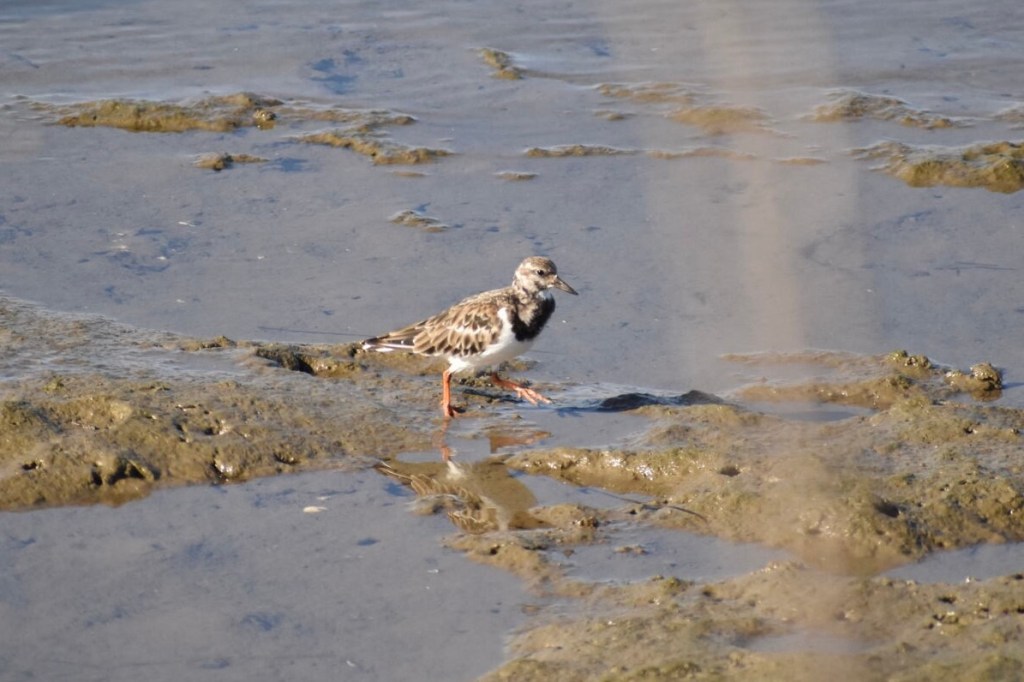
Winter is when you are most likely to see ruddy turnstones, as their range extends over much of the shores of the world except Antarctica. North America hosts a little more than half the population of these birds in the winter. While they favor the coasts, they are occasionally seen inland as well. I have been lucky to see ruddy turnstones across thousands of miles, wintering in Hawaii, California, and the Gulf Coast of Florida.
Among the most northern breeding birds of any species, they spend their summers in the high Arctic, nesting on the bare tundra where no trees can grow. Their breeding habits have only recently gained scientific attention and are still little known compared to our knowledge of other species.
Behavior
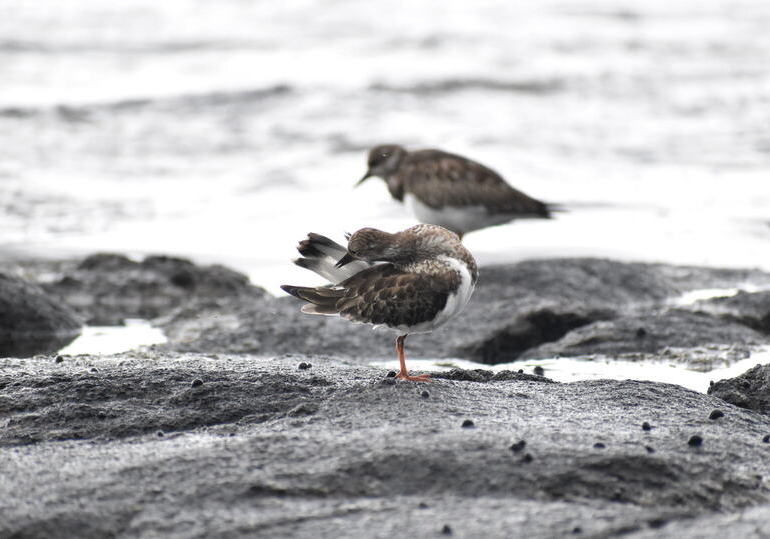
Turnstones are animated, energetic little birds that are fun to watch along the coast, especially while tidepooling. There is a strange kinship in watching birds doing the same activity you’re doing: looking for intertidal invertebrates. Often foraging in small groups of five to 10 with others of their own kind and other species, you can find them primarily on rocky shores, though sandy shores are also taken.
If you see a group of turnstones hopping and skipping along the rocks coming toward you, remain still and crouch down to be on their level. If you remain still, they will likely continue foraging toward you and get quite close before leaping in small bursts of flight to get past you.
Ruddy turnstones are monogamous, choosing a mate for life, and are highly faithful to both breeding sites, wintering sites, and mates, year after year. If you see ruddy turnstones at the same sites in the winter multiple years, you are very likely seeing the same birds, and perhaps their offspring, that have made round trips to the Arctic and back to see you.
Consider yourself lucky if you happen upon a consistent ruddy turnstone wintering site, as they are listed on the IUCN as near threatened globally, primarily due to habitat loss and depletion of vital food sources at migratory stopover sites. As long-distance migrants, they are particularly vulnerable to changes to their environment, as one change along their journey can jeopardize their lives and breeding success.

Categories
tags
Subscribe to the blog
Sign up to receive weekly emails with tide pooling information and guides so you never miss a post!


 The Tide Is Out
Leave a comment