
One Tide Pool

Like any other “seek and find” hobby (bird watching, fossil hunting, coin collecting, etc), tide pooling often feels like you hit the jackpot or you’re wasting your time. While it might seem like I only ever hit jackpots, remember I chose what I share on this blog. I just don’t write often about times I find nothing (although this post is about that specifically).
However, in the most recent winter low two-cycle, I hit the jackpot in a variety of ways. Today, we’ll focus on a single tide pool (the one pictured below) and what I found in it, showing both the diversity and density of life that you can find in a small space if you look closely and move slowly.
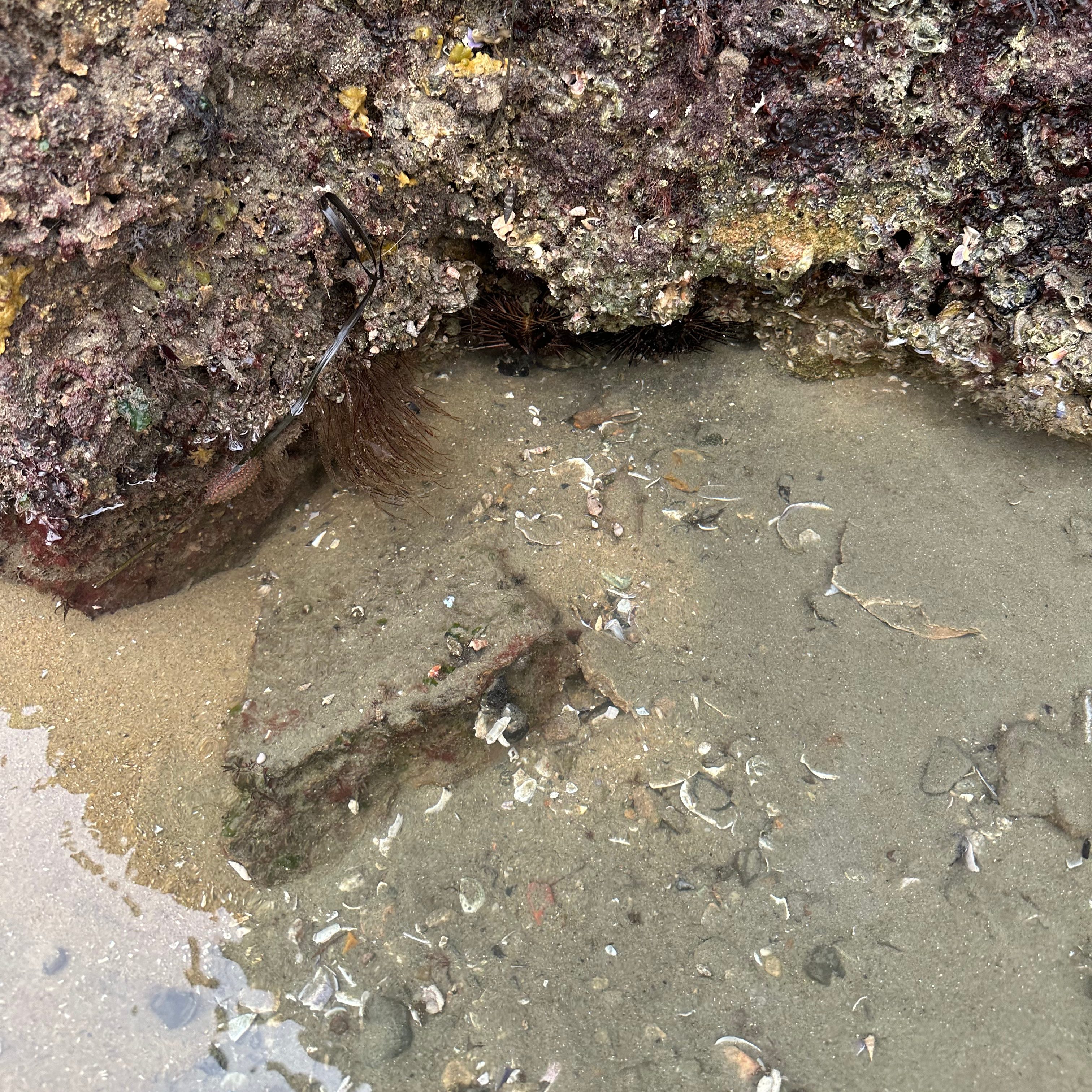
My tide pooling day had already been good, visiting a protected mostly-sandy beach that bordered a seawall and some rock, when I came upon a particular pool formed in the low ground around a corner of the seawall. It was no more than a foot or two across and maybe six to 8 inches deep. It was mostly sandy, although a few rocks and lots of shell fragments were scattered and half-buried in the sand. At first glance, nothing seemed to move. (Take a minute to look at the shot above and see what you can spot. There are at least 3 “big” animals visible).
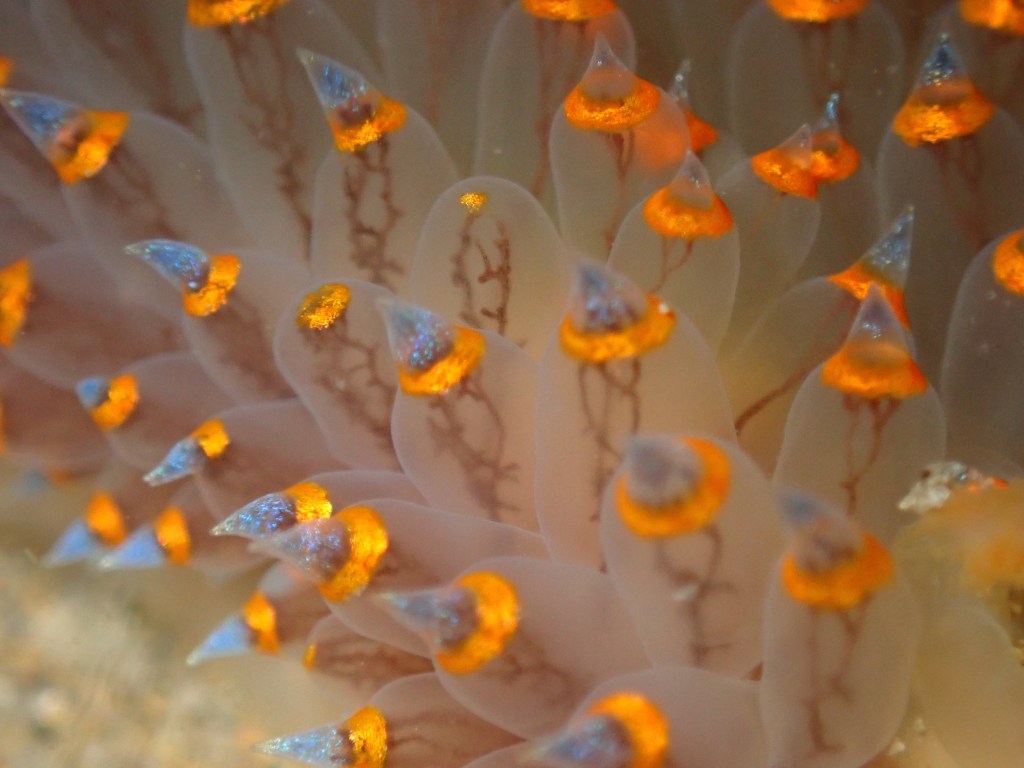
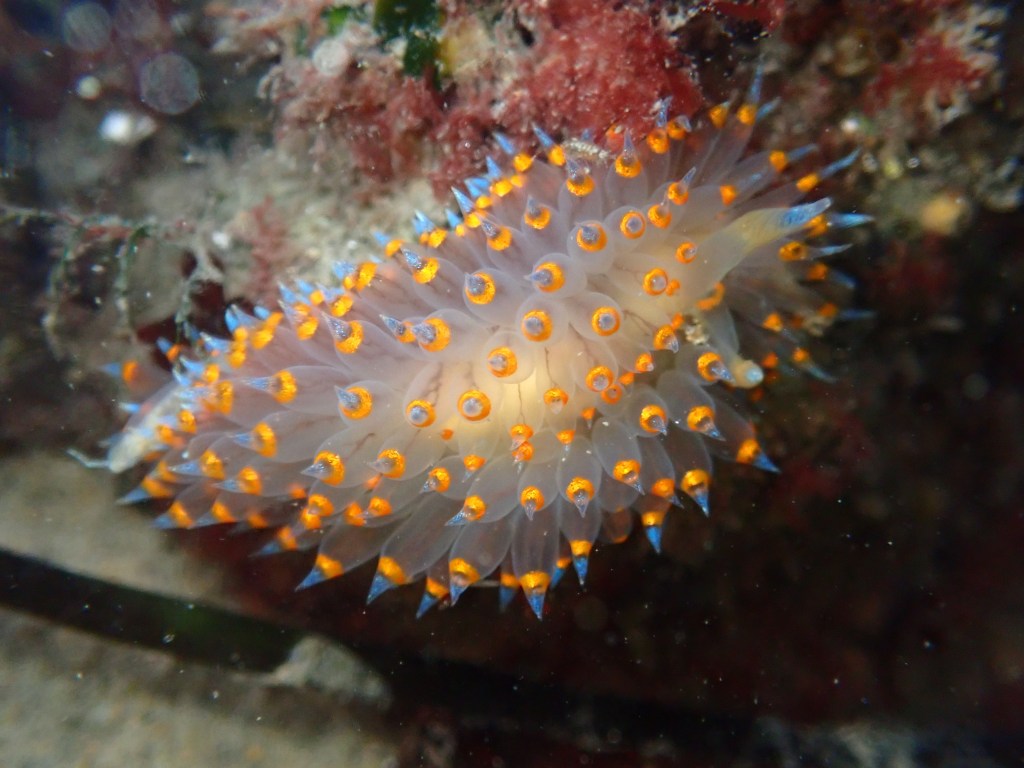
The first animal I noticed was a cockscomb nudibranch (Antiopella barbarensis) (did you see it in the shot above? Look on the left, half way down) hanging upside down a thin blade of seagrass. These slugs boast stunning cerata if you get close enough, with rings of yellow, blue tips, and often the digestive track visible inside. I took tons of photos of this animal, as it was a big specimen (as far as intertidal sea slugs go) at about an inch and a half.
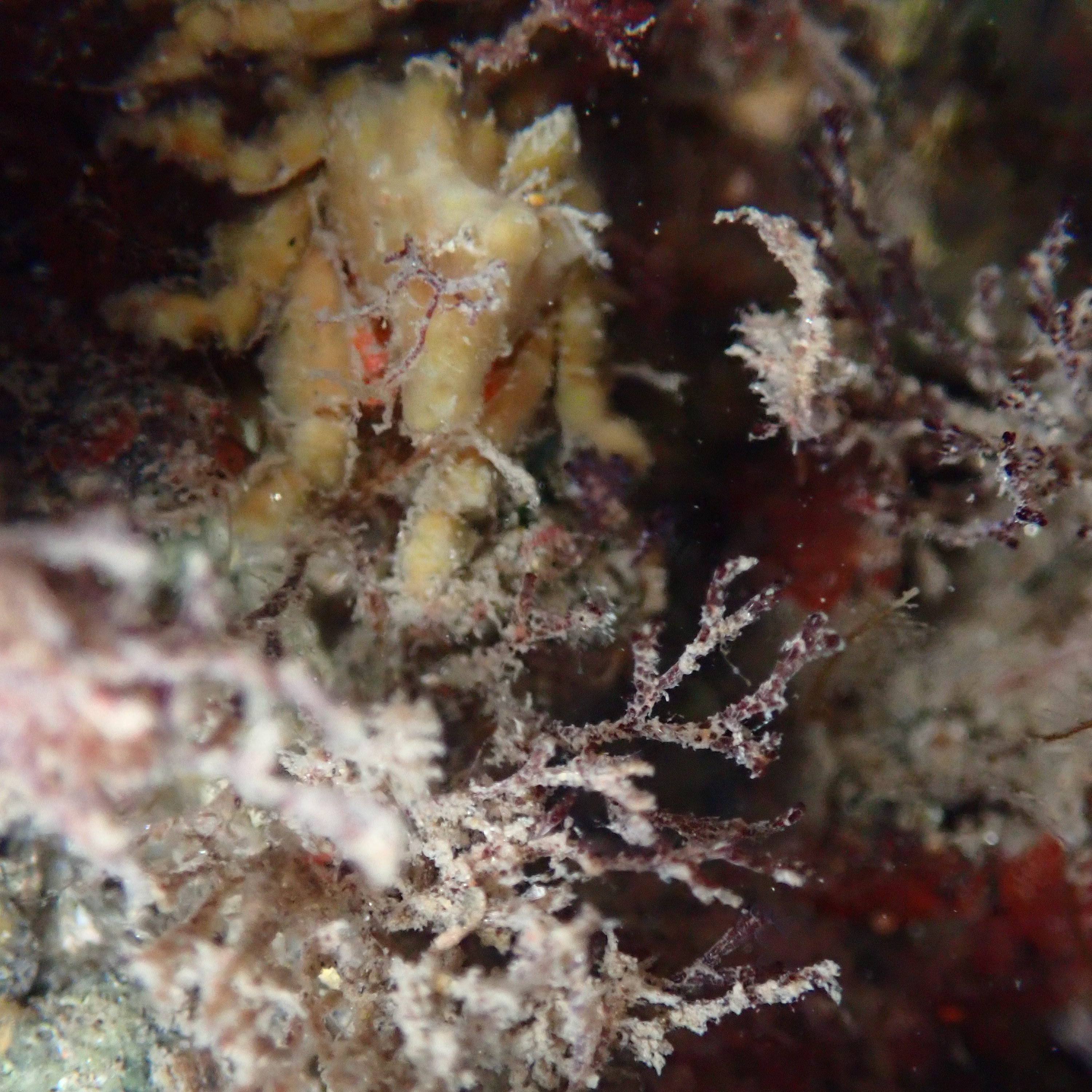
Next to the slug, snuggled up against the fouling on the wall, was a curiously shaped yellow sponge (seen just above the cockscomb in the first image). Recognizing camouflaged animals in the intertidal comes with lots of practice, and I was sure that this was a small crab that had decorated itself with a sponge. However, as it was only 2 cm or so long and about two feet from me, it was hard to make out. I took photos from as many angles as I could, difficult because it was so close to the surface, hoping they would come out well enough to get an ID. When I drew my camera close, I saw the slightly crustacean-like movement; it was a crab.
After reviewing my photos, I found that this was likely a dwarf tear-drop crab (Pelia tumida), a new species for me! With a beautiful yellow sponge covering and striking red eyes, I wish I was able to get better shots of him. Maybe next time.
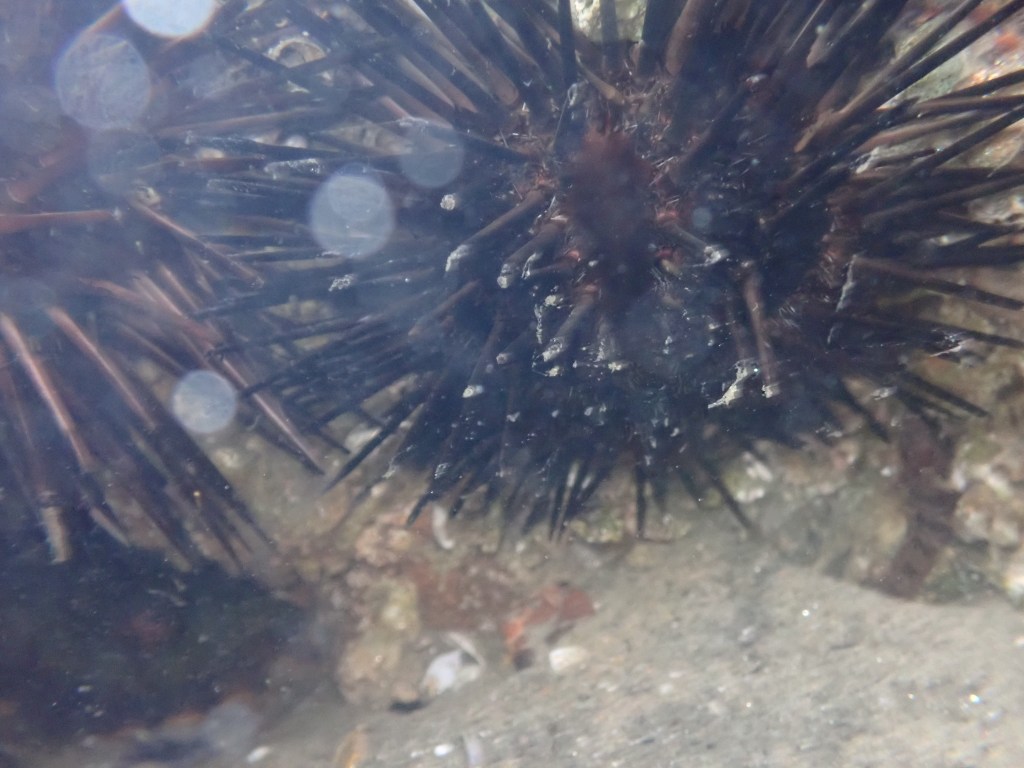
While I was shooting the cockscomb and crab, bending down allowed me to spy several black starry urchins (Arbacia stellata) clinging to the downward slope of the seawall. These urchins aren’t often found on outer coasts, so it’s a treat to see them on protected shores. It was also nice to see a group, as many in the population here had been wiped out by a storm a year or two ago. They are much larger and have longer spines than the more common Pacific purple (Strongylocentrotus purpuratus) and red sea urchins (Mesocentrotus franciscanus). You can just make out a couple of these guys in the top third of the first image.
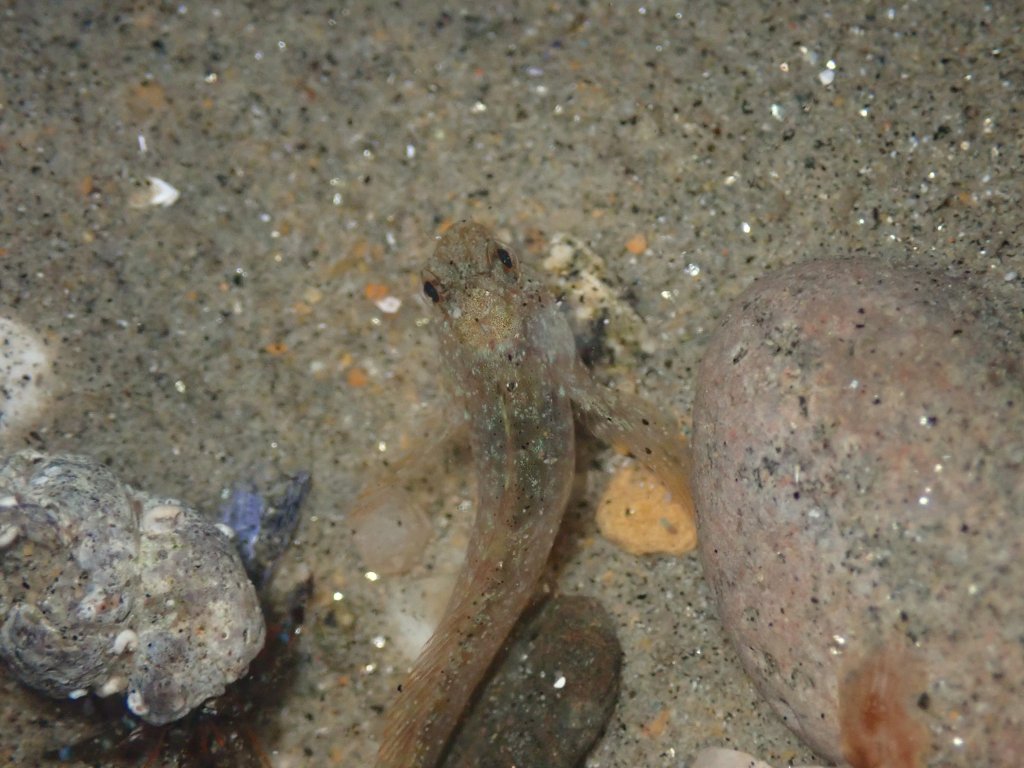
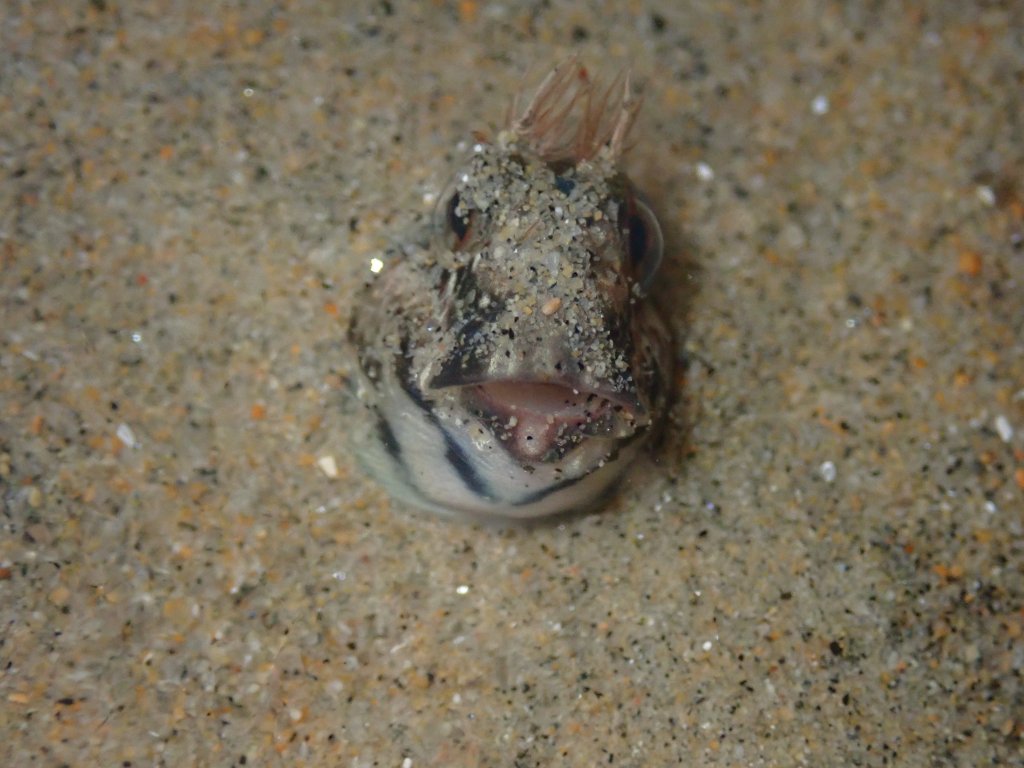
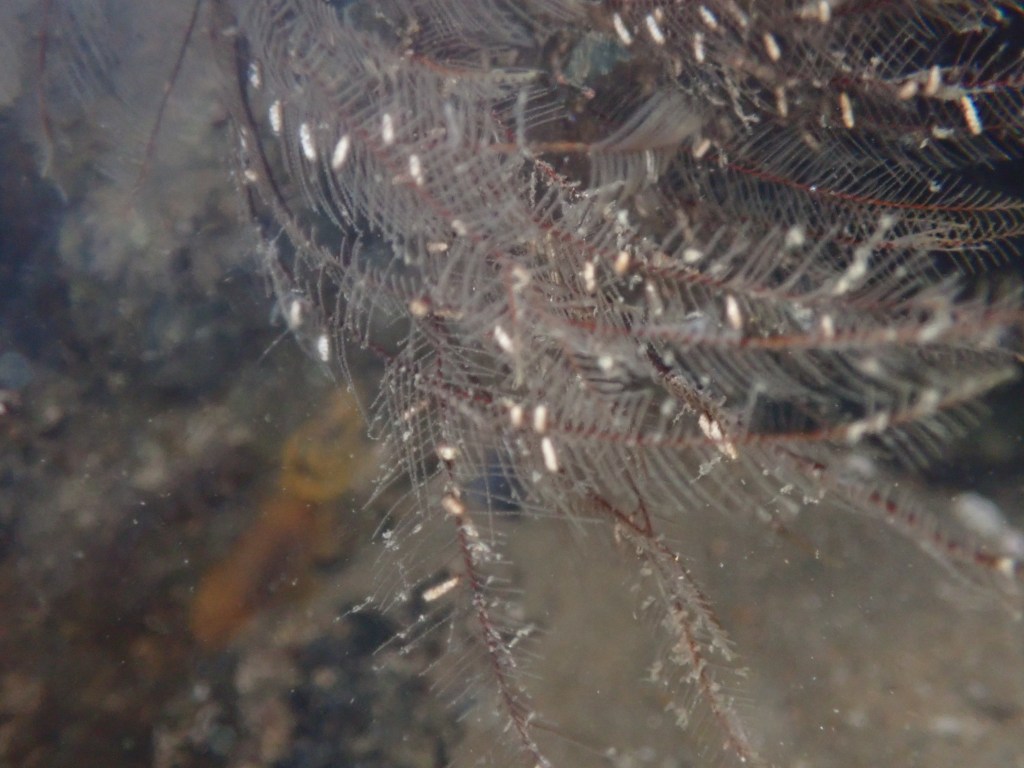
Also along the wall was a beautiful fan-shaped hydroid (seen on the left wall in the wide angle shot) and a cute little notchbrow blenny (Hypsoblennius gilberti). Right close to my feet, I saw movement that I thought was a buried mollusk. Gently reaching into the sand to pull it up, I was surprised to see a fish head! Another, but much larger, notchbrow blenny had let me pull it up out of the sand and wasn’t moving, likely thinking I was a predator and remaining still to fool me.
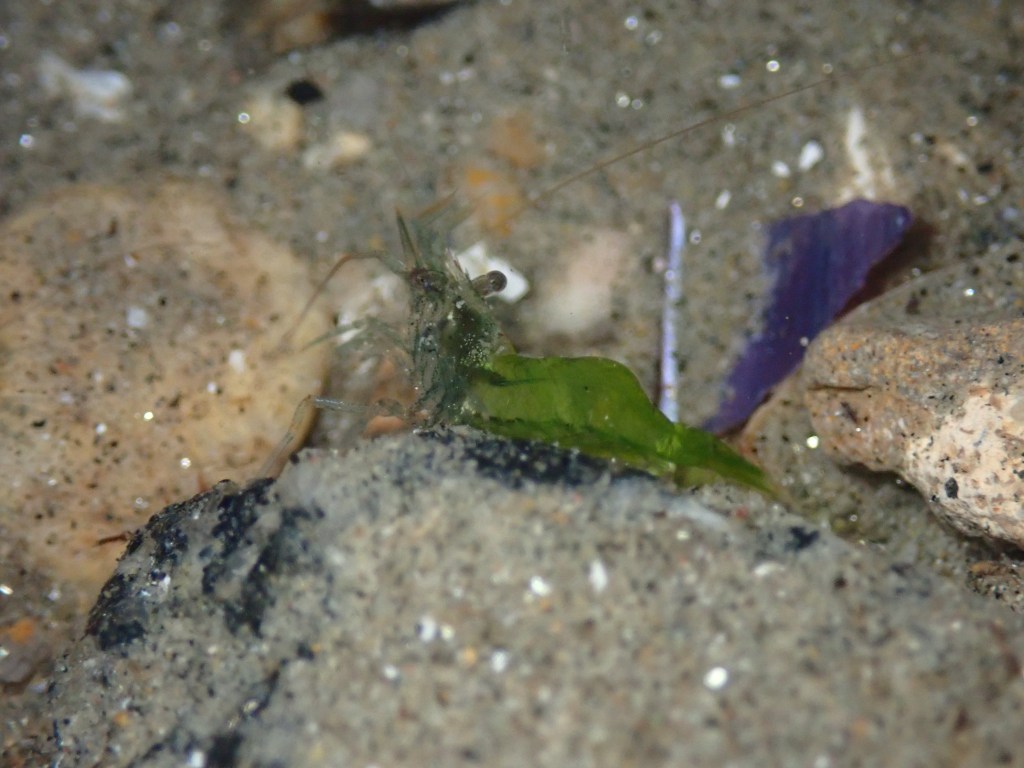
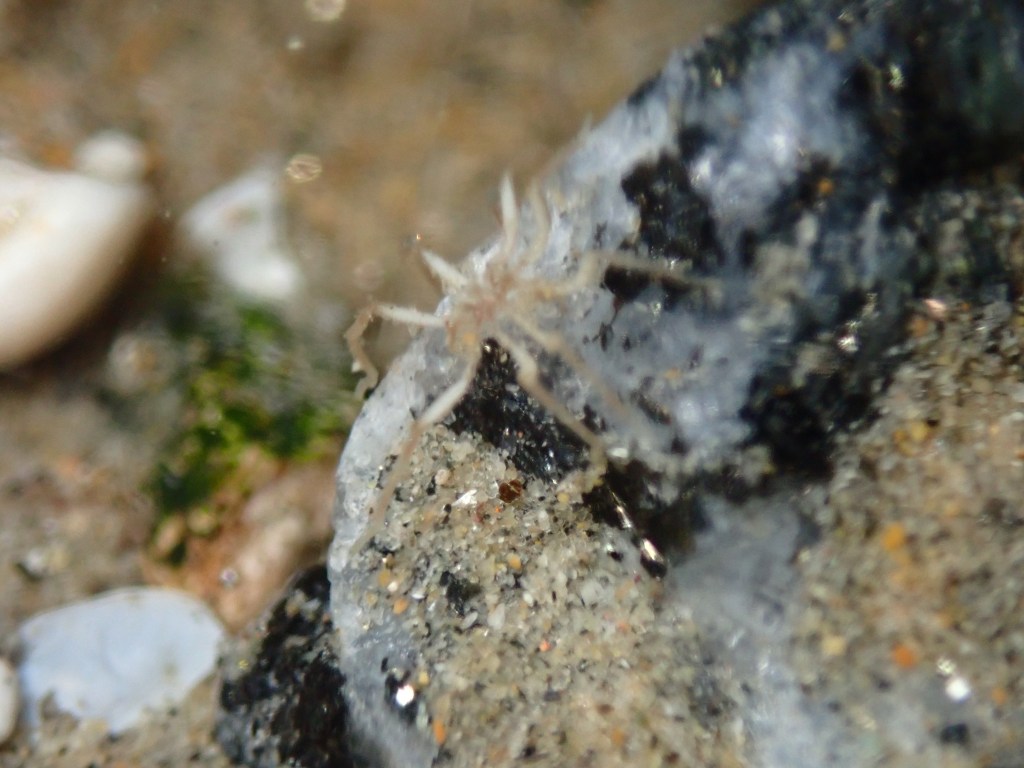
There were a multitude of shrimp in this still pool as well. Most likely red-banded transparent shrimp (Heptacarpus sitchensis), though their bodies were very green, probably from their food source. There was even a sea spider poking around under a small pebble, but their difference in water temperature and possibly salinity made the photos blurry.
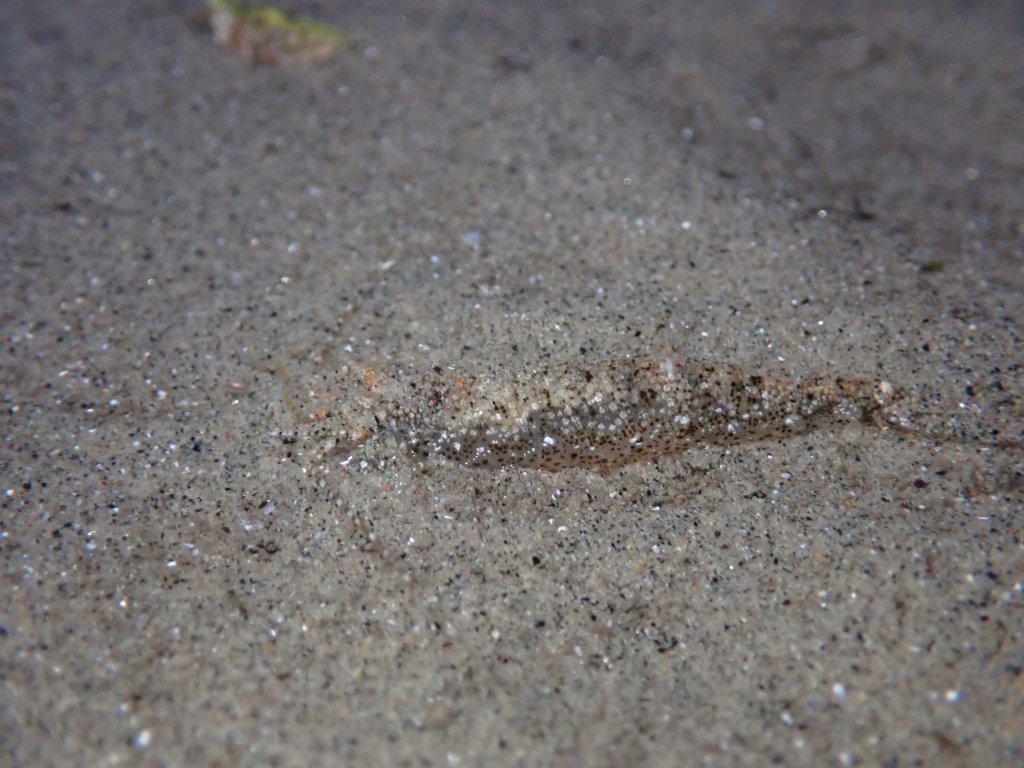
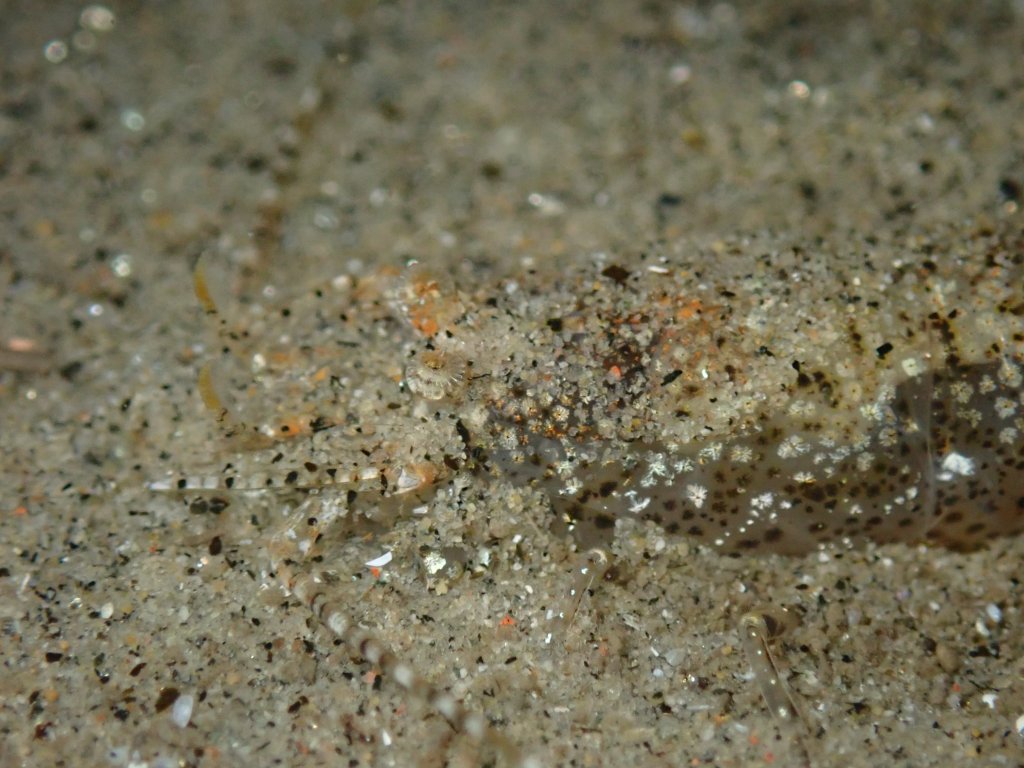
When I turned another small rock, a lightning-fast something sprang away and disappeared in a puff of sand a few inches from me. Despite seeing where the thing had buried itself, it took me a minute to spot it again. It was so perfectly camouflaged against the sand. With only its eyes, antenna and some of its body visible, it was very difficult to make out any detail. It had even kicked up sand onto its back when re-buried itself, adding to the camouflage. I took plenty of photos and was able to get close. This is likely a smooth bay shrimp (Lissocrangon stylirostris), but it is at least in the family Crangonidae.
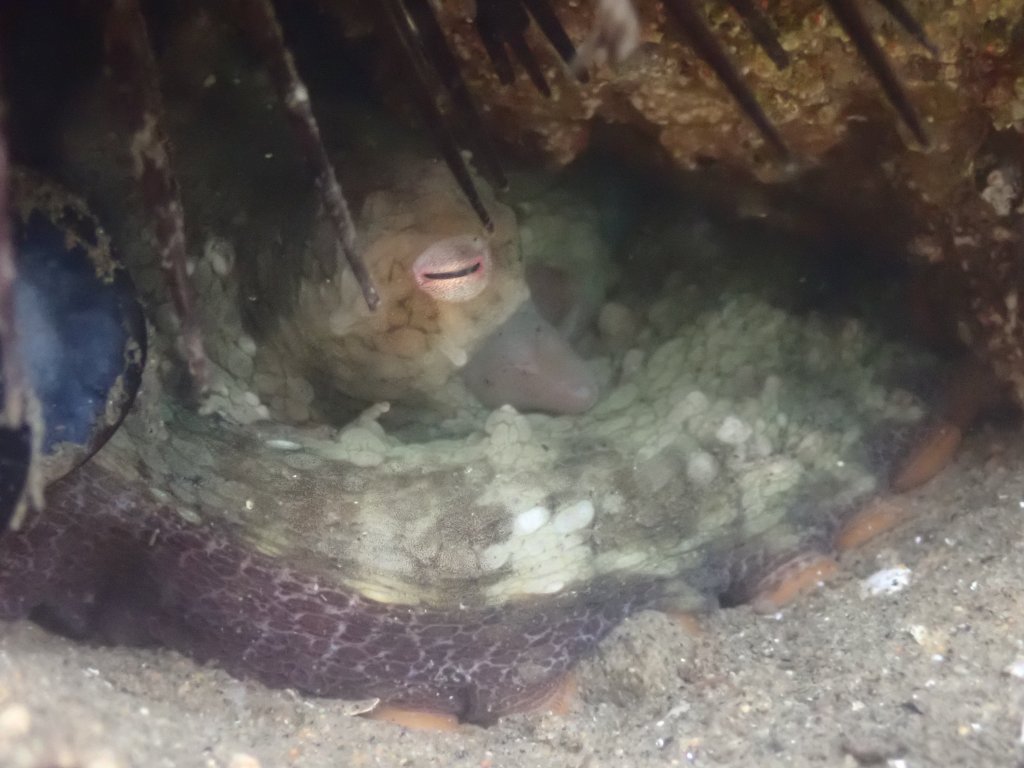
Just when I thought I had exhausted the pool’s animals, bending further over, I spied a lesser two-spot octopus (Octopus bimaculoides), hunkered down in the corner where the sea wall met, mostly hidden behind the urchin spines. Of course this pool would have an octopus. He had probably been watching me the entire time. You can just barely see the edge of his tentacles in the wide angle shot.
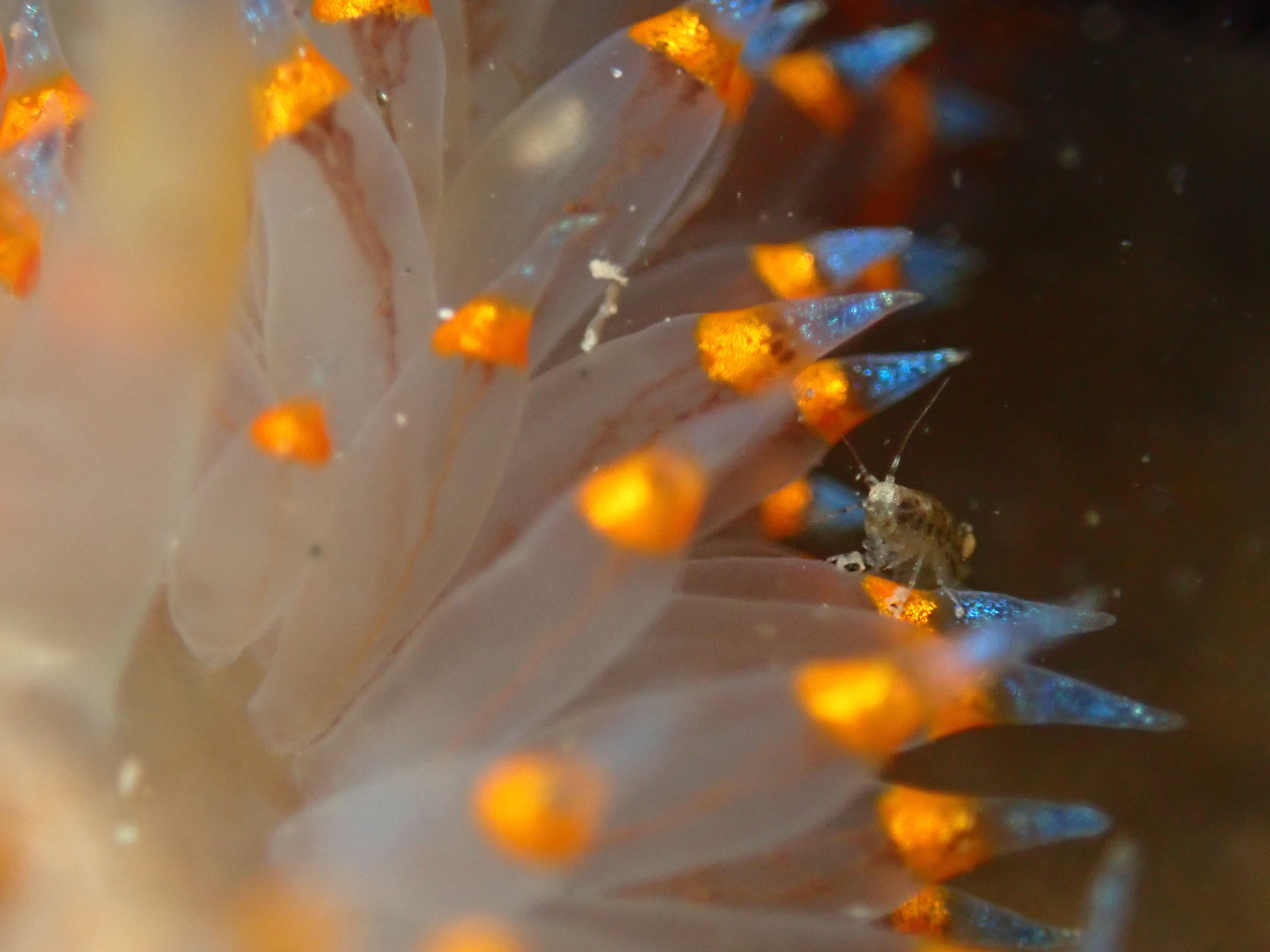
Later, when I was going through my photos, I came across this shot with the tiniest amphipod perched on the cerata of the cockscomb. I didn’t see it in person; just happened to get it in focus in this shot. It made me wonder how many other creatures I missed, even in this single tide pool.

Categories
tags
Subscribe to the blog
Sign up to receive weekly emails with tide pooling information and guides so you never miss a post!


 The Tide Is Out
Leave a reply to beth Cancel reply