
Welcome back and Summer 2025 Tide Pooling Logs
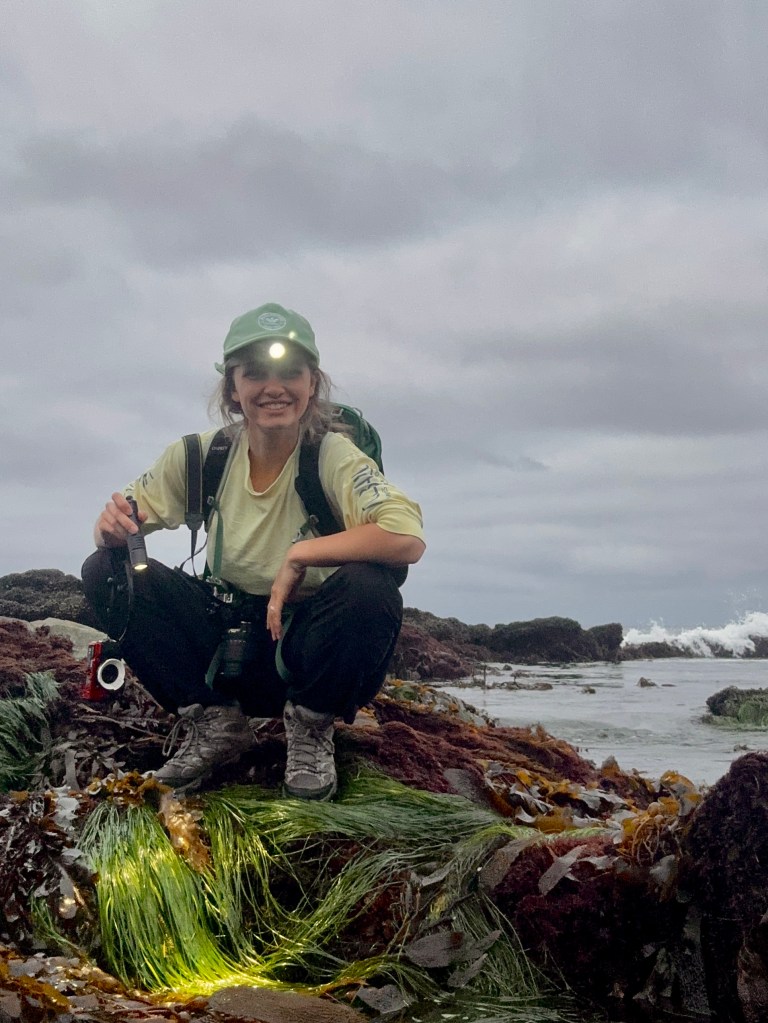
Hello everybody!! Welcome back to the Tide Is Out. Thanks to everyone for your patience this summer as I took a little break to work on other projects, do a ton of traveling and of course, go tide pooling! I’ve got some great resources coming up, along with logs of our trips over the past couple of months.
Just to give you a little sample of what I’ve been up to, we’ll start with a tide pooling log from one of my favorite locations (a secret sandy beach) and one of my favorite times to tide pool (well before dawn).
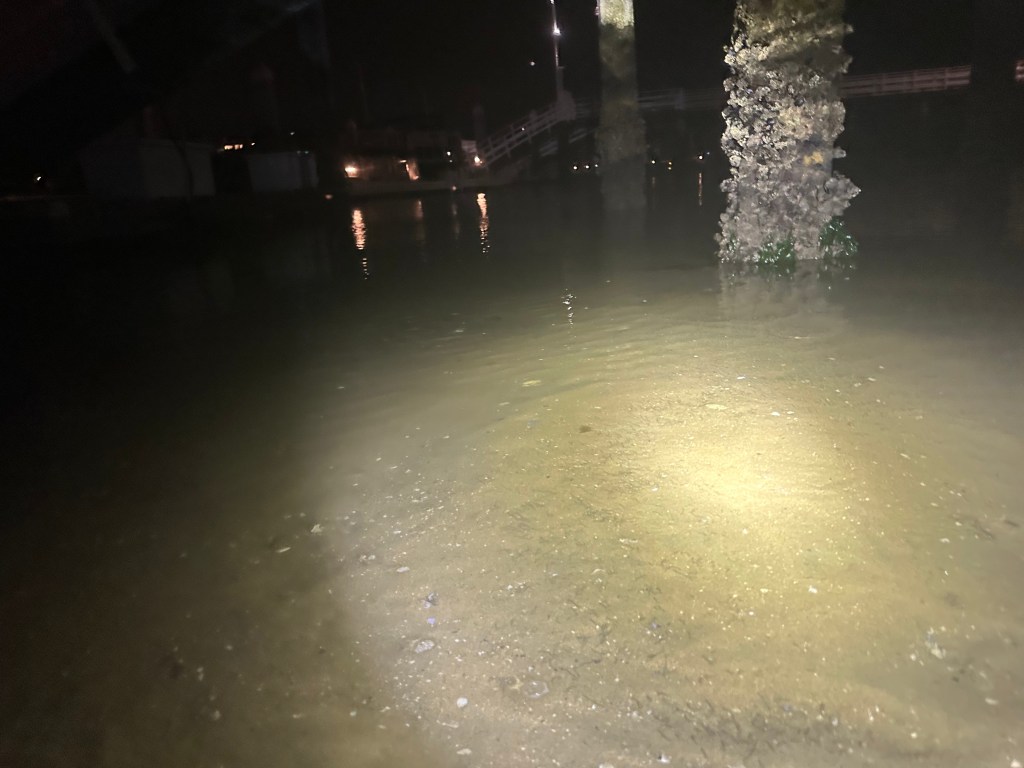
I had arranged to meet a friend at a small sandy beach in Orange County for the first of the tide cycle back in June. Because it was the first night it was worth going out, it was well before dawn when we arrived, with no hint of light in the east. Although this makes for little sleep, it is the best time to find nocturnal animals you won’t see otherwise.
Although this location had had numerous hydroids in the past that many nudibranchs fed on, they had died off since we had last visited. But we were still hopeful about finding some slugs. It wasn’t long before we spied a couple of sorcerer’s dorids (Polycera atra), with a strange coloration of cream stripes and orange spots that we don’t usually see on the outer coast, rocky shores. There were several large individuals of this morph.
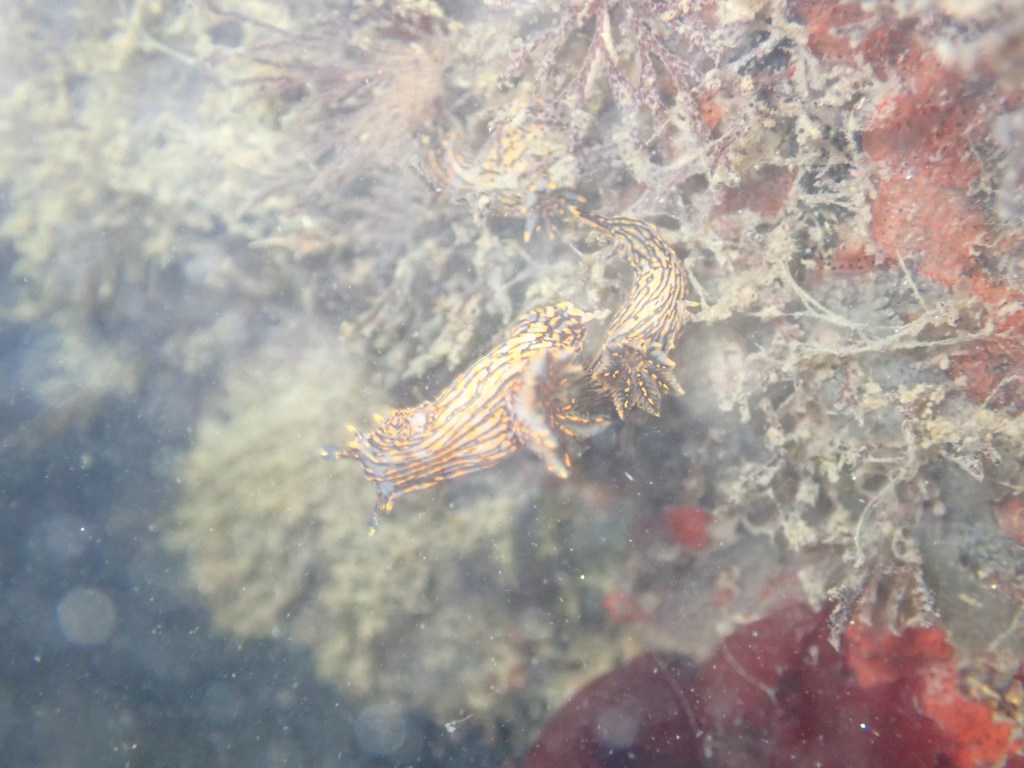
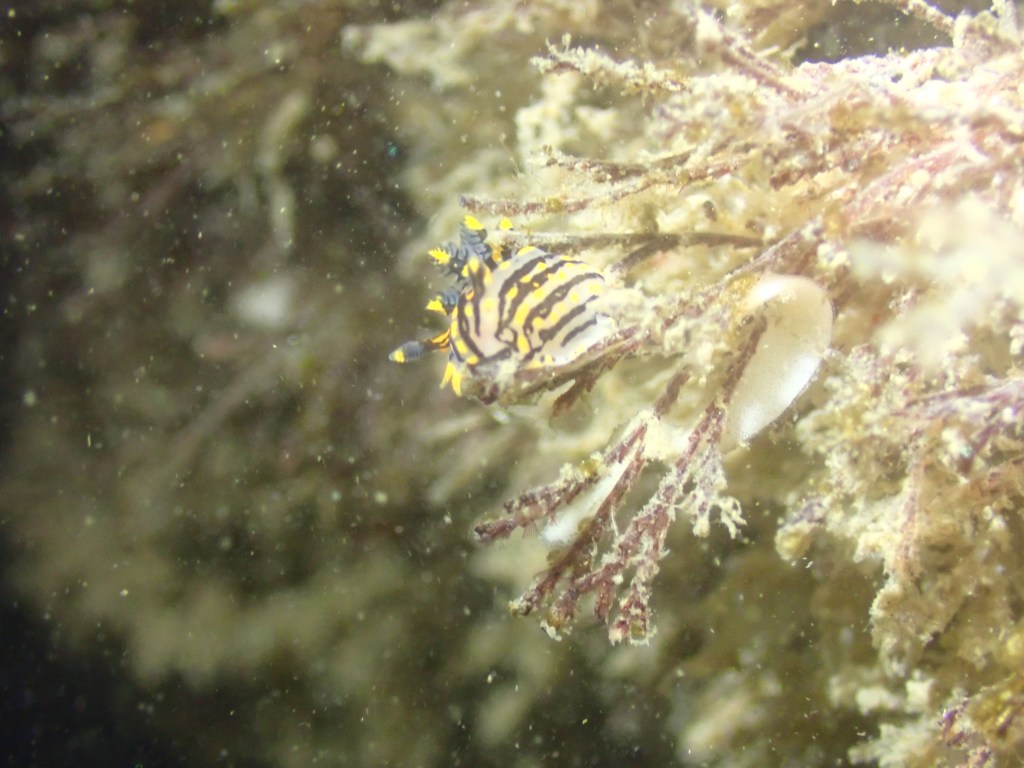
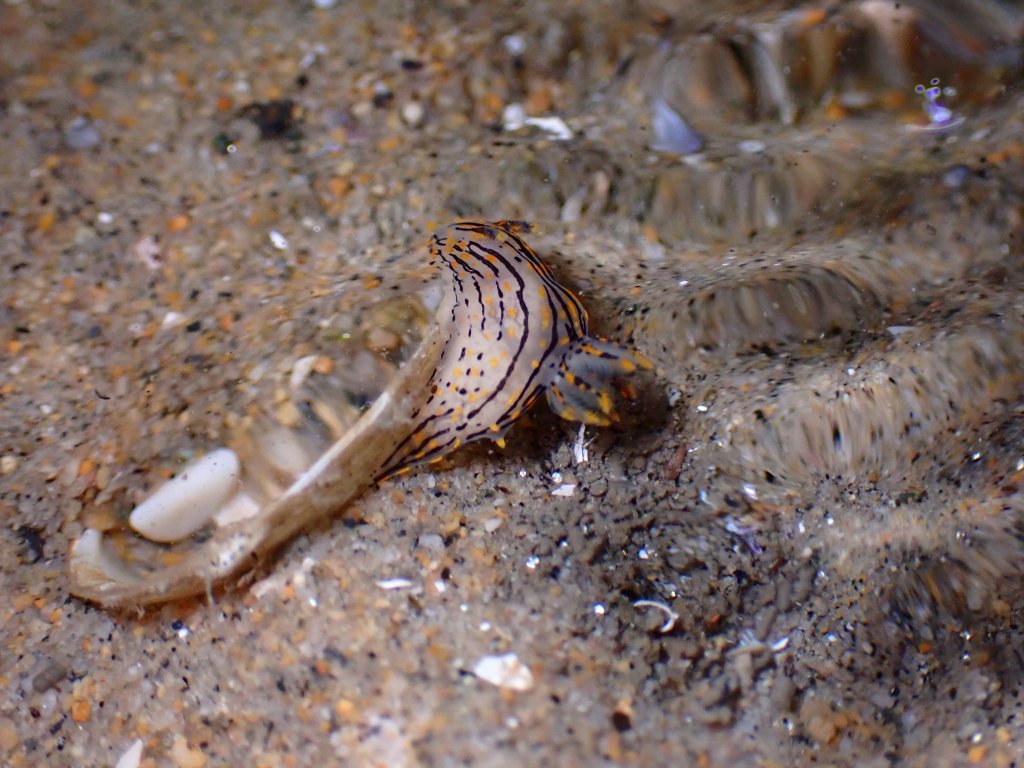
Because of how low the tide was, we were able to access a couple floating docks while wading, where many more sorcerer’s dorids were hanging out, some very close together, and many egg masses. We probably saw more than two dozen of this one species.
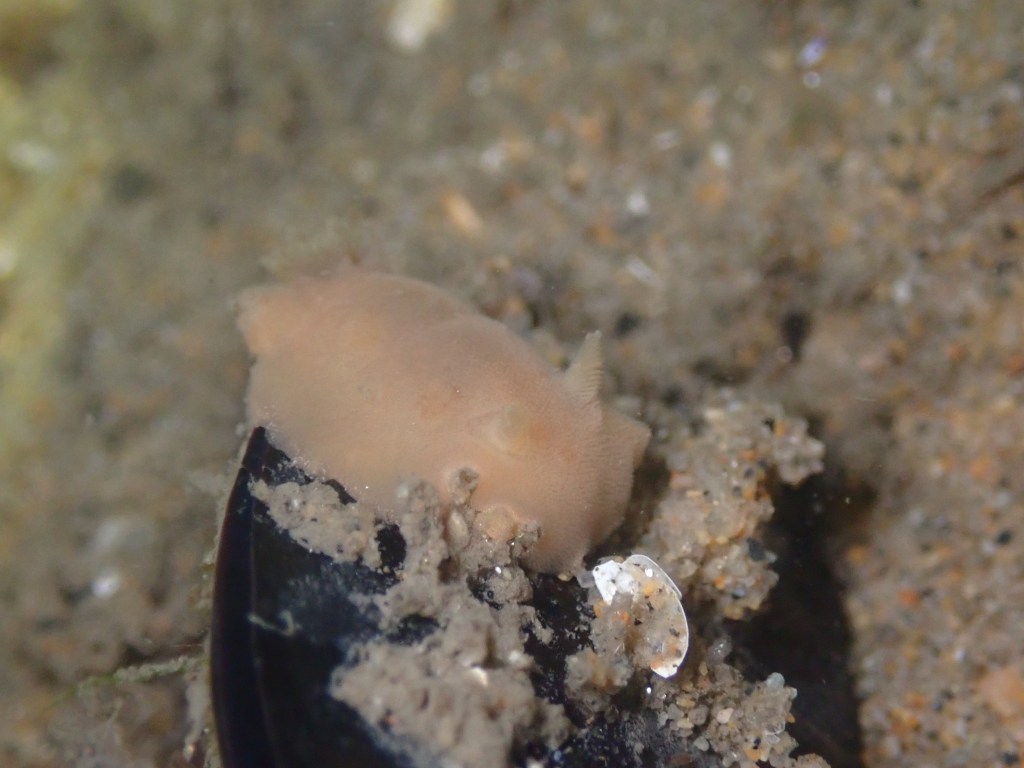
I also encountered a San Diego dorid (Diaulula sandiegensis) with strange, pinky coloration and no spots at all. Another larger slug of this species had the more typical tan color of this location, but with squirrelly spots that didn’t form to the usual pattern.
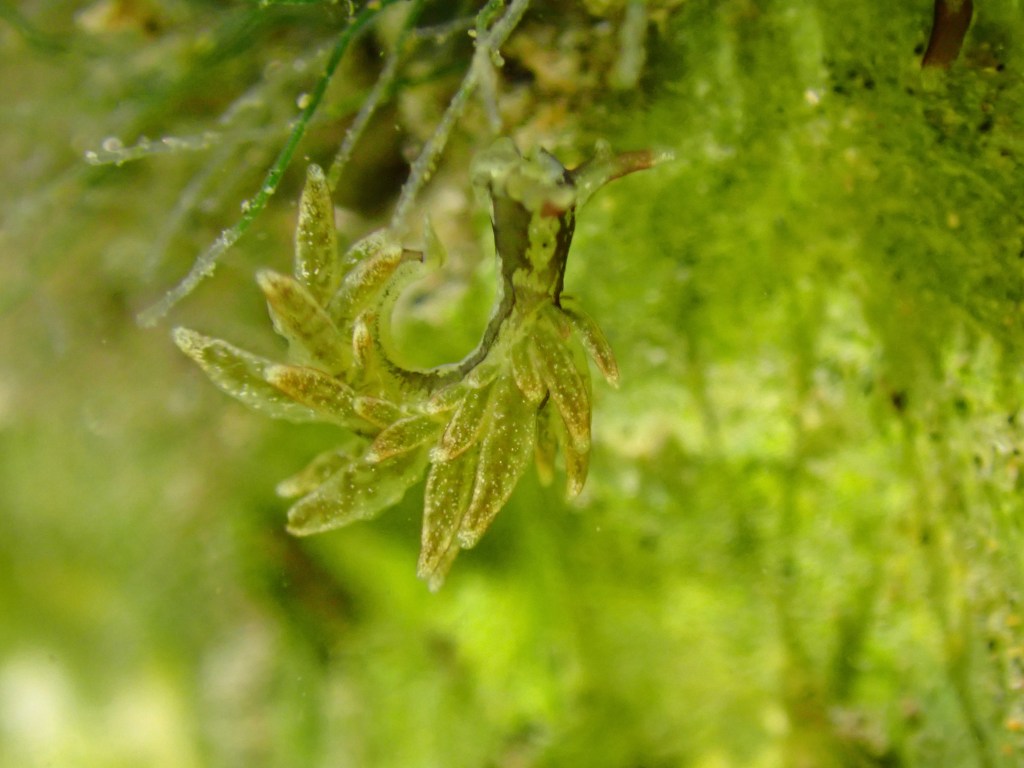
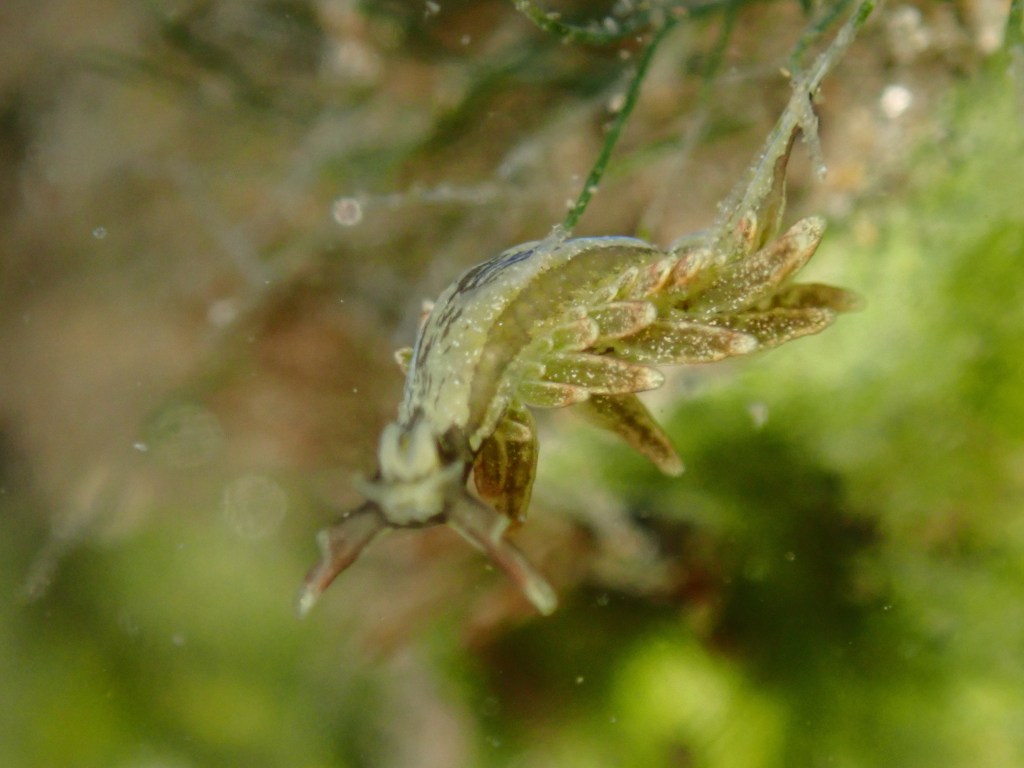
One of my favorite finds of the night was a group of Enteromorpha-eating sapsuckers (Aplysiopsis enteromorphae), a species I had only seen once before at another location. Clustered in a tiny pool in the mid-intertidal, on both sand and algae, were somewhere between 8 and 10 of these teeny, tiny slugs, measuring no more than 5 millimeters. Their colors and cerata made them difficult to photograph, even with a flash to illuminate them.
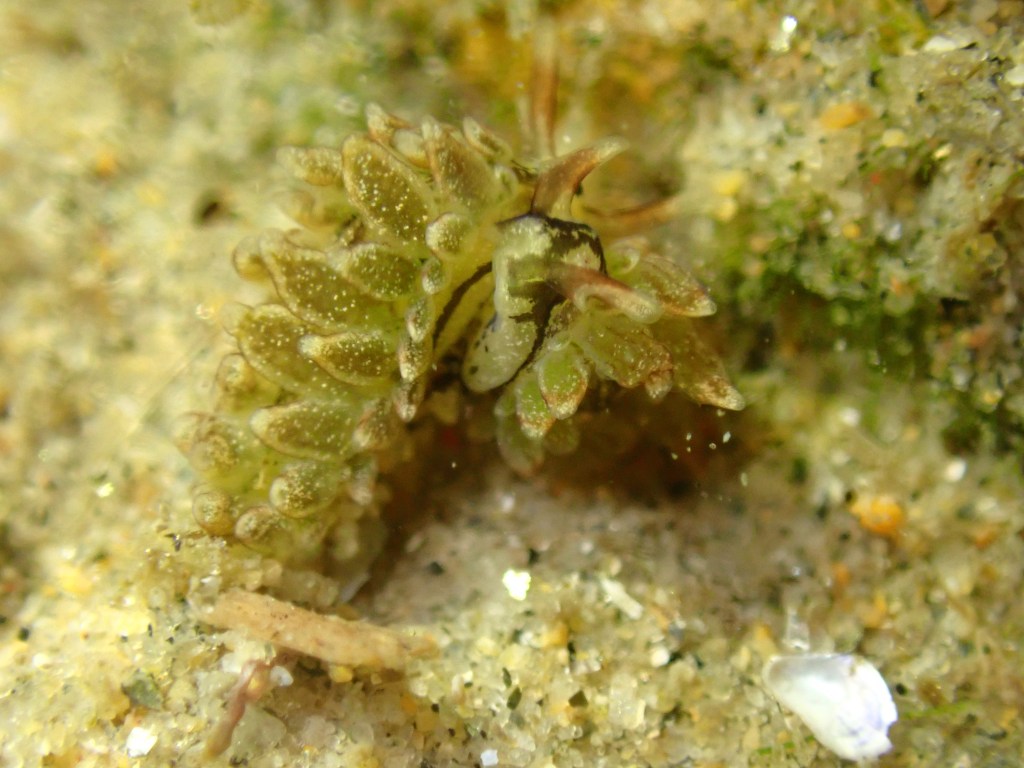
We also found a couple of mating pairs among them and had the opportunity to photograph this behavior as well.
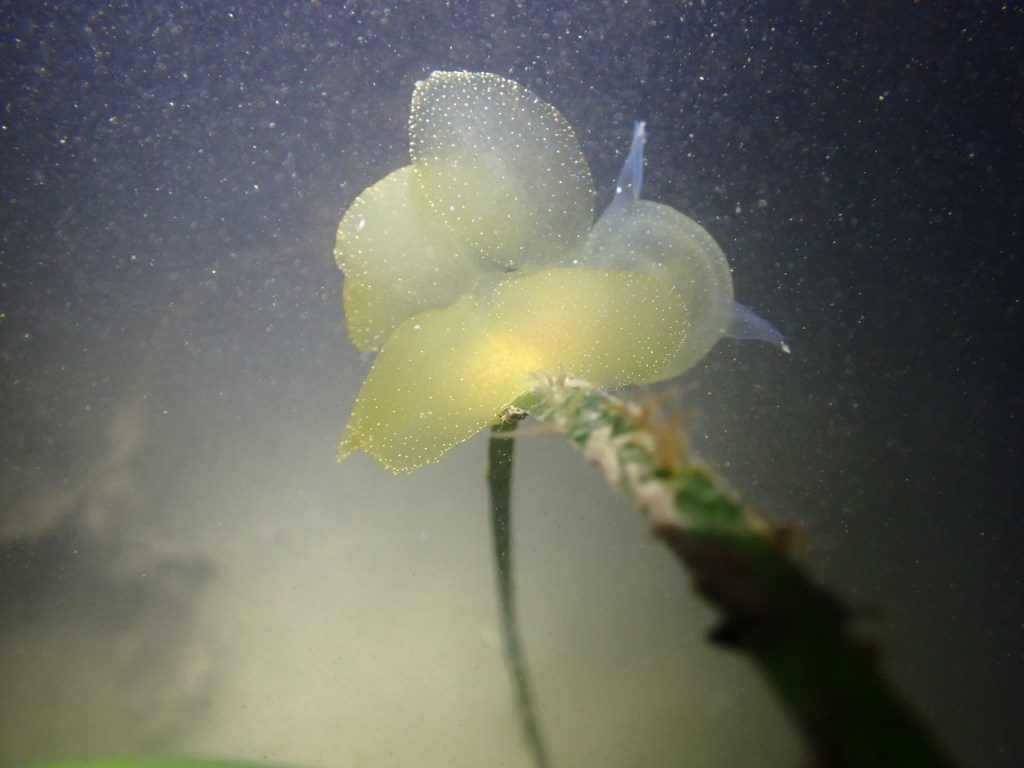
A lifer for me this trip was a hooded nudibranch (Melibe leonina) we spied in deeper water while wading next to a sea well, clinging to some sea grass. Although the silt and deep water made photography difficult, its iridescence spots and large features still shone through. These creatures extend their large “hood” heads to capture small invertebrates and sometimes even fish! This one was about 3 to 4 inches long, pretty sizable for an intertidal individual.
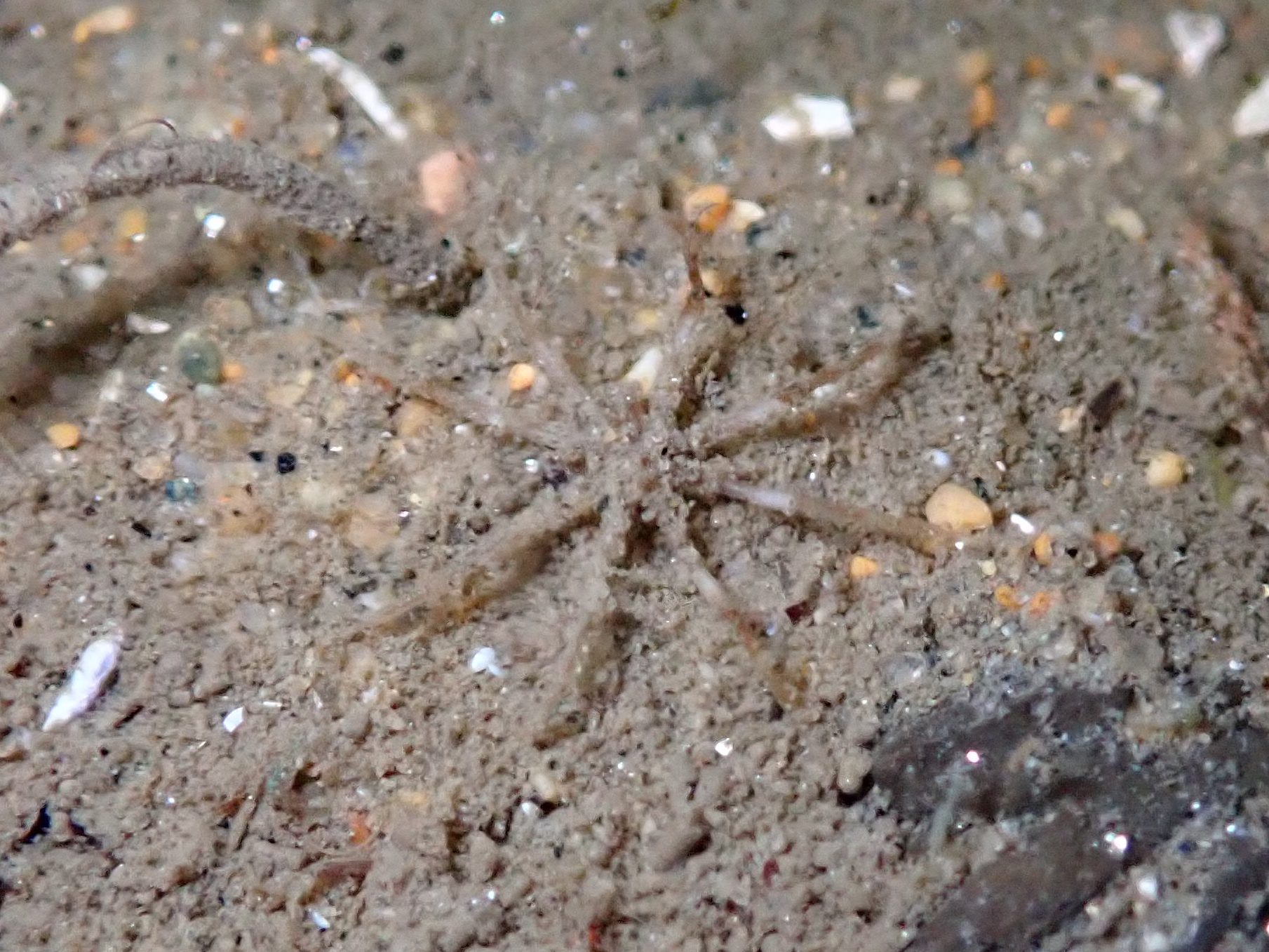
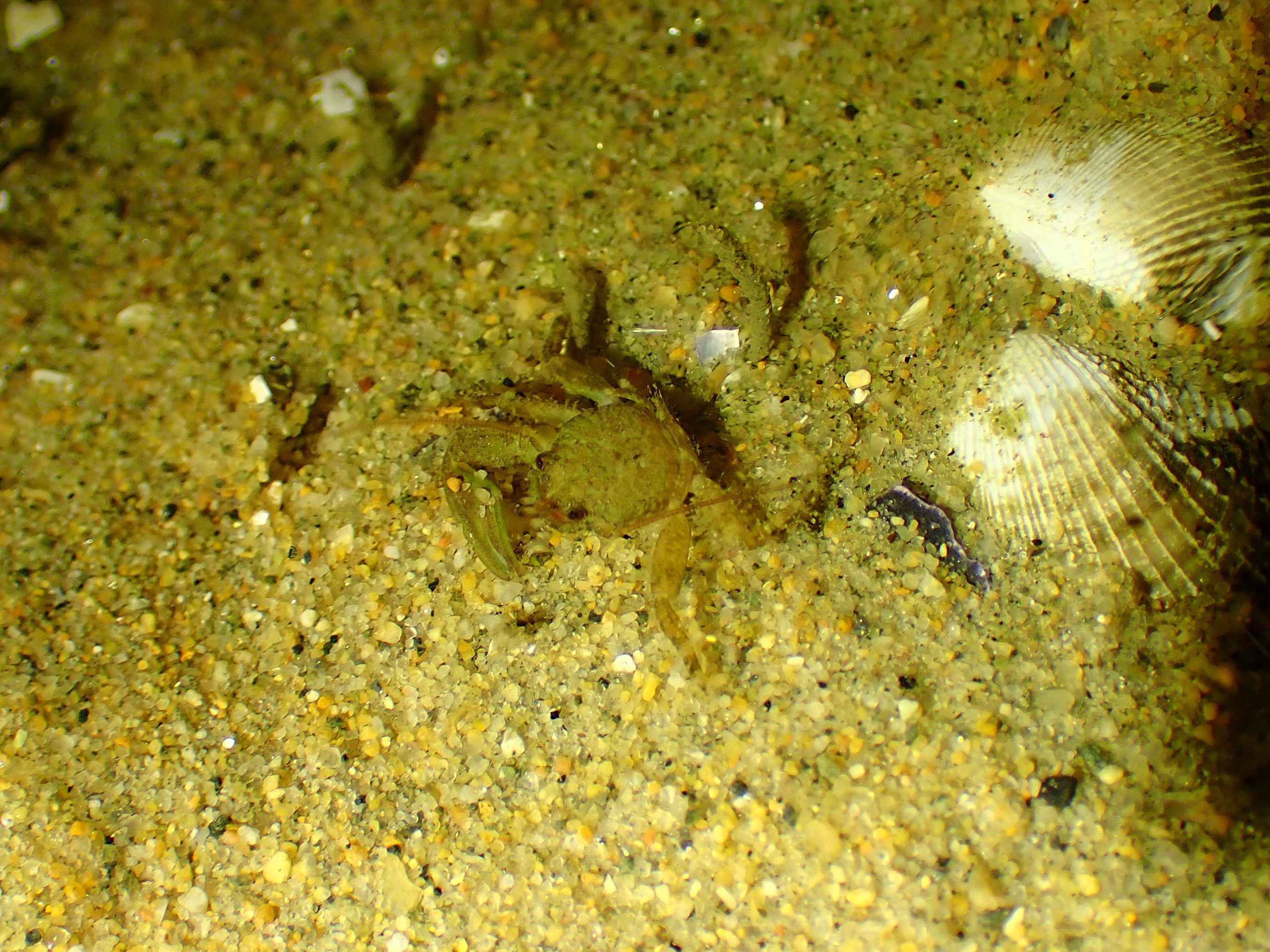
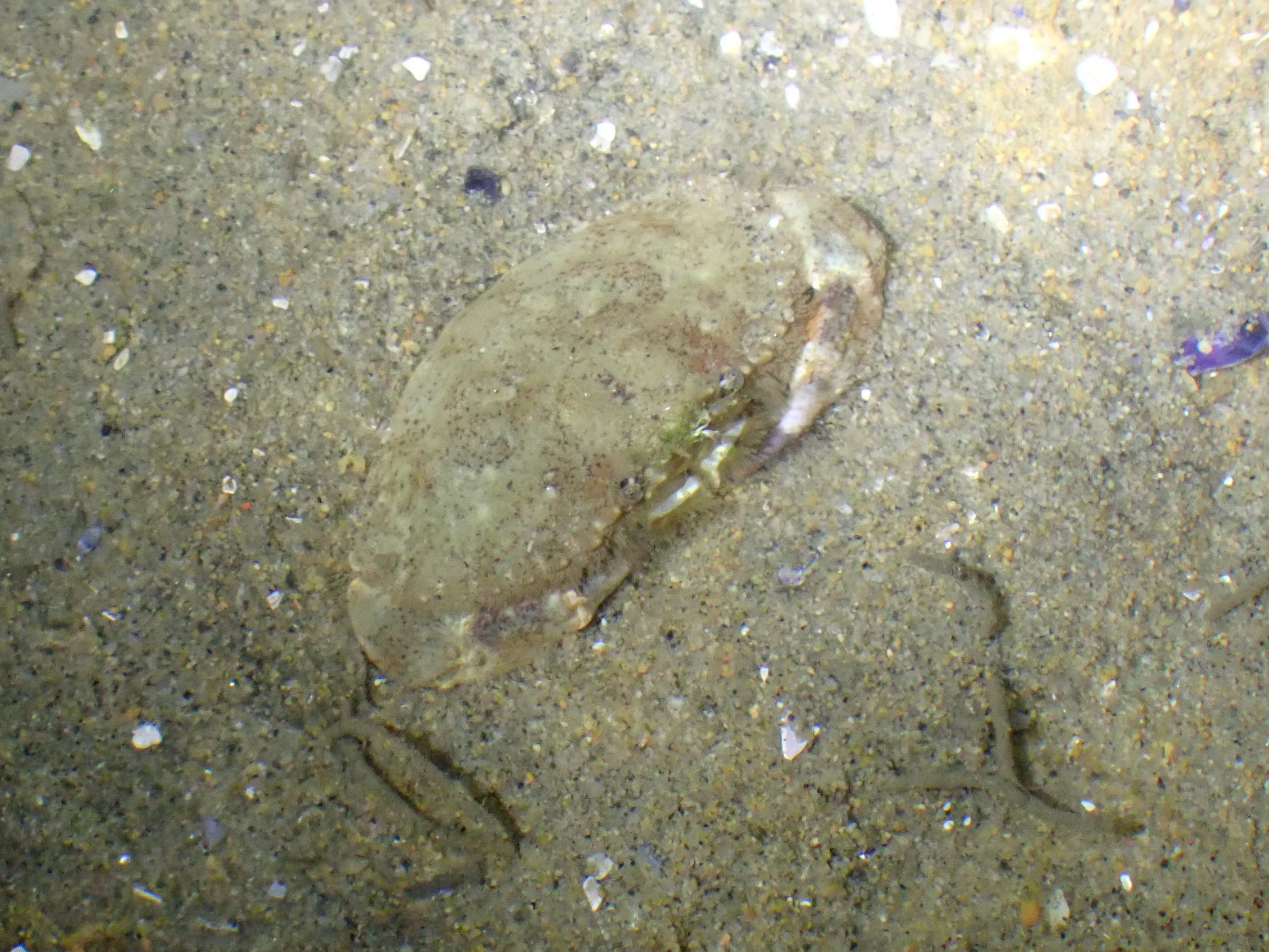
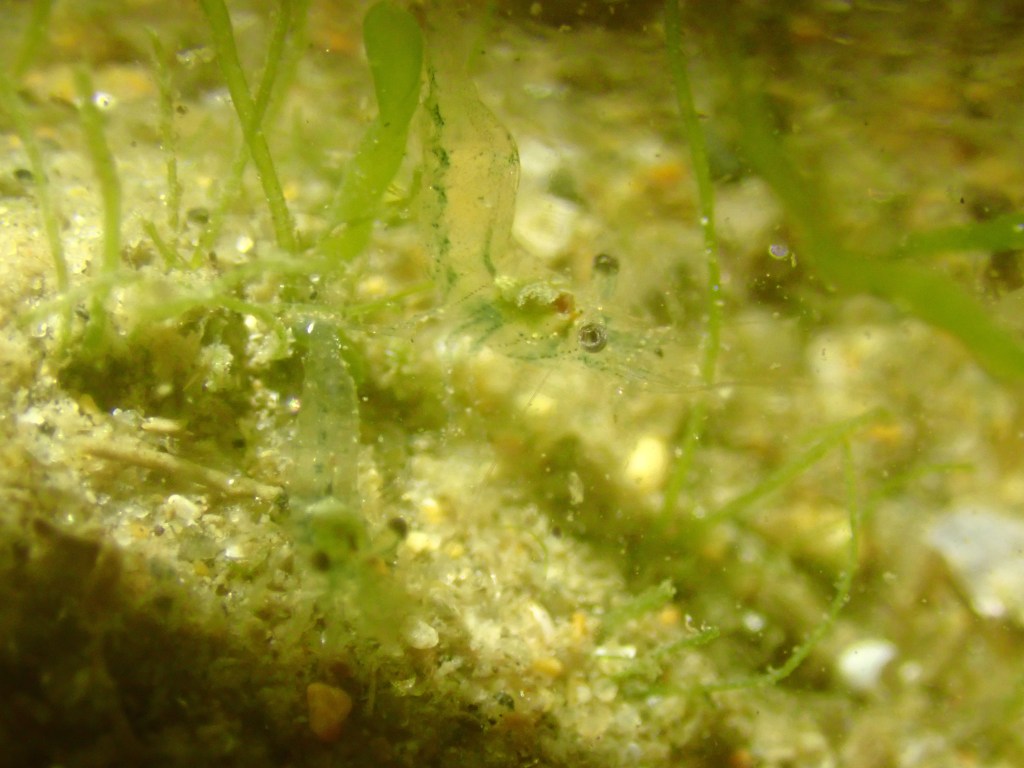
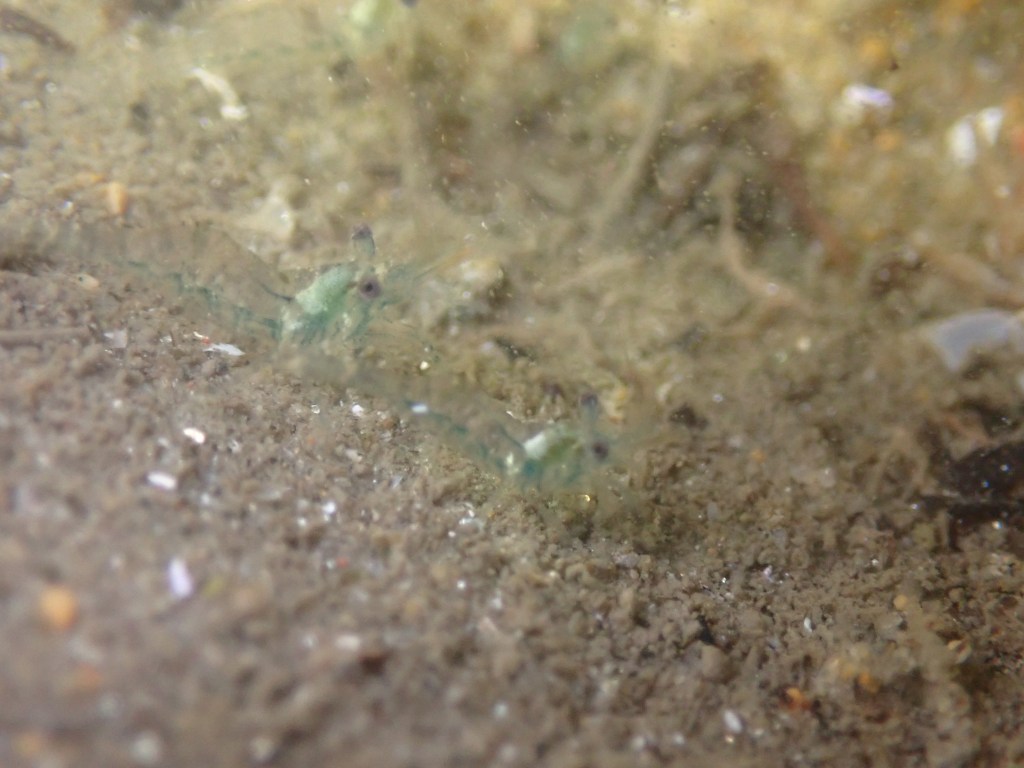
The early morning also provided several jointed-limb creatures for us to see. I spotted a tiny, sand-covered sea spider that I haven’t been able to identify, along with several rock crabs and a porcelain crab. Perhaps my favorite of these was the shrimp with entirely transparent bodies but for thin green markings on their sides and heads. There were dozens of these shrimp at only a couple of millimeters each, but they were so camouflaged and so small that I almost missed them completely.
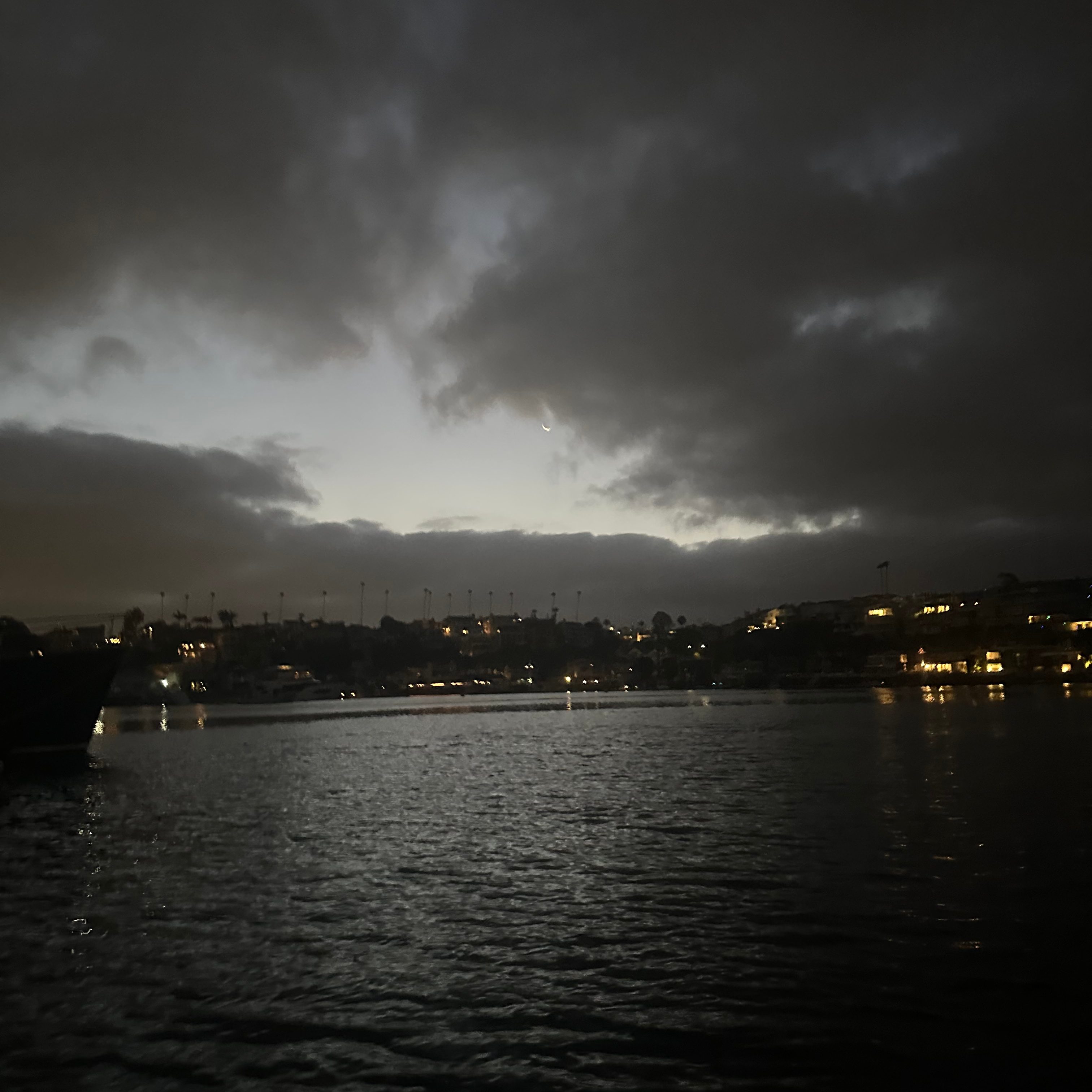
After we had made our way east as far as the deeper water would allow along a harbor sea wall, we decided to turn back toward the cars. Ordinarily, at low tide, this beach has significant sand exposed, but now, at only 1.0ft or so, it was entirely flooded up to the sea wall! We would have to wade to get back to the sand. The moon, which was a few days before new, was up in the east and gave little light as the clouds were still thick. If I turned my dive light off, we were wading up to our thighs in a dark harbor with who knows what swimming at our feet.
The deeper water didn’t deter us from looking for animals though, just a little bigger ones. There were small fish and fry galore in the shallows, sometimes swimming in front of my camera, too close and fast to focus. There were bigger fish too, schooling in the eelgrass and sand flats, and several gobies guarding burrows in the sand.
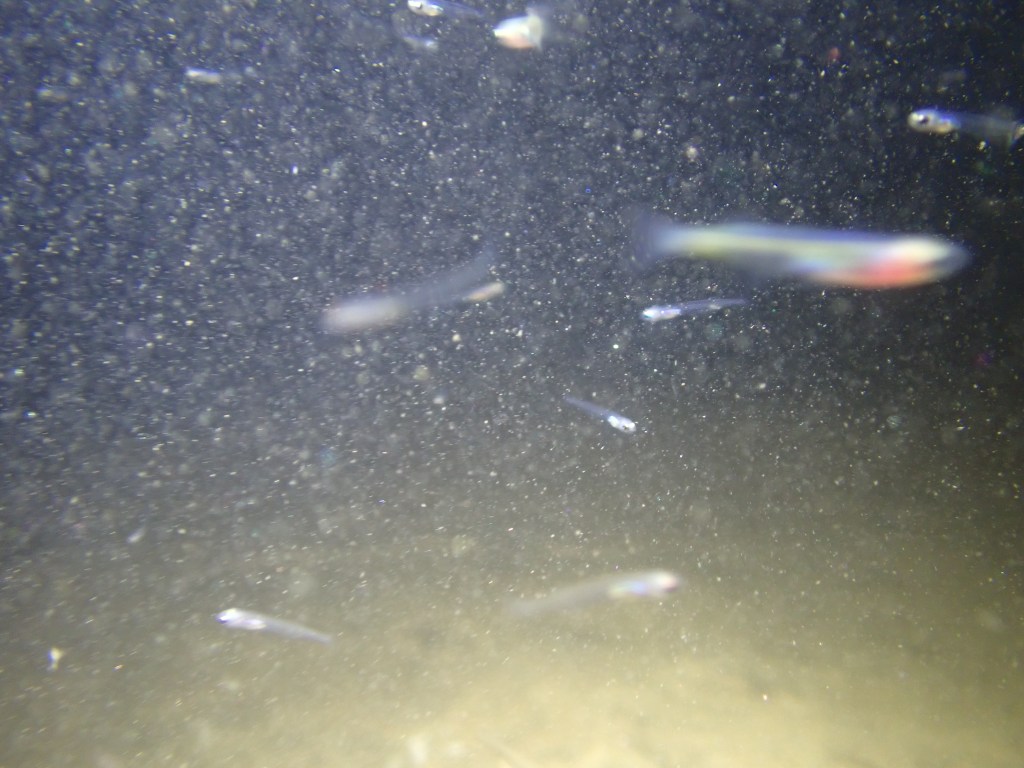
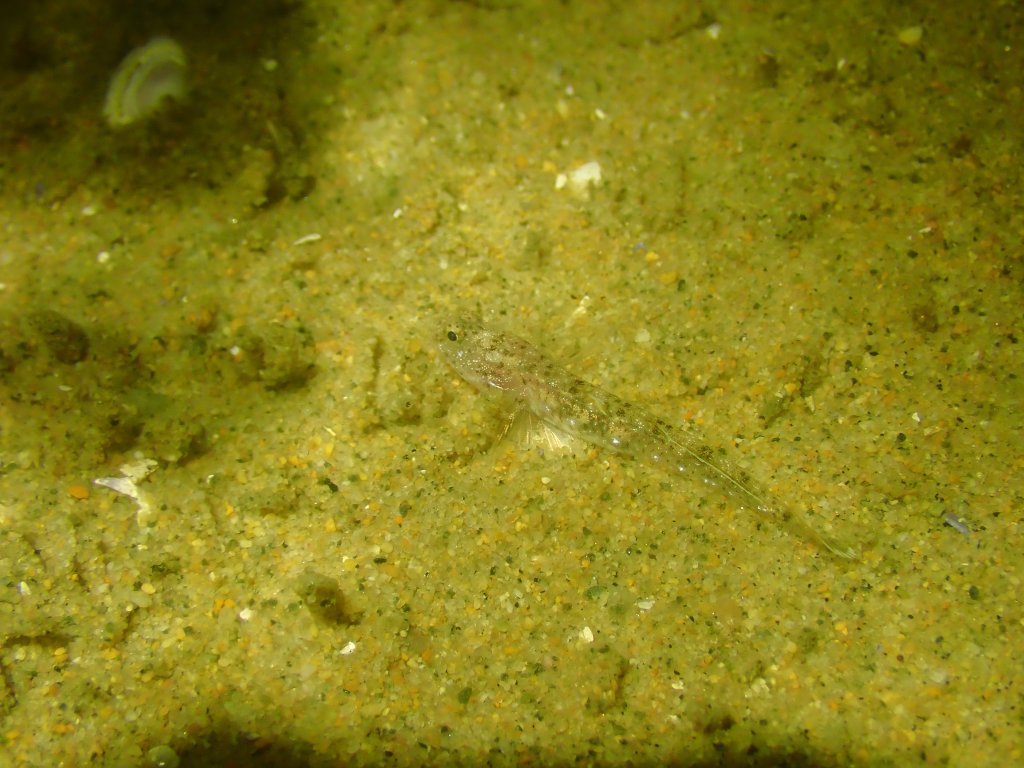
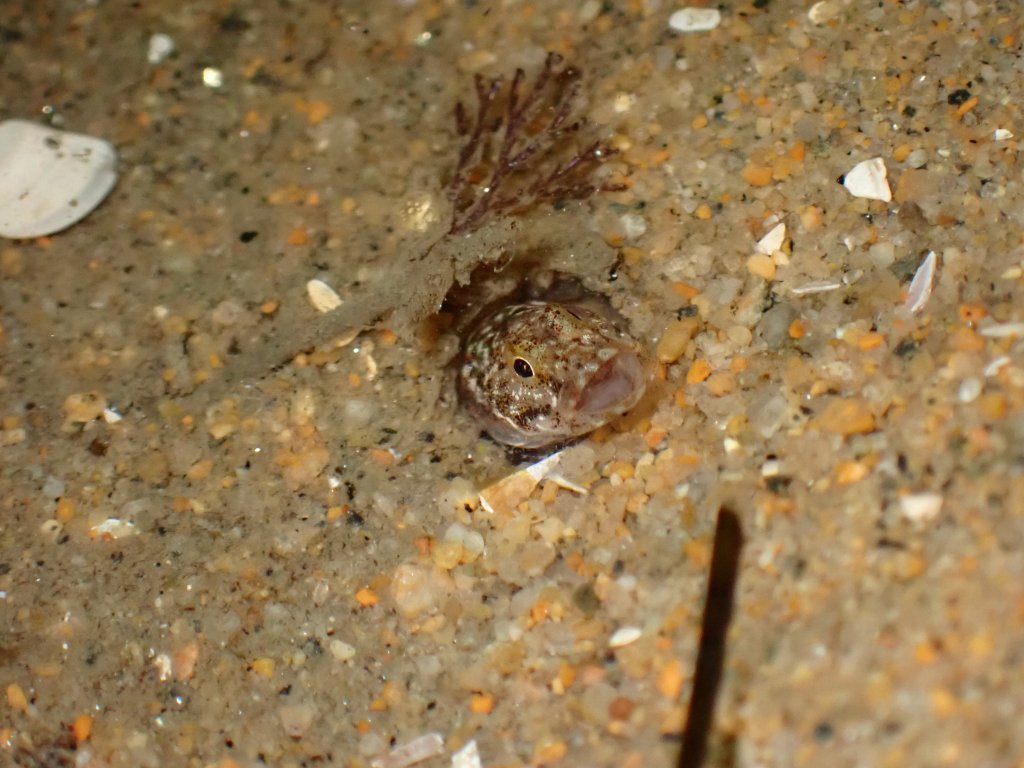
Just past a little dip toward the deeper harbor, I spied what was likely a California halibut (Paralichthys californicus), but he was far enough away, it was difficult to get photos that would confirm this. I also spotted this mystery fish half-buried in the sand, but I have yet to find an identification for him.
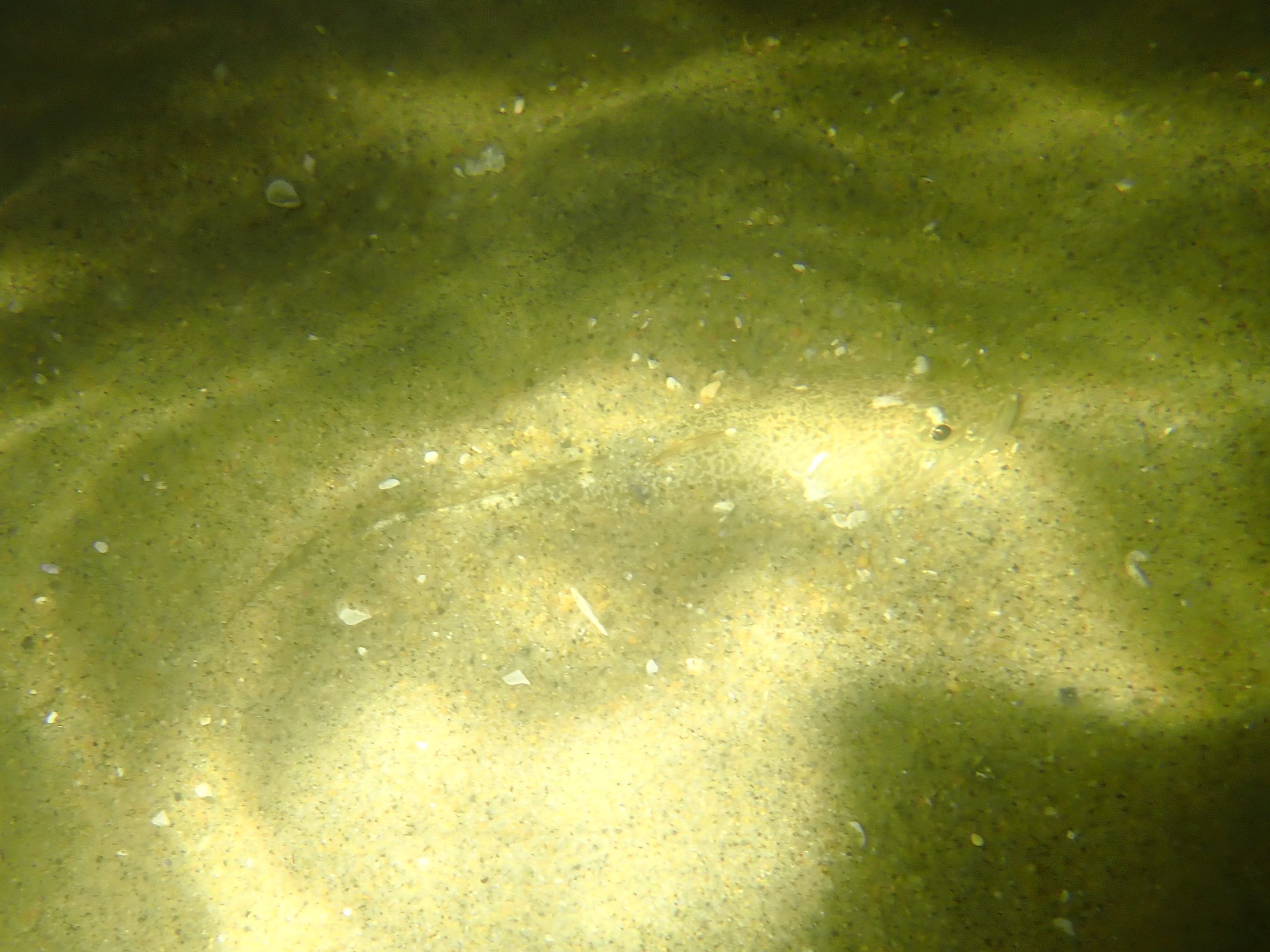
As we trod back toward the cars on the flooded beach, I suddenly pulled up short and called out. I had nearly stepped on a large ray, molted to the color of the substrate, with two pointed wings on either side of its body and no tail. I had no idea what it was. As I moved to take a photo, it jetted off in a puff of sand to a little way away. My friend spotted another one, larger than the first, next to her, and then another, and another! They must have come up to feed when the beach flooded, for only a couple hours before, this sand had been exposed. At the time, we were wary, not knowing if the rays could sting. But we later identified them as California butterfly rays (Gymnura marmorata), a near-threatened species found widely in the Eastern Pacific but seldom seen. I wish I had gotten better photos, but again, the light and silty water made our cameras struggle.
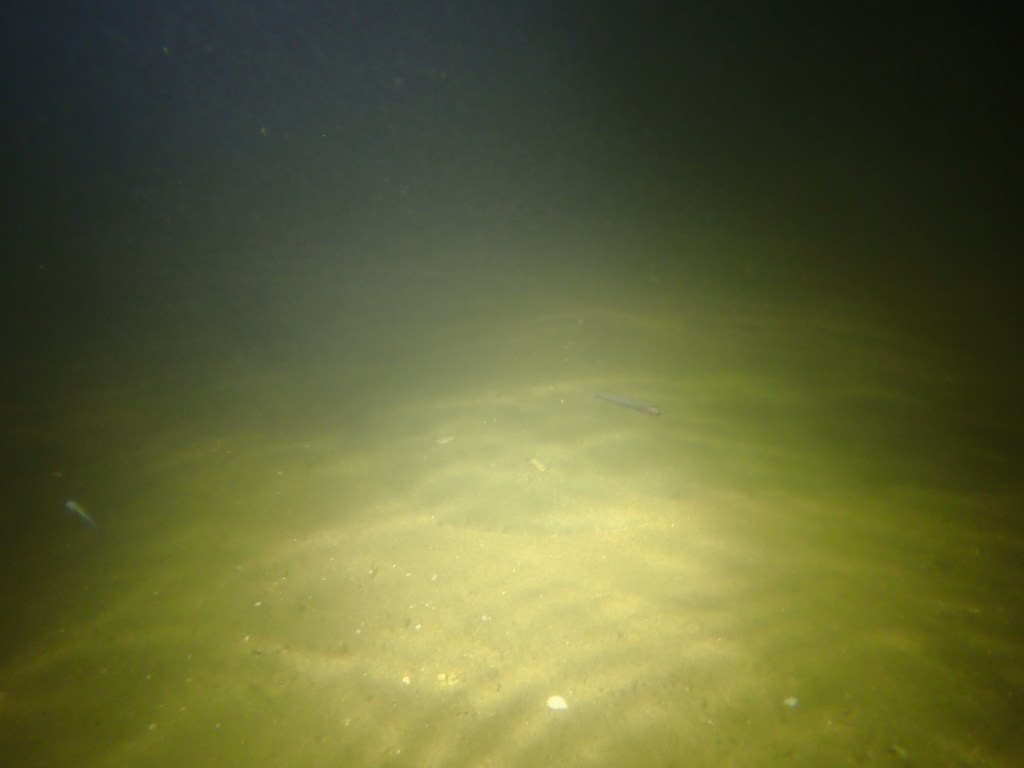
The clouds were lightening from deep blue to gray by the time we rinsed our equipment and made it back to the cars. As I drove back to sleep for a few hours, the first commuters were heading to work.

Categories
tags
Subscribe to the blog
Sign up to receive weekly emails with tide pooling information and guides so you never miss a post!

 The Tide Is Out
Leave a comment