
6 Best Southern California Tide Pooling Spots from North to South
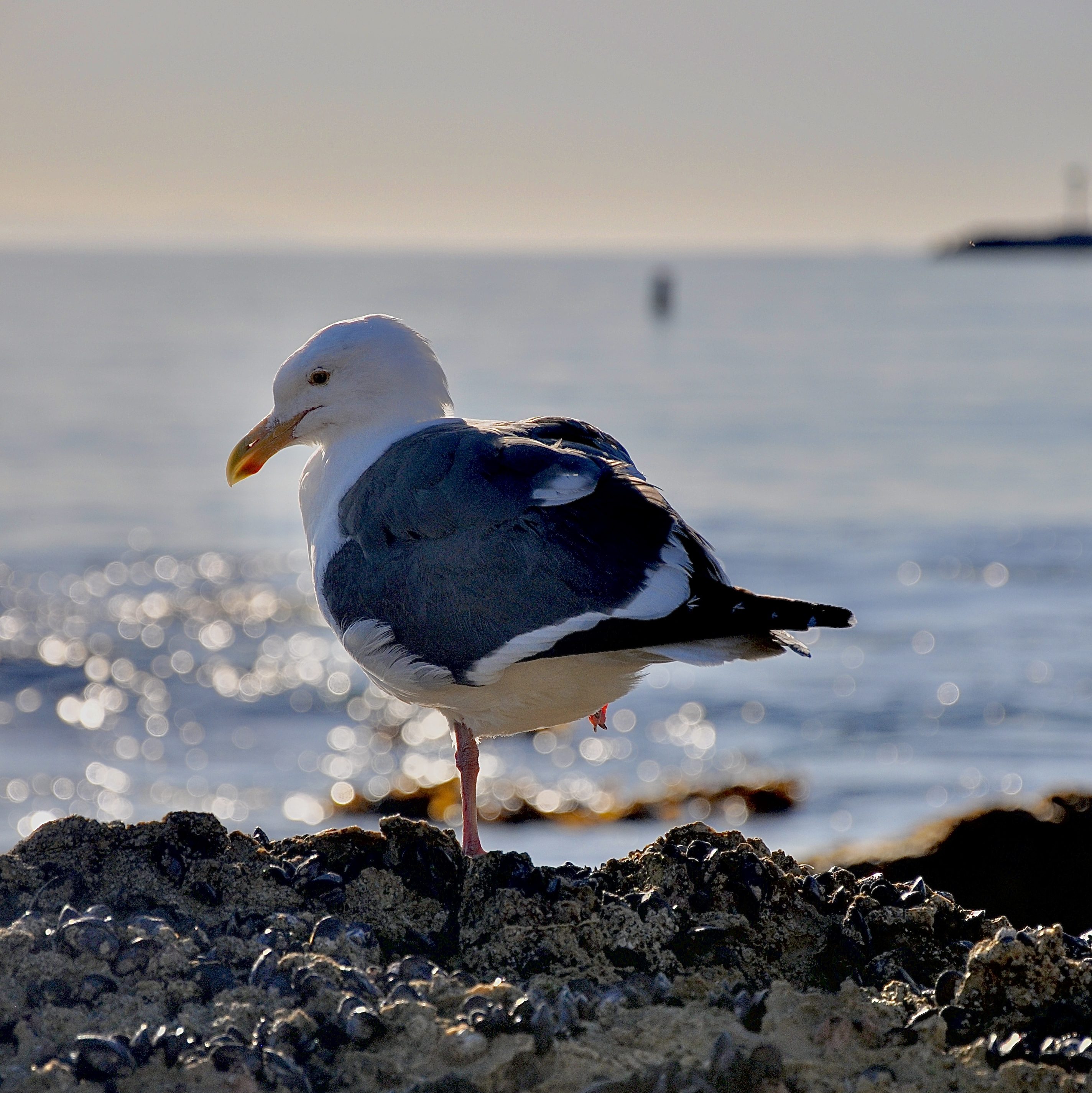
It’s no secret that Southern California is a hot spot for tide pools. This stretch of coastline from Los Angeles to San Diego is bursting with marine life as cold, nutrient rich water from Alaska meets the warmer, calmer waters off the coast of Mexico. Plus, with easily accessible sandy beaches punctuated with rocky shoreline, the tide pools here are accessible to almost everyone who are out and about.
With so many options, it’s important to pick the tide pool location that will offer the best experience, whether you are searching for very specific and rare nudibranch or taking your kids to explore the tide pools for the first time.
I’ve complied a list of the best tide pools in Southern California based on a variety of factors. All of them boast abundant and beautiful marine life, but each have their own advantages and drawbacks. Below, we’ll break down each one so that you can visit the tide pools best suited to you.
- Little Corona Del Mar Beach
- Crystal Cove State Park
- Laguna Beach
- Dana Point
- La Jolla
- Point Loma Peninsula
Little Corona Del Mar Beach
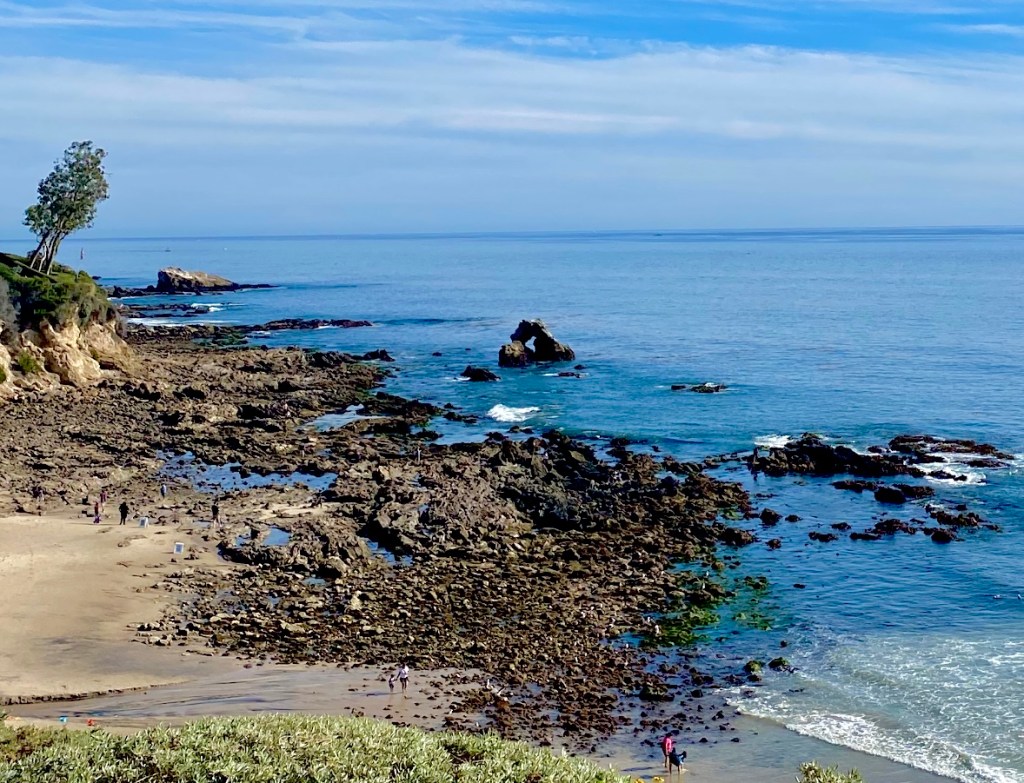
The most northern tide pooling spot on this list, Little Corona Del Mar beach is a tiny tide pooling gem among the bustle of Newport Beach. The small beach is the much less visited sister to Corona Del Mar (meaning “crown of the sea”) just to the north, a wide open strip of sand hemmed in by a jetty on one side and a rock point on the other. But instead of visiting the extremely popular beach, tide poolers prefer Little Corona, just south around the rock point from “Big Corona.”
This small cove offers tide pools to the north and south that boast abundant marine life. Crabs, urchins, sea stars, tide pool sculpin, anemones, mussels, barnacles, nudibranchs, octopus, and sea hares are all commonly seen here. Perhaps the most distinctive aspect of Little Corona is the abundance of Hopkins rose nudibranchs, bright pink sea slugs that dot the sea grass. They seem to be particularly fond of this area.
Little Corona is a Marine Protected Area, which means no collecting of any kind is allowed. It’s extremely important to follow this law to preserve the environment for years to come.
Getting there and accessibility
Little Corona is easily accesible off Pacific Coast Highway from the Corona Del Mar neighborhood in Newport Beach. You will need to weave through some neighborhoods to reach the coast. Unlike its larger counterpart a couple hundred yards to the north, Little Corona does not have a designated parking lot. Parallel parking along the street is the only close option and it can be crowded. Access to the sand is by a long and steep paved hill with no mandatory stairs. Be prepared for hiking back up this hill at the end of the day. The sandy beach is small and the rocks quickly become the dominant feature. The tide pools on the south are generally better for wildlife as they create deep tide pools instead of the shallow, fast moving water to the north. Some sections of the rock are quite angled and they are not the easiest tide pools to traverse once you reach the mid-intertidal zone.
Who is it Great For?
This spot is great for avid tide poolers as the marine life is excellent and there are lots of tide pools to explore. You can traverse the rocks south for multiple miles, continuing to explore less frequented areas if it’s busy.
Little Corona is also great for those exploring the tide pools with kids. A wagon or beach cart is helpful for getting everything up and down the hill, but otherwise this beach is perfect. Many of the pools that boast anemones, hermit crabs, and small fish are easily accessible without climbing over sharp rocks. Plus, the cove is protected from the surf, so it’s safe for the little ones to play in the waves. This was the first tide pooling area that I visited as kid.
Crystal Cove State Park
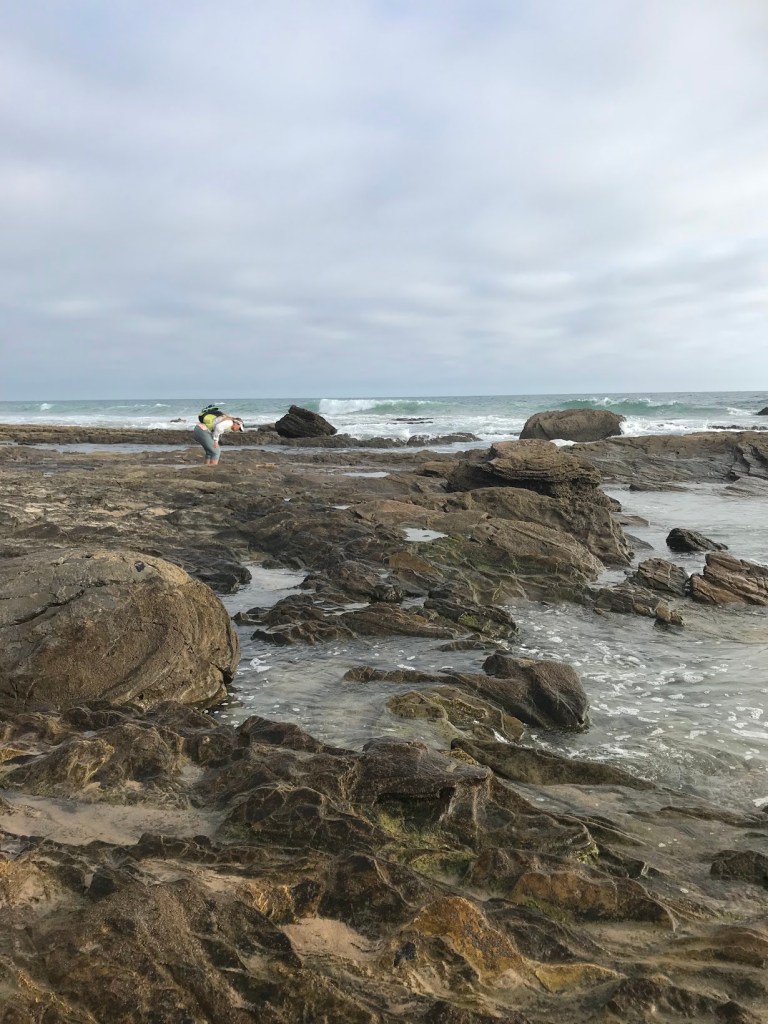
Just a few miles south of Corona Del Mar is Cyrstal Cove State Park, known for it’s excellent hiking trails and beaches. The tide pools here are a connection of the same rock formations of Corona Del Mar. In fact, if the tide is low enough, you can rock scramble from Little Corona to Little Treasure Cove, one of Crystal Cove’s best tide pools spots, but I don’t recommend doing this. It can only be done at low tide and you wouldn’t want to get cut off from your car by the tide.
There are several sections of tide pools at Crystal Cove, which we’ll discuss below, but they all boast phenomenal intertidal life. All the common tide pool creatures such as shore crabs, anemones, urchins, and the like can be found here. Little Treasure Cove is by far the best of the tide pooling areas, specifically known Spanish shawls, a purple and orange nudibranch.
Crystal Cove is also a Marine Protected Area, so leave you buckets at home.
Getting There and Accessibility
Crystal Cove is located right off Pacific Coast highway between Newport and Laguna. The main entrance is the most southern one, but the tide pools are found at the northern entrance: Pelican Point. This entrance will bring you to a large bluff parking lot. Because the area is a state park, there is a $15 parking fee upon entry. There are both stairs and steep paths down to the beach. The best tide pools are to the north, with Little Treasure Cove having the most abundant marine life. This area is the most northern section of Crystal Cove and encompasses various rocky outcroppings and small bays. There are also less phenomenal but still good pools to the south if you don’t want to rock scramble at all.
Who is it Great For?
Crystal Cove’s best tide pools require a good deal of rock scrambling to access, making it better suited to avid tide poolers. However, if you’re looking to have a beach day and maybe poke around in some tide pools, then the pools of Pelican Point are a great option as the sandy beach is expansive.
laguna Beach
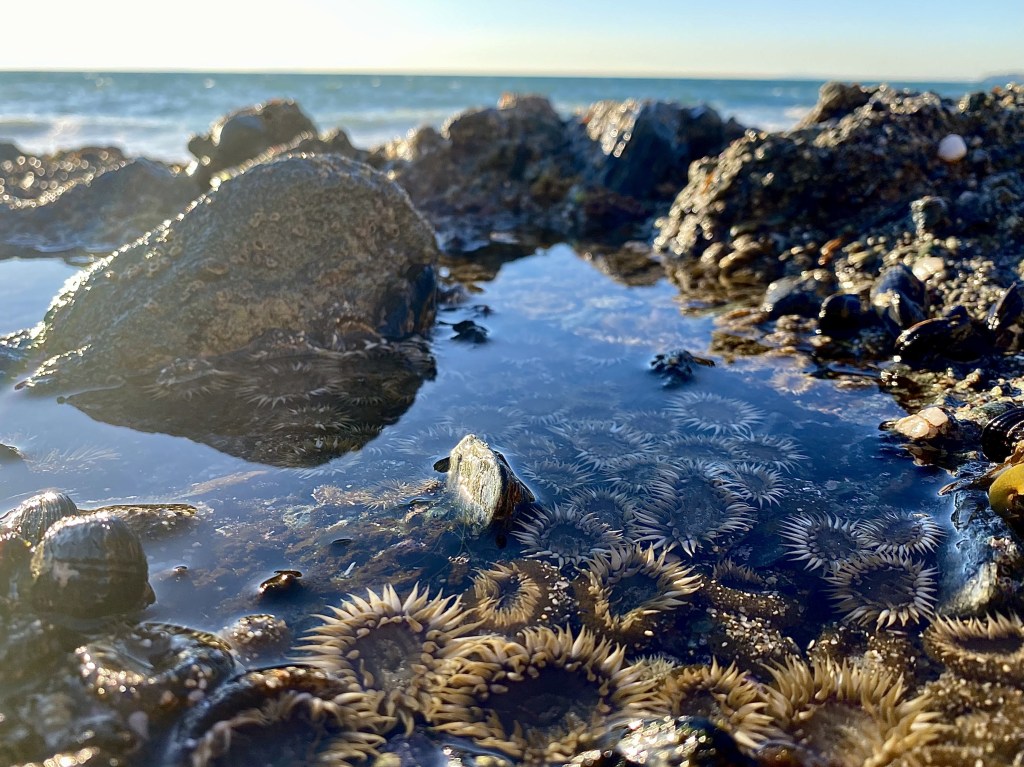
Continuing south on our journey down the SoCal coast looking for tide pools, we’ll soon come to Laguna Beach, a expansive area with multiple bays and tide pooling spots. The beaches can be crowded here, but the tide pools are expansive and you can usually find fairly quiet places. If you take the time to climb up to some of the less frequented tide pools, keep your eye out for Christmas tree worms. Common through the California coast, Laguna is known for having an unusual density of these beautiful and delicate creatures along with other kinds of Polychaete worms.
Laguna Beach’s tide pools are also part of Marine Protected Areas. If you get the trend here, prohibiting collecting at these tide pools is what makes them as abundant as they are.
Getting There and Accessibility
This strip of coastline is located along the edge of the city of Laguna, near the downtown area. Parking is a mix of metered street parking and public lots. The beaches are strung together in a series of bays that usually require climbing up on a bluff to get from one to another. The best tide pools are on the north and south ends of Crescent Bay, just south of the large Emerald Bay, and along the shoreline between Picnic Cove and Pelican Rock that forms Heisler Park. Ease of getting to the tide pools in Laguna will depend on which location you choose, but generally they require only some moderate beach walking. To get to the pools with better marine life, however, some rock scrambling will be involved.
Who is it great for?
Laguna is a great place for avid tide pooler and beginners alike. The rocks are fairly easy to traverse and the marine life is abundant. You can chose how far you’d like to rock scramble and see animals in any pools you choose. The beaches can be very busy, however, so if crowds aren’t your thing, you’d be better off choosing a different location. On the other hand, if you want some time to walk around the trendy downtown and beachy shops after exploring the beaches, Laguna is the place to go.
Dana Point
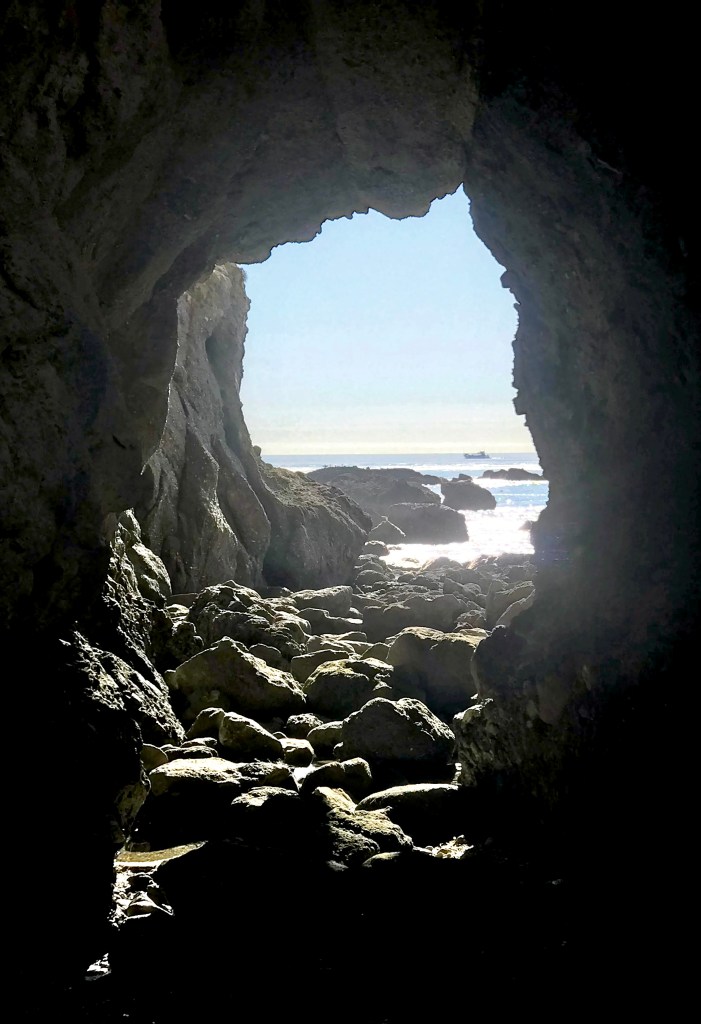
About midway between our most northern beach and the most southern tide pooling spot is Dana Point. While it is perhaps the least spectacular of the tide pooling spots on this list, that doesn’t mean it isn’t worth a visit. The main pools are just off the headlands a few hundred yards to the north. These pools offer fewer unusual species, but still boast many ochre sea stars, urchins, abalone, and shore birds, and some marine slugs. Because of their proximity to the harbor, some tide pools will also dock foul while at Dana Point, an activity similar to tide pooling that involves looking under floating docks for animals instead of in tide pools.
There is also a dry sea cave that visitors to get to by walking north along the coast. The cave can only be accessed at low tide and you will have to “spider-walk” (a hand and a foot on one wall and the others on the other wall) or wade through water to get inside, where you will find a dry cavern open to the sea.
Getting There and Accessibility
Dana Point Headlands is just north of Doheny Beach in the city of Dana Point. Drive pass the harbor and park at the Ocean Institute (well worth a visit if you have time). You’ll then walk passed the Ocean Institute, down the stone steps to the sand, and to the north for the best pools. The rocks tend to be bigger here than at other tide pooling spots, so the going can be slower, as it is more akin to rock scrambling than walking.
Who is it great for?
The Dana Point tide pools are best for those comfortable traversing the bigger rocks. Avid tide pooler do frequent the area, but the lack of deeper, consistent pools make the marine life less abundant. The headlands are great for families with older kids that want to explore the larger rocks and the sea cave at the end of the shoreline.
La Jolla
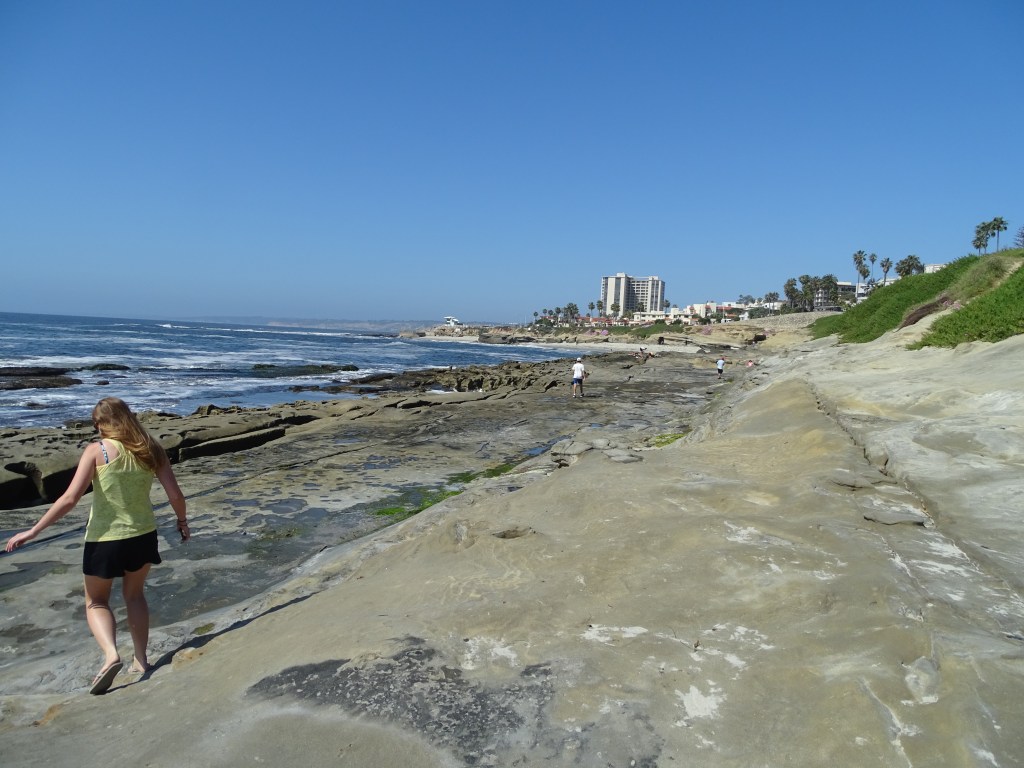
Boasting some of the most vibrant tide pools on our list, the area of La Jolla in the city of San Diego is a must-visit tide pooling destination. With various tide pooling locations and some awesome snorkeling spots, this beach town really has it all. The tide pools here are busting with life, a favorite among tide poolers for its abundant nudibranchs and other unusual creatures. La Jolla is also famous for its pinniped population, especially its California sea lions and Pacific harbor seals that are often seen lounging on the beaches or playing in the surf. The area also boasts a large leopard shark population in the summer months when the water is warmer.
Again, the La Jolla tide pools are part of a Marine Protected Area. Treat all animals with respect and do not approach the seal or sea lions. This area as a famous tourists destination, so it’s important to set the right example for those who are uneducated about the wildlife on our shores.
Getting There and Accessibility
La Jolla is rather accessible, although the area is very busy and parking is almost exclusively on the street. The town is just north of Mission Bay in San Diego and stretches a fair bit of coastline.
There are three awesome tide pooling areas here. The most northern is the coast opposite Cuvier Park. You can find concrete steps to the beach from here that give you access to the rocks. The central tide pooling spot is Bird Rock, well known for nudibranchs. These pools are at the intersection of Bird Rock Avenue and Dolphin Plaza, but you will need to park elsewhere and walk. The most southern of the spots here just a short walk from Bird Rock at Bird Rock Waterfront Park. Access to the beach is by steps and a large path.
Who is it great for?
La Jolla is great for all kinds of tide poolers. It is especially popular with avid tide poolers who like come here at low tides early in the morning or late at night at avoid the crowds. During the day, this area can become very crowded, so think about moving on to another location if you don’t like crowds or don’t want to deal with parking.
There are plenty of sandy beaches for the kids to play on as well as the seal and sea lions that will capture everyone’s attention.
Point Loma Peninsula

Almost as far south as you can go in the United States before reaching Mexico, Point Loma Peninsula is the land feature that creates San Diego harbor. At the end of this peninsula is the Cabrillo National Monument, a tribute to Juan Rodriguez Cabrillo, a Spanish explorer who led the first European expedition to what is now the West Coast. At the end of the peninsula, visitors can drive down a windy road to the rock coast on the windward side of the peninsula to visit some of the best tide pools around. This area is also known for stunning rock formations and large open pools. Animals that you might find in these tide pools include sea slugs, anemones sea stars, an abundance of shells, and tide pool fish such as wholly sculpin and various bennies. There is also a lighthouse and visitor center here that are both worth checking out.
Getting There and Accessibility
Point Loma is at the southern most tip of the Point Loma peninsula, passed many neighborhoods and a military cemetery. You will have to enter the national monument to access to the tide pools and the fee for a vehicle is $20. Once inside, you will drive down a winding down to your right and park in the lower parking lot. Some of the tide pools are rather accessible with concrete steps leading down to the water, but others require walking on steep, dirt paths and scrambling over rocks. Please be careful while rock scrambling as Point Loma has a few large crevasses that would make nasty falls.
This area doesn’t offer a sandy beach to relax on, so if you’re looking for a beach and tide pool double date, you would be better off choosing one of the other locations on this list.
Who Is it Great for?
The tide pools at Point Loma Peninsula is great for beginners and avid tide poolers alike as the marine life is abundant (although not like La Jolla or Corona Del Mar), and they are fairly accessible. If you don’t have a lot of time to spend, the $20 entrance fee can seem hefty. Point Loma is also a bit of a drive even if you life in San Diego due to do winding through neighborhoods. I’d recommend this tide pooling spot mostly to those interested in history instead of beach lounging, as the historical site on the bluff worth visiting.

Categories
tags
Subscribe to the blog
Sign up to receive weekly emails with tide pooling information and guides so you never miss a post!
 The Tide Is Out
Leave a reply to The Hopkins Rose Nudibranch –That Bright Pink Sea Slug – The Tidepooler Cancel reply