
Too Small To See
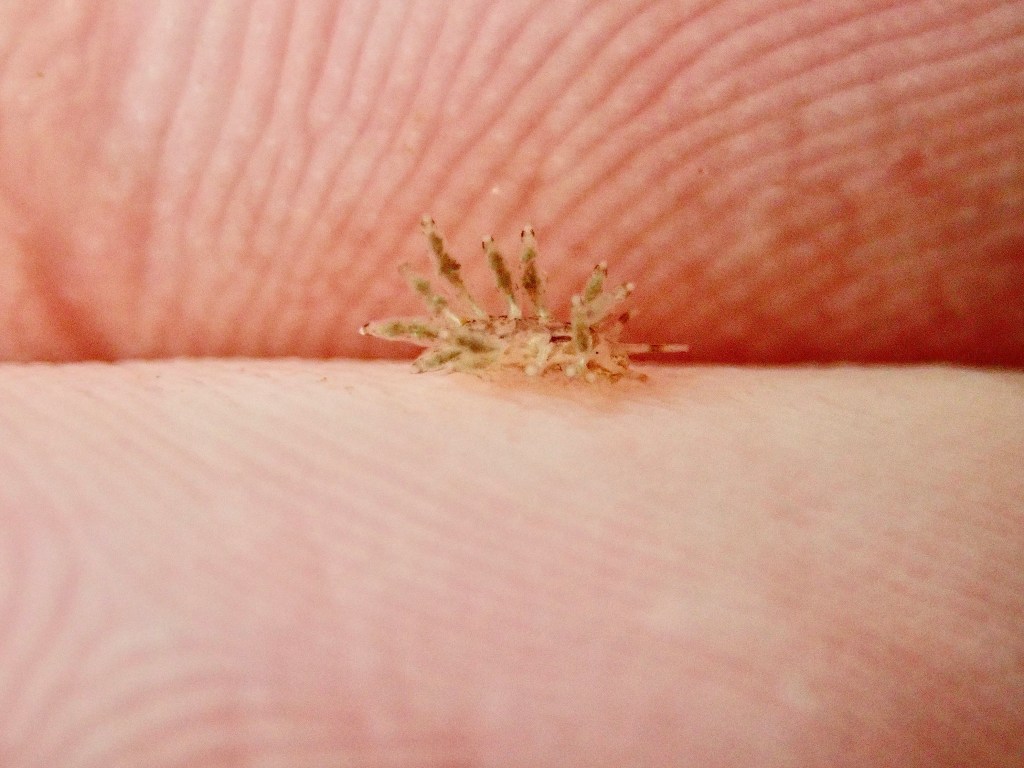
Most animals that live in the intertidal are small on most scales. Certainly on the human scale, you won’t often find anything that isn’t several dozen times smaller than you.
I rather like this aspect of the tide pools, but even I must admit that some animals are simply too small. I don’t mean the microscopic ones. I mean the ones just large enough to see that they exist with the naked eye, but small enough that you can’t make out much detail. I’ve caught drifting sea slugs so small I can make out the individual lines of the fingerprint in the image (see example above). These single-digit millimeter animals challenge my love of the small, my back in straining to get closer, and my eyesight for picking out small details.
Although, I have been surprised by how much detail I can see on the smallest of slugs, even from standing up. I’ve seen this in other seasoned tidepoolers as well. They will see a speck across a pool a few feet away and can identify the slug to the genus level. Of course, some of this information is gathered from behavior, movement (or lack thereof), and location.
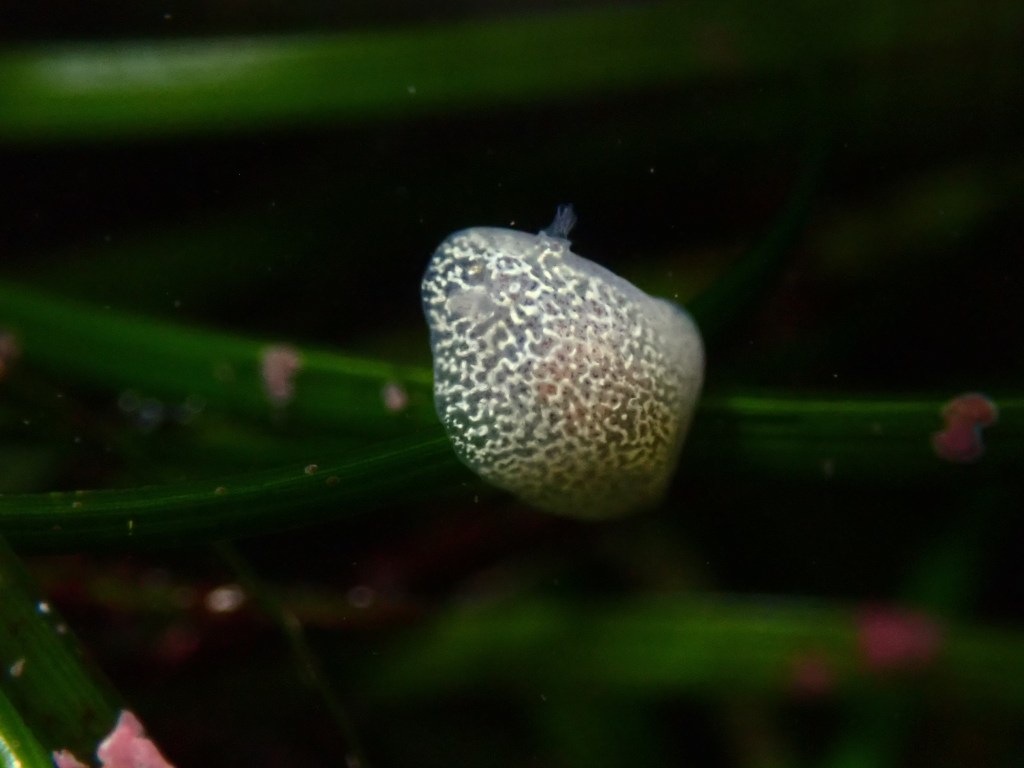
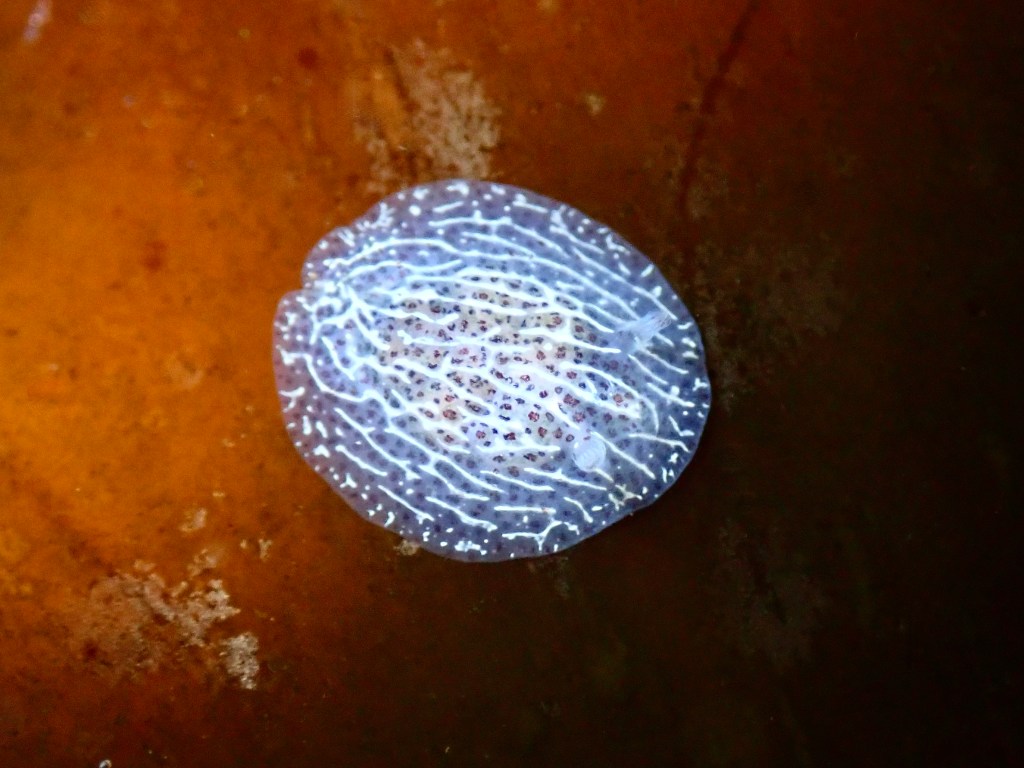
But even the best of us cannot tell a minute pacific corambe from a minute steinberg’s corambe with only our eyes. For that, we need our macro cameras.
The macro camera is a second set of eyes to the tidepooler, acting as both camera and magnifying glass to identify animals. I catch myself spotting an animal and immediately putting my camera between me and it. Of course, I’m not actually seeing it, but the image my camera screen is reproducing of it. Can I even call this seeing a creature? If I saw a picture of it online, I wouldn’t say I’ve seen it. If I saw a video of it, ditto. If I saw a live webcam of dolphins in the next room at an aquarium, I wouldn’t say I’ve seen them, even though they were near me and my view was live. How is my camera in the intertidal any different?
And does this really even matter? So what if we view nudibranchs and dolphins and most of our lives through technology? What difference does it make, except the plausible harm of blue light?
When I find myself only looking at my camera screen in the tide pools, I remind myself to pull it away and observe the animal, for just a moment, how it actually is, how it actually looks to my eyes. Usually, this reminds me how incredibly small it is. Occasionally, if I am being reflective, it reminds me that wonder is given by the animal and its maker, not the photographs and their maker. I won’t go into my obsession with getting good photos here.
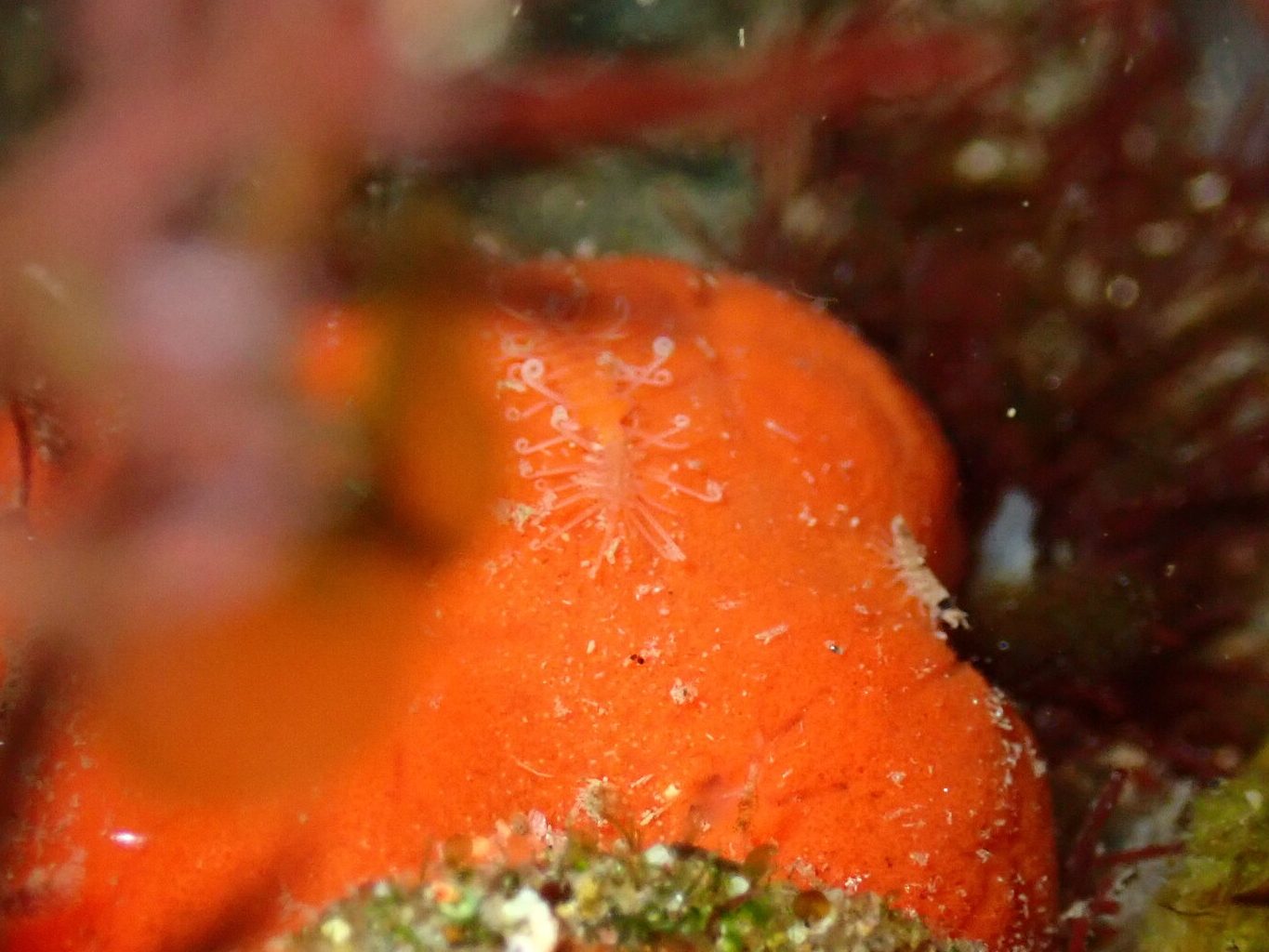
Once, I saw an animal in my photos that I didn’t see in real life. I was ecstatic as it was a worm I had never seen before, and even our local annelid expert couldn’t ID it. It’s likely this worm has never been photographed before. It’s likely it has never been seen, even by me.
Recently, while out on the rocks, I spoke to one of the little animals, my current photography subject, as I often do: “Wait, no! Don’t run away from me!”
A friend overheard me and called from the next pool over, “Well, you know, you are rather big and scary.”

Categories
tags
Subscribe to the blog
Sign up to receive weekly emails with tide pooling information and guides so you never miss a post!
 The Tide Is Out
Leave a comment