
Can I Touch Sea Stars at the Tide Pools?

The short answer: Usually, yes!
Long answer:
Sea stars are some of the most fascinating animals in the tide pools. They are often the biggest animals casual beachgoers will see, so it’s common to ask whether it is safe to touch or hold them. Generally, you can gently touch the sea stars you see in the tide pools or on the shore. Sea stars are echinoderms, so most have rough skin that isn’t sensitive to oils on our hands like other animals. If you see a sea star on the rocks, get your hand wet and gently touch it with two fingers (this is mostly to discourage poking). You’ll likely find its skin bumpy and rough, although some species, like the leather star, are slimy to the touch.
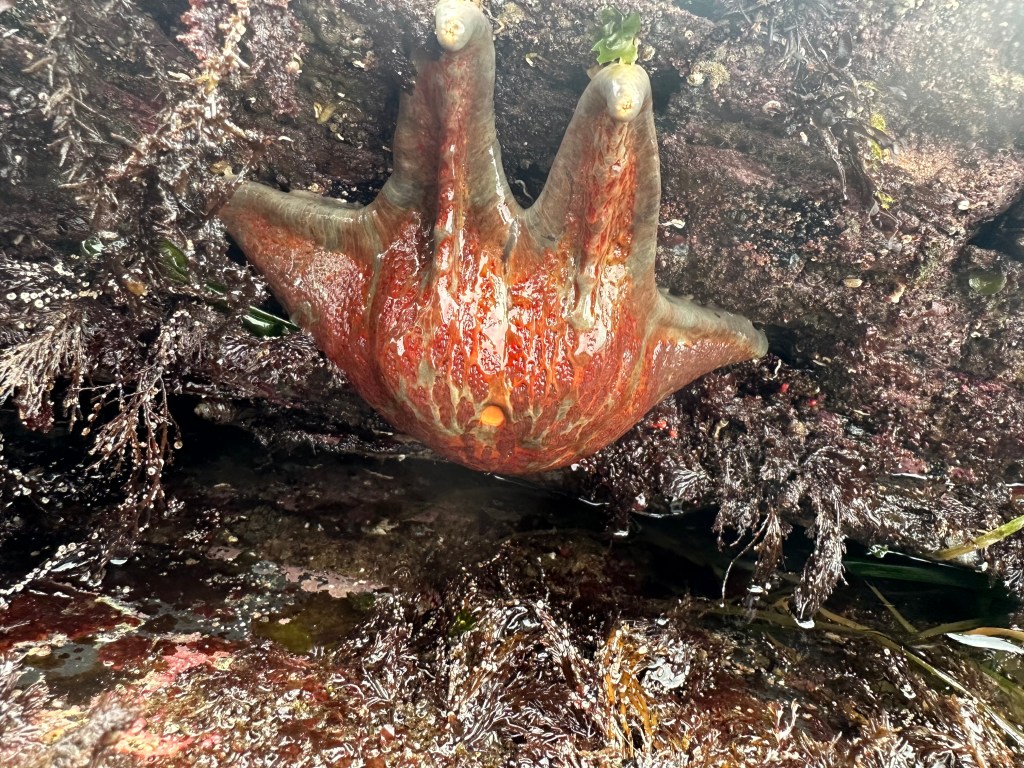
Despite most sea stars being safe to touch, they are usually not safe to pick up and hold on rocky shores. On the rocks, animals rely on being able to hold onto their homes to keep from being eaten or washed away by the waves. Sea stars do this with hundreds of tube feet like tiny suction cups gripping the rock. Pulling a sea star off the rocks will pull off some of its tube feet in its effort to hang out. Not to mention it might not be able to get a firm grip when you put it back before a predator comes and eats it. For these reasons and others, never pull a sea star off the rocks; observe it from where it is.
However, on sandy shores, you can usually pick up the sea stars you see on the sand. In California, these are often sand stars that crawl along the surface or burrow beneath the substrate. These stars aren’t attached to anything solid and thus won’t be harmed if you gently pick them up. You can even turn them over to see their tube feet before gently setting them back down — right side up — on the sand.

Whatever you see at the tide pools, always keep in mind gentleness and handling animals with respect. Never harass or be cruel to animals by throwing them or pulling them apart. Be good stewards of the land and animals for others to enjoy.
Finally, many online sources say that sea stars will die if exposed to air. But this isn’t true since we see sea stars that live intertidally and are exposed to air at low tide frequently. This advice often comes from the aquarium industry. Sea stars you might keep in a home aquarium are subtidal and may die if exposed to air. But the sea stars on the shores are the intertidal species and used to being emersed (exposed to air) when the tide is low, although they will usually huddle in shaded places to keep from drying out. Even if a sea star is out of the water, don’t pull it off the rocks to “help” it back to the water.

Categories
tags
Subscribe to the blog
Sign up to receive weekly emails with tide pooling information and guides so you never miss a post!
 The Tide Is Out
Leave a comment