
Tide Pooling Log: Corona Del Mar, December
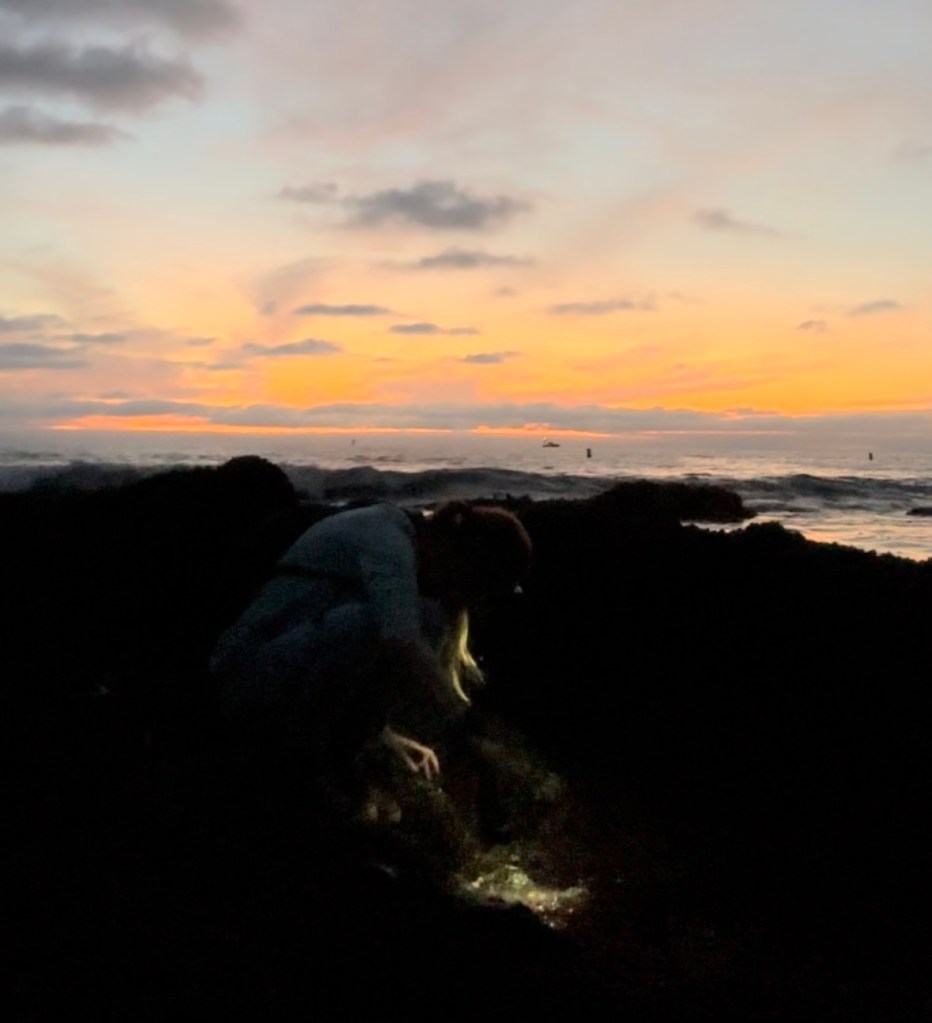
To be quite honest, I prefer tide pooling at night. While often the cold and darkness can make logistics harder, the animals you see are so worth it. There is nothing quite like being on the rocks at night with all the nocturnal animals emerging from their hiding places just after dusk.
Recently, we visited the tide pools at Corona del Mar after dark. While the nudibranchs seemed strangely absent (didn’t see a single opalescent nudibranch which usually dominate after dark with dozens of specimens), many other critters were out, and I saw a variety of animals I had never seen before. Unfortunately, I had camera trouble and had to spend some time working out a memory card issue, but it worked out in the end. Here is a short recounting of what we saw that night.
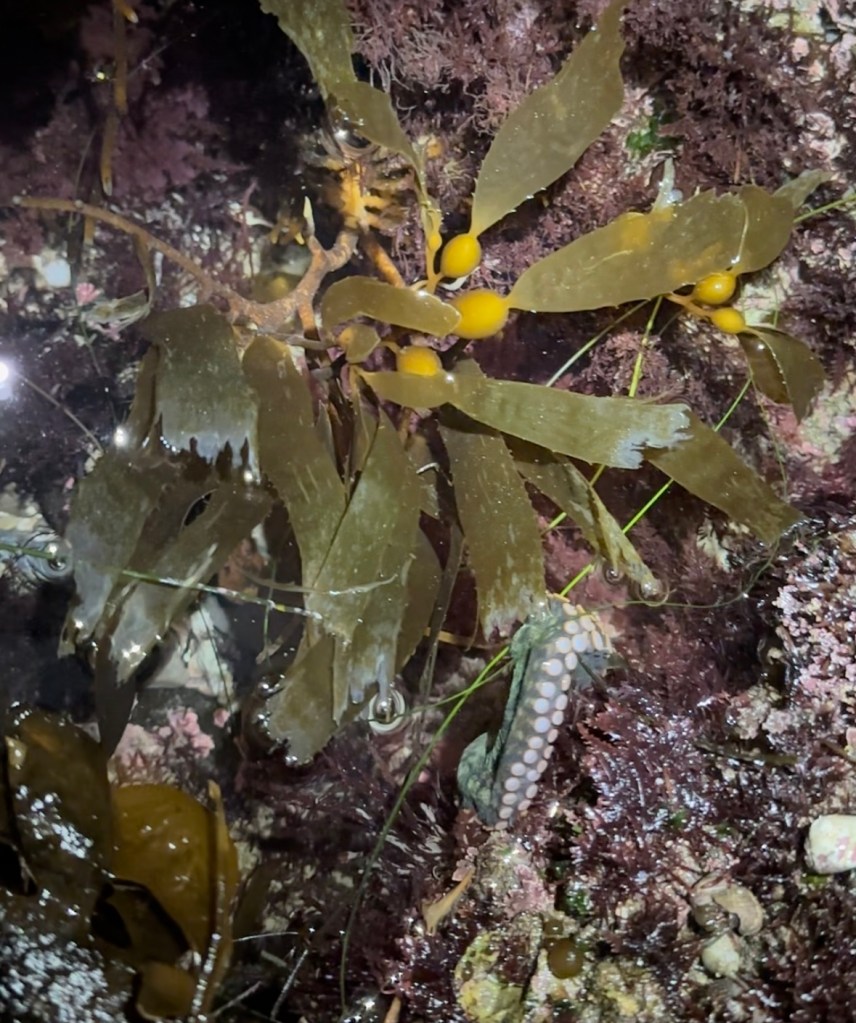
I was crouching on a rock just as my memory card fiasco began. While trying to fix it, a couple octopus arms emerged from under the rock I was on, hundreds of individual succors exploring in and out of the water. I stopped to watch for a moment and appreciated that I couldn’t take any photos. Seldom do I stop to simply watch and not take photos of these amazing animals. After a few moments, I did snap a couple photos with my phone. He has very shy though and wouldn’t come out of his den much more.
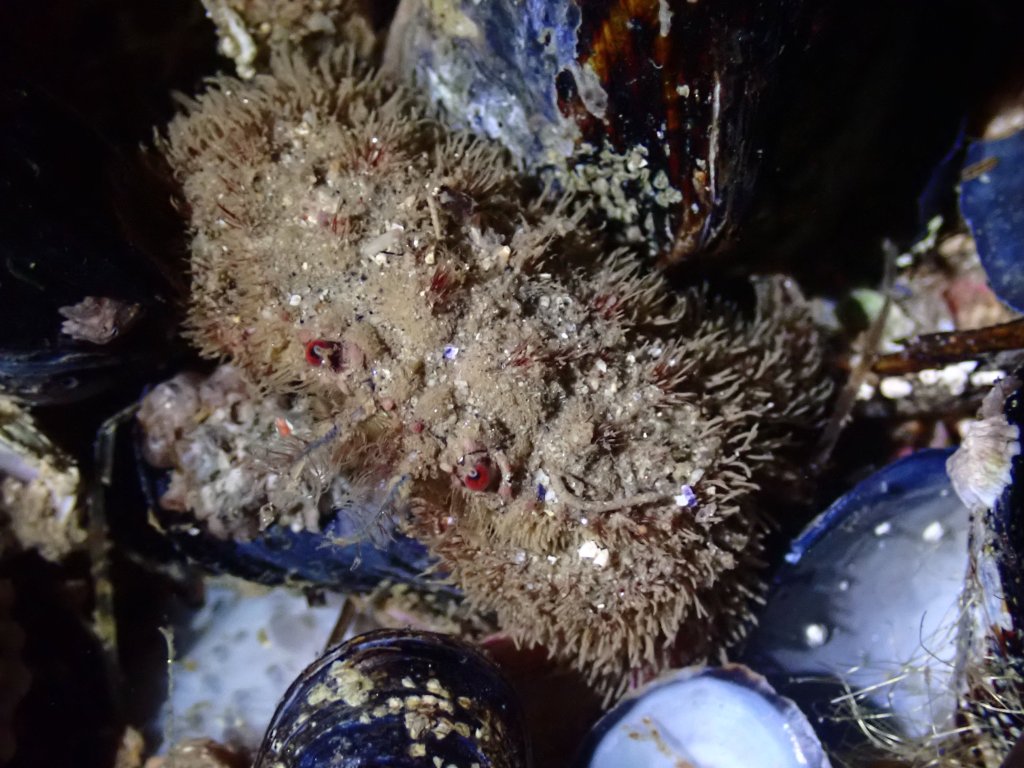
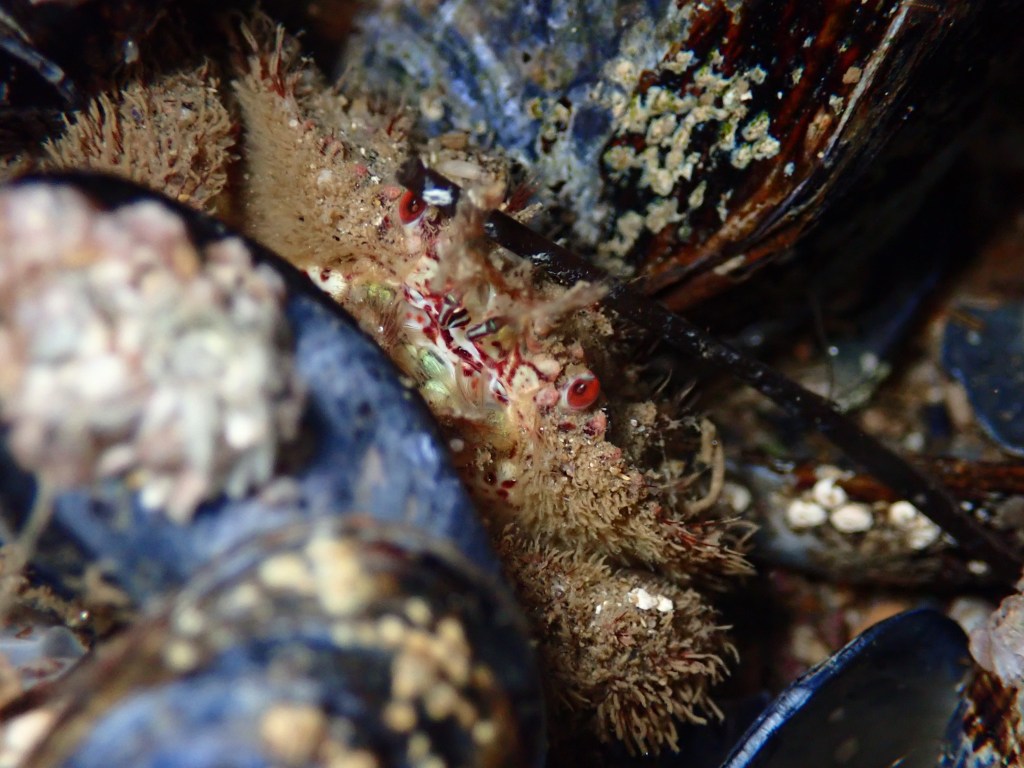
Just after this, while walking back to find a fix for my camera, I saw something I was much sorrier I couldn’t take photos of: a Pacific rock crab (Romaleon antennarium) covered in fuzzy camouflage nestled among the mussels. After spending nearly half and hour working on my camera, I returned to this spot and found him again, still quietly filter feeding, content to remain in the same spot. I took many photos of him, and he was obliging, never moving or shrinking back from my camera.
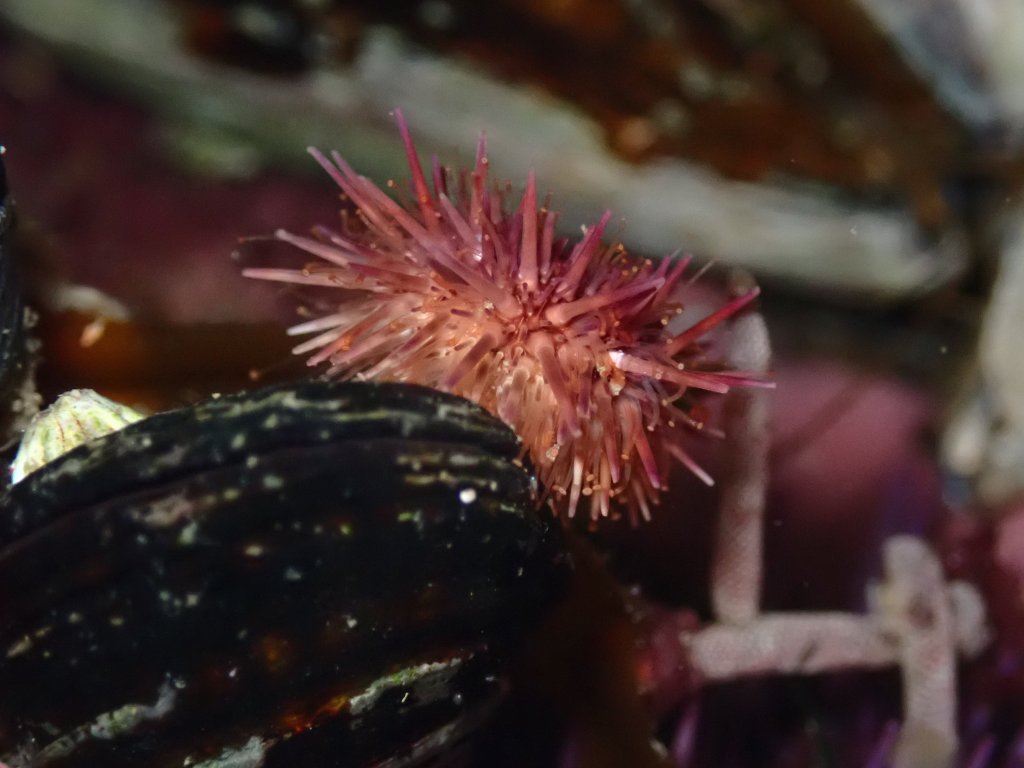
In the same pool smothered with mussels in the mid intertidal I saw a red sea urchin (Mesocentrotus franciscanus), far less common than the pacific purple sea urchin (Strongylocentrotus purpuratus). Mostly nocturnal, these guys come out to graze and scavenge after dark. This one was on the move, with its tube feet extended and moving about. It was far beneath a crevice though, and I wasn’t able to get many shots.
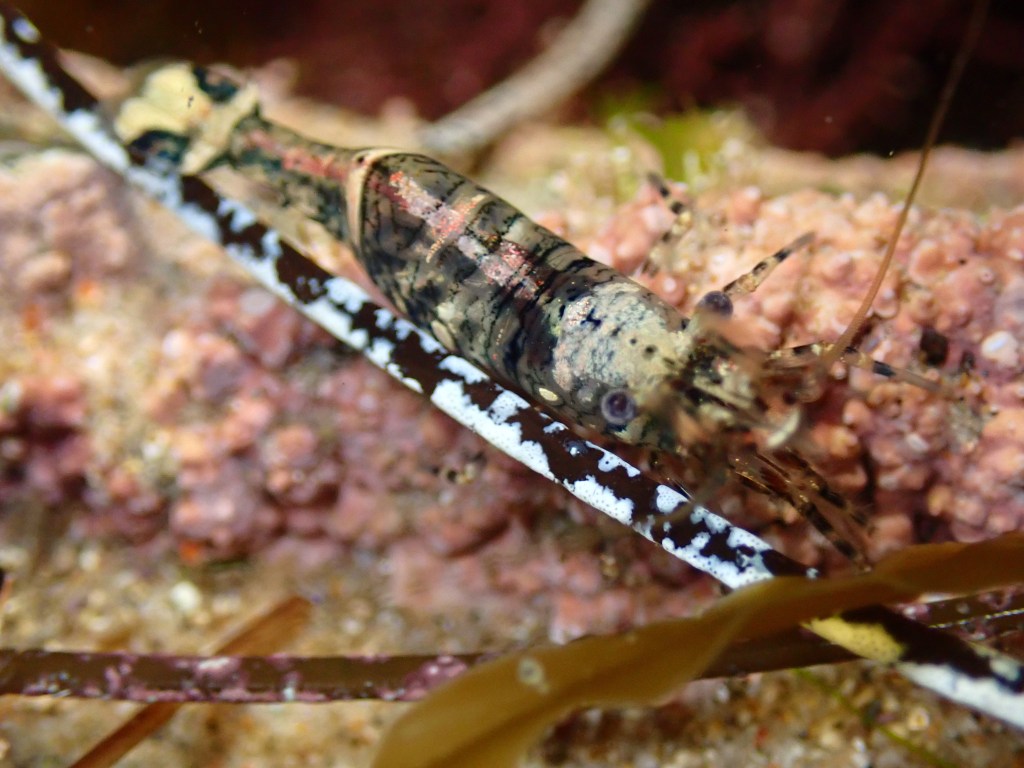
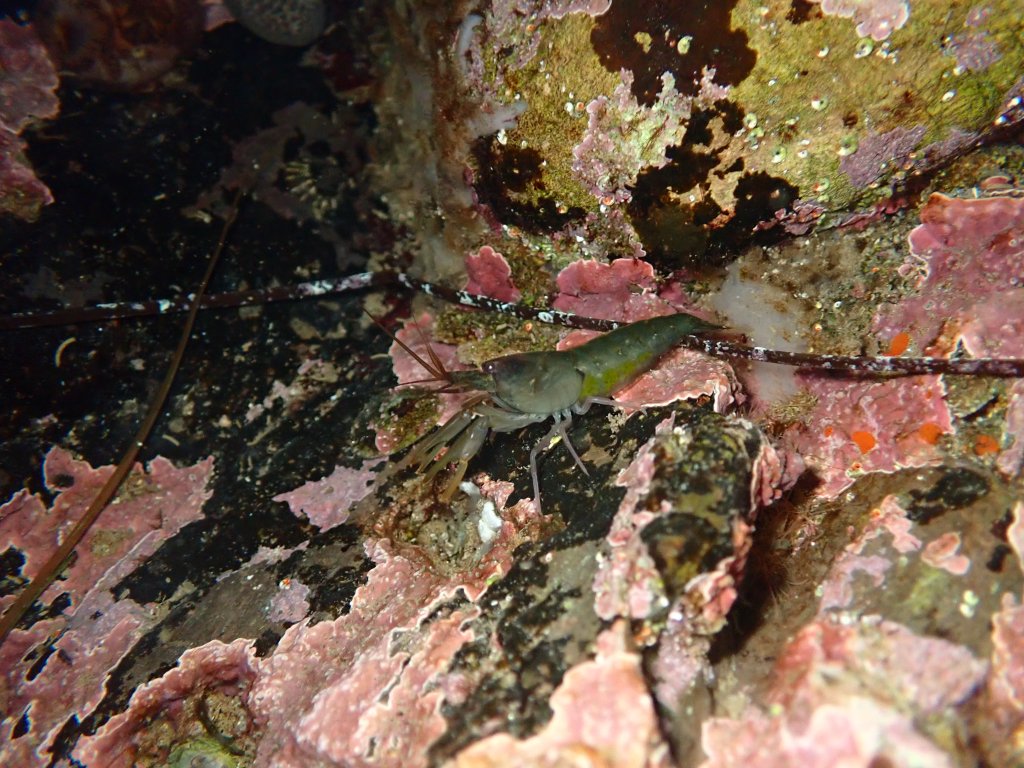
Shrimps were perhaps the stars of the evening. I did see one red rock shrimp but got no good photos of the light averse little guy. The red banded transparent shrimp (Heptacarpus sitchensis) (photo on the left) were also out in numbers. You can see these small shrimp during the day and at night. Of all shrimp you’ll see in the tide pools, these guys seem to be the least skittish and often will let you get close with a camera, unlike other species that flee when you barely disturb the water like the Betaeus longidactylus on the right. No common name for these members of the snapping shrimp family that quickly retreated at my flash. Another new species to me.
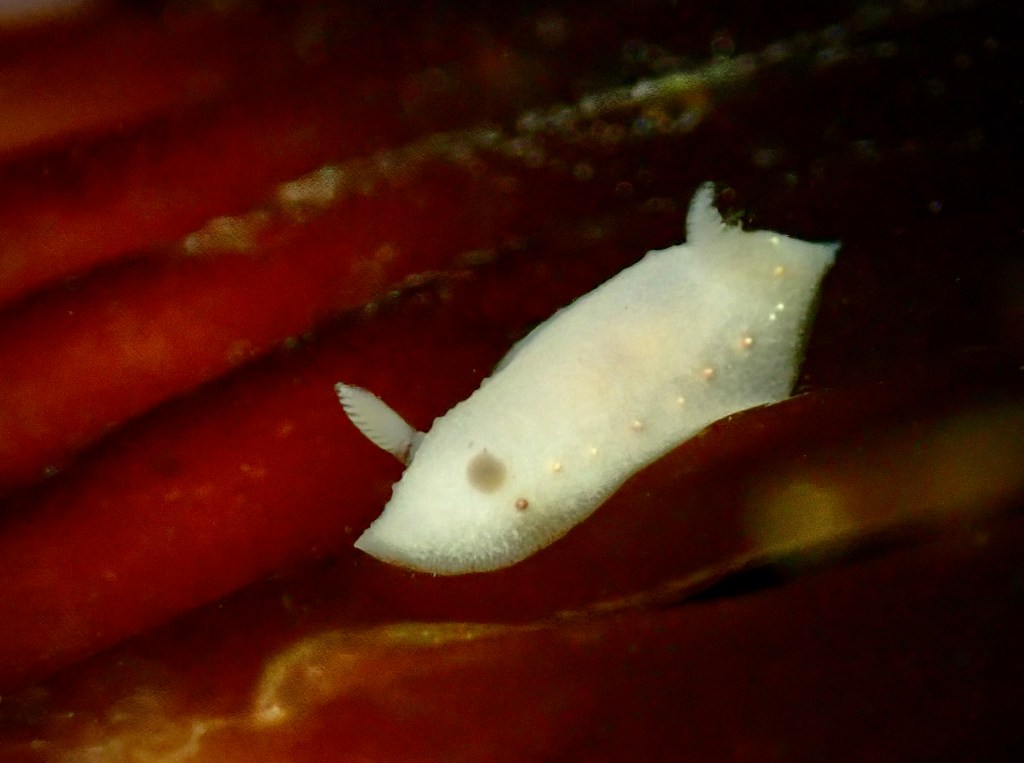
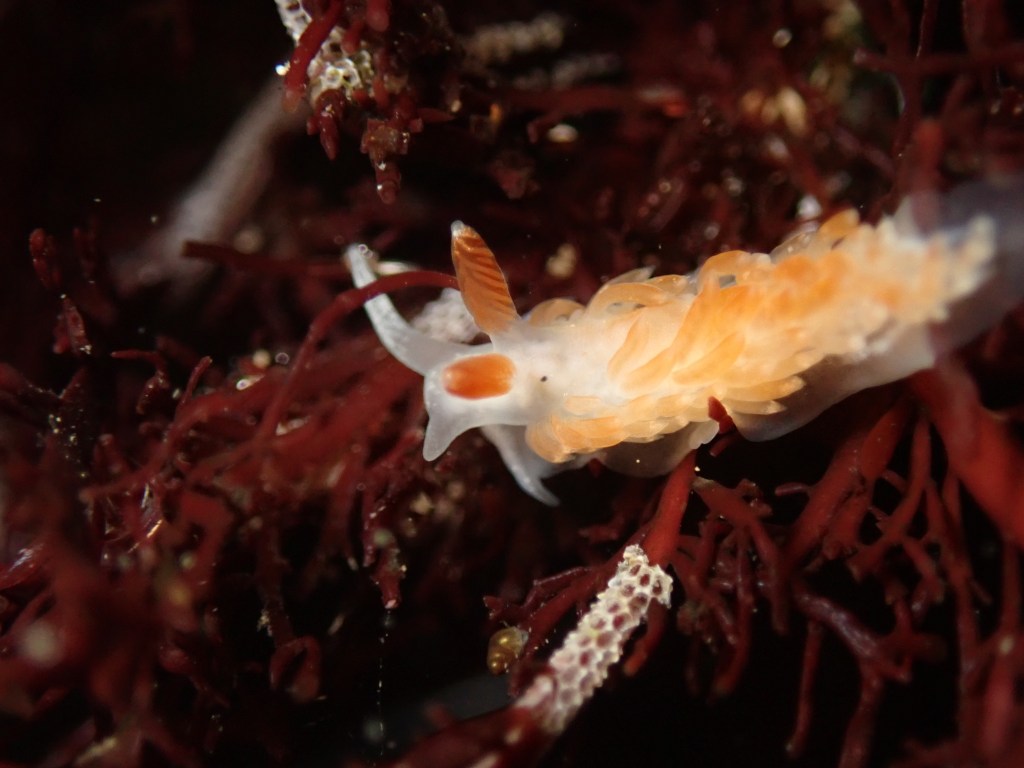
As I said above, the nudibranch scene was less than great during the low tides over Christmas week, but I did spy a couple new-to-me species. I knew the slug on the left was a cadlina but thought it was a modest cadlina, which I had seen only once before at this beach. Turns out it was a dark spot cadlina (Cadlina sparsa), another species of the same genus. I also scored an olive’s aeolid (Anteaeolidiella oliviae). Tiny but beautiful with its rich orange cerata and red rhinophores.
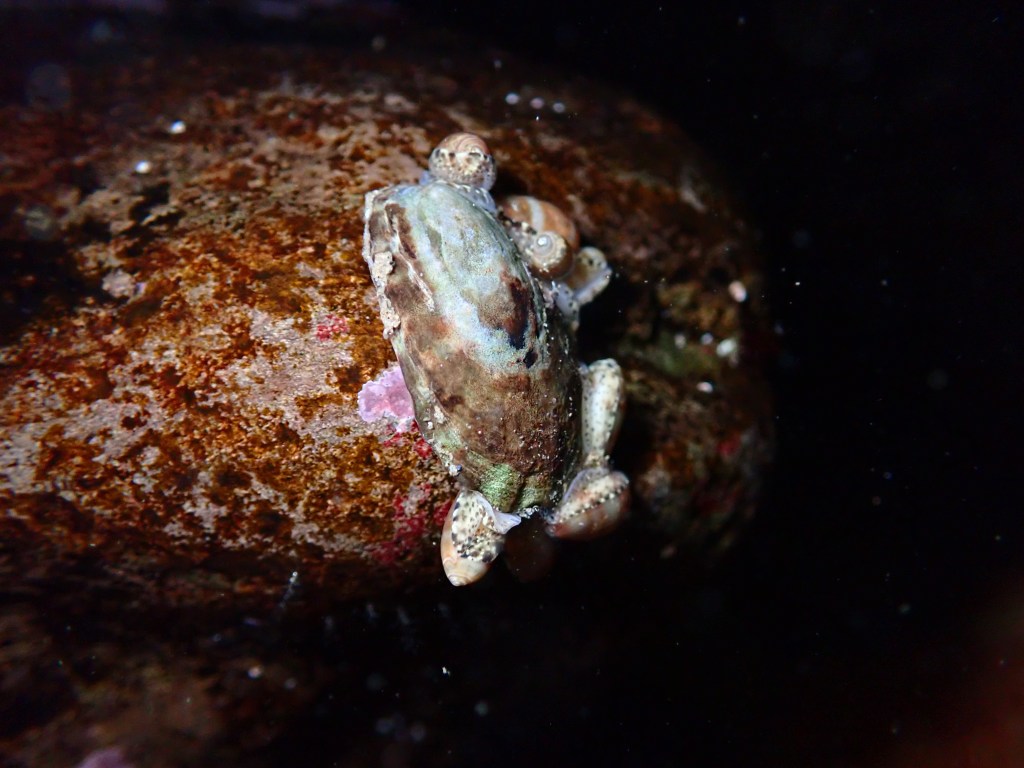
One of the strangest things I saw all night was this limpet which was apparently being eaten by a plethora of California Marginellas (Volvarina taeniolata). Still not entirely sure what was going on here, but it just shows the immense variety of things you can encounter in the intertidal.
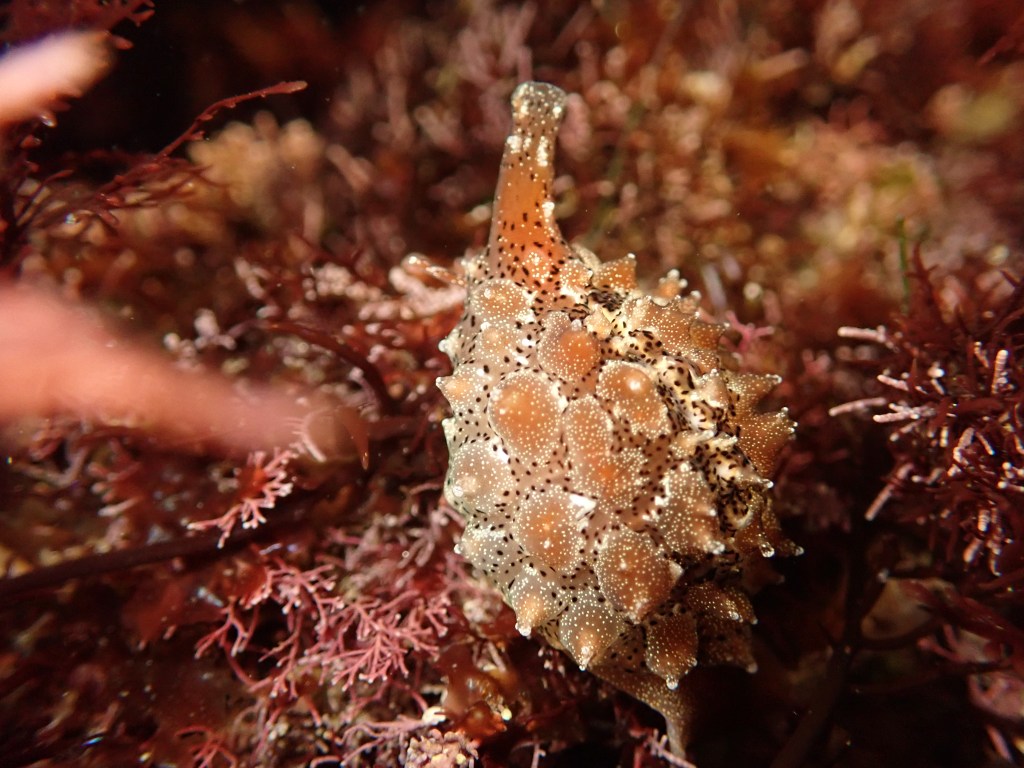
Some animals are distinctly diurnal or nocturnal like the red rock shrimp which will almost never been seen during the day. But other animals seem to have little preference for light or dark. I had seen several solander’s trivias (Pusula solandri) that week in the daylight, but this one was fully out and about long after dark, going about its business.
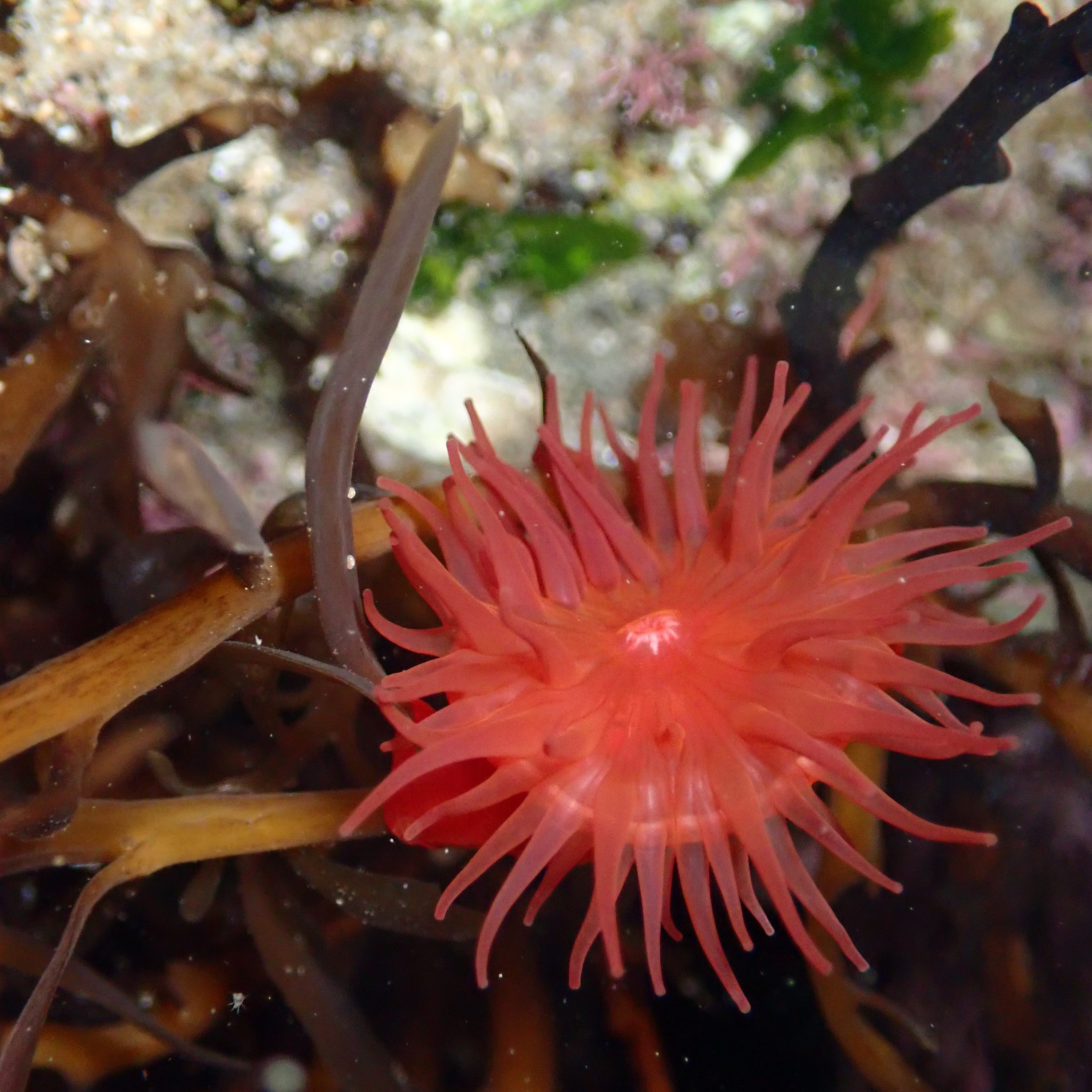
Brooding anemones (Epiactis prolifera) like the one above are nearly sessile animals, preferring to grow on algae instead of rock like their sunburst cousins. I have seen them many times during the day, but never with their tentacles this wide open. I wasn’t aware that they were nocturnal feeders until that night.
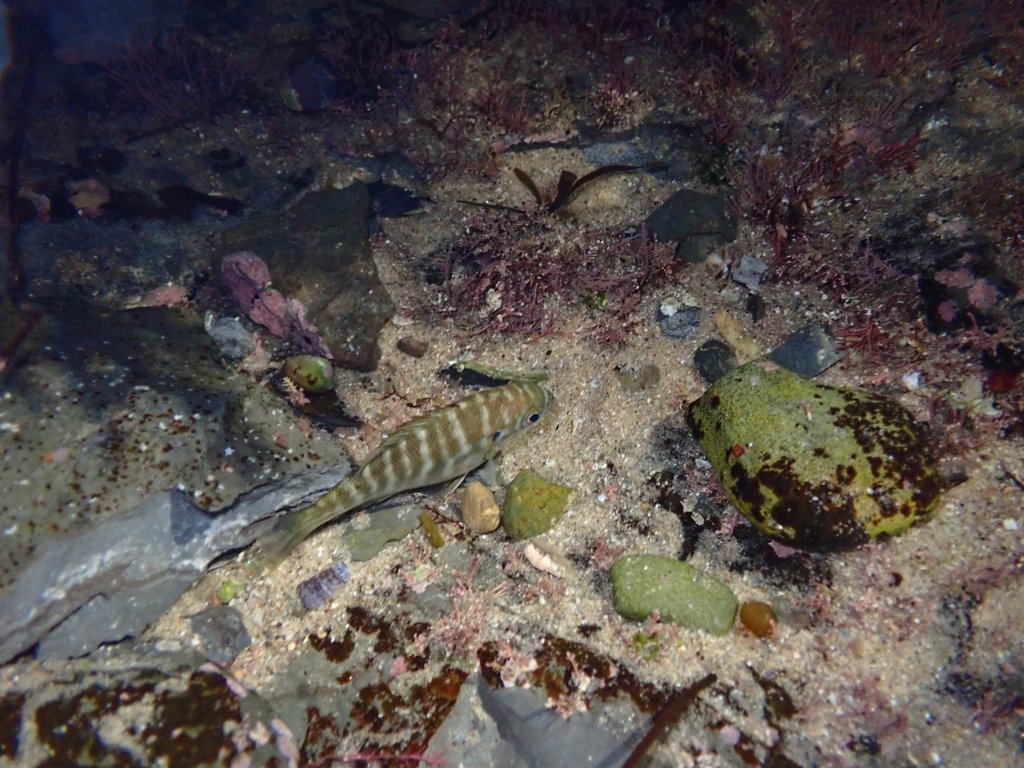
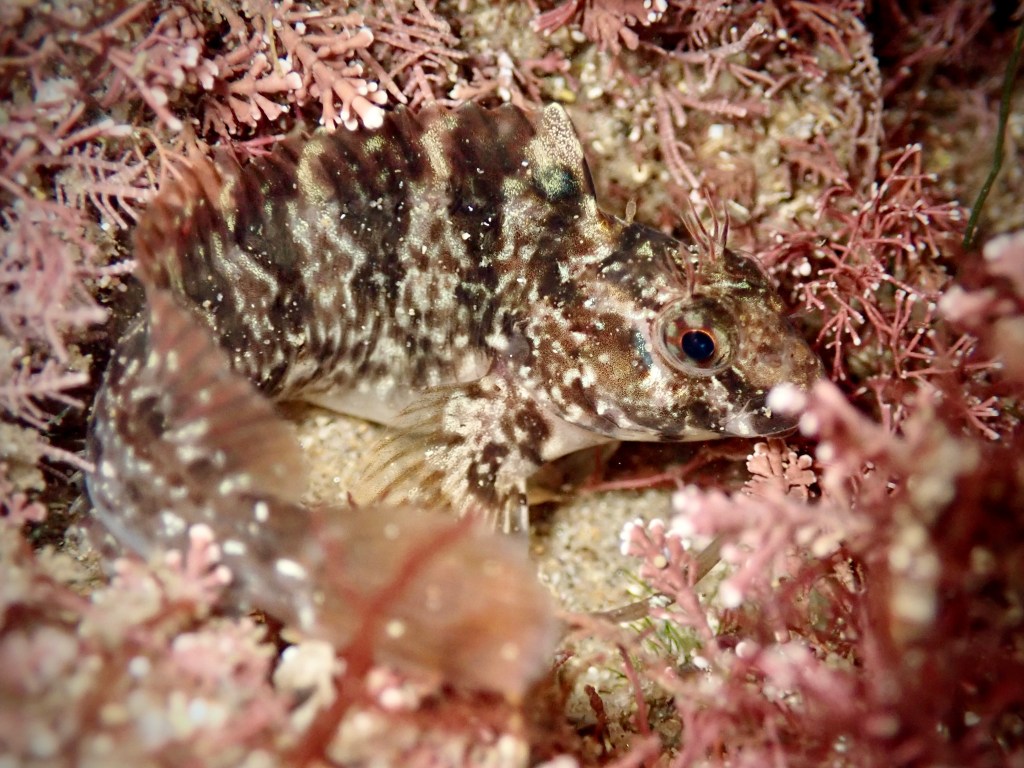
Fish aren’t the main inhabitant of Pacific coast intertidal zones, but tonight I spied several species I hadn’t seen before. The typical woolly sculpin that dominates during the day was still out, but among them were several notchbrow blennies. Distinguished from sculpin by their plume appendages over their eyes, I had never seen these before. Perhaps they are nocturnal as well. The other common tide pool fish, the opaleye, also made a few appearances along with a zebra stripe chub, another species I had never seen in the intertidal before. As it was small, I assume this was a young fish taking refuge from predators that would accompany deeper water.
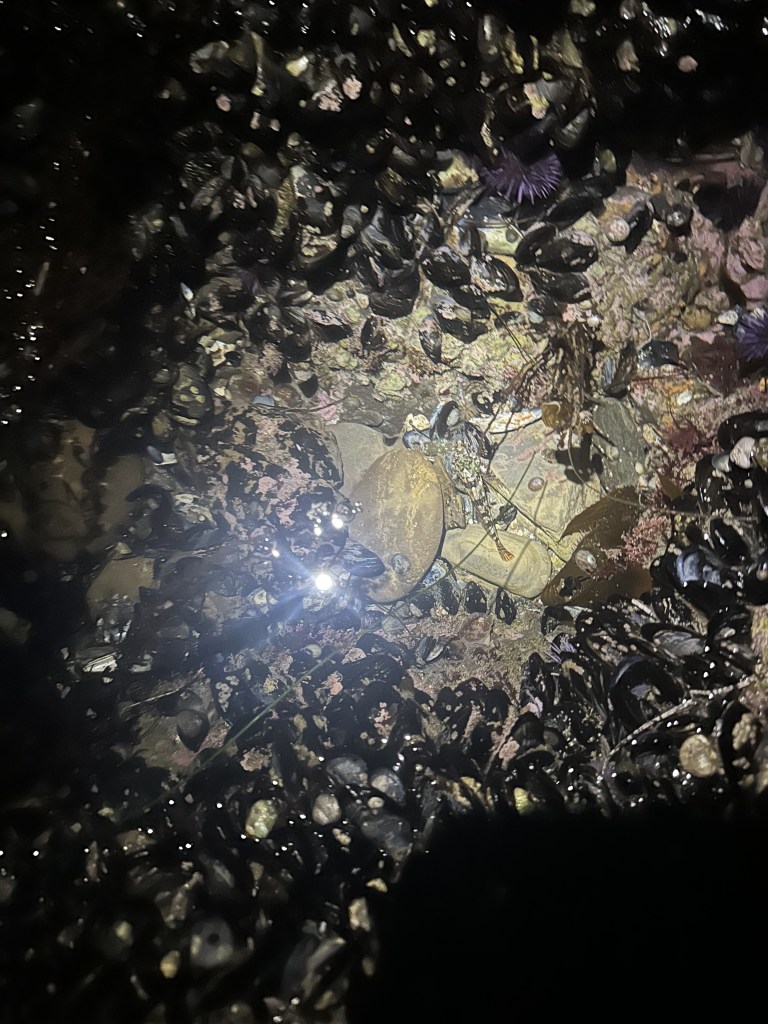
I didn’t realize how cold my hands were until they refused to move but in slow, choppy movements as I tried to send a text message. It was time to head home. While the darkness didn’t bring out the number nudibranchs I was hoping for, it was far from a disappointing evening.

Categories
tags
Subscribe to the blog
Sign up to receive weekly emails with tide pooling information and guides so you never miss a post!
 The Tide Is Out
Leave a comment