
Giant Key Hole Limpet: The Simplest Animal in the Cancer Fight
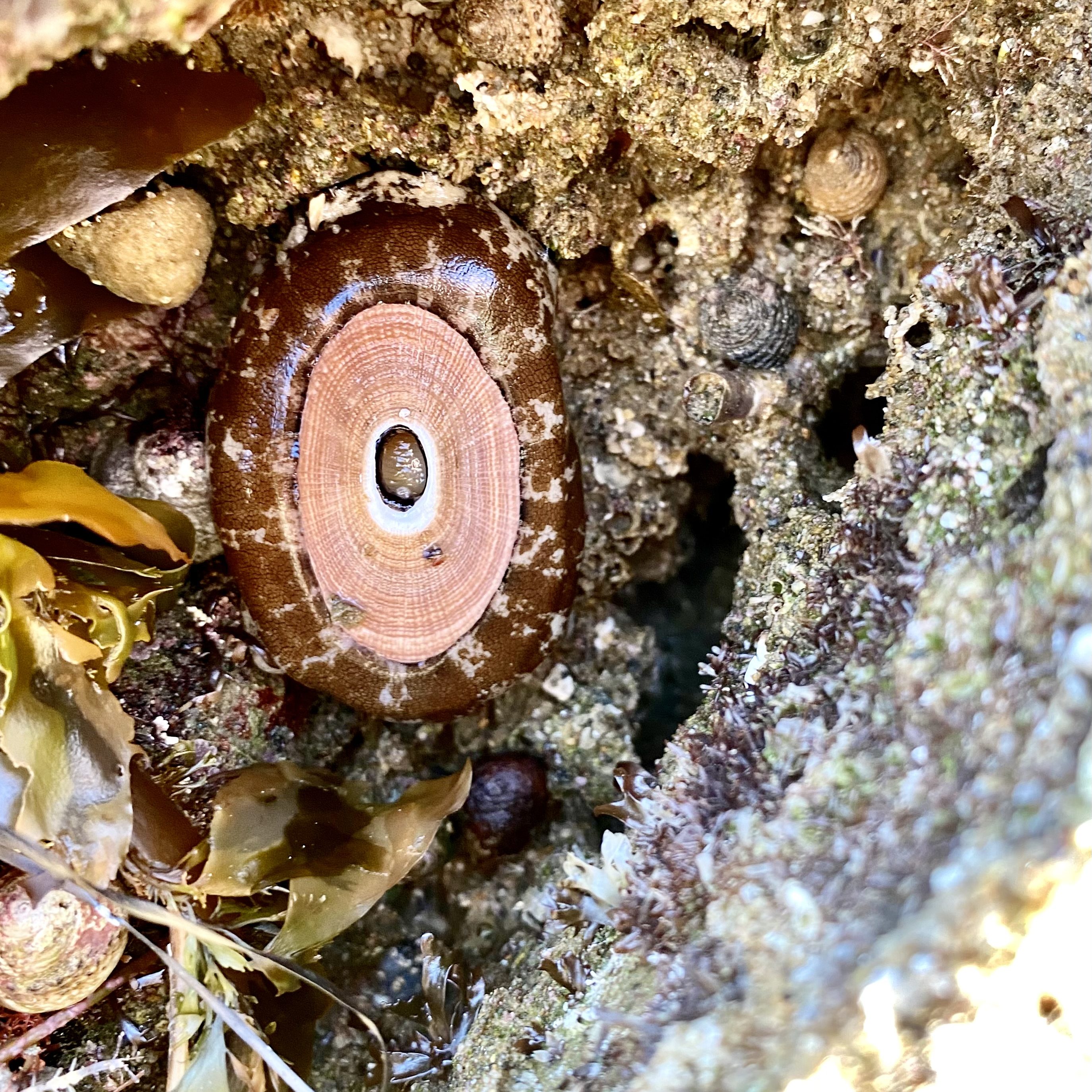
Perhaps on the most interesting and bizarre of the larger animals a first time tide pooler might notice is the large-ish, fleshy, oval shape blob, often out of the water, with a hole straight in the center as if it had been drilled there.
This alien creature is a what is commonly known as a giant key-hole limpet (Megathura crenulata). While it might not look like much, if you’ve had a vaccine or certain cancer treatments, you have this animal to thank.
Quick Facts
- Not a true limpet because of its center “hole,” but related to to volcano limpets and abalone.
- One of the world’s largest limpets, growing up to 6 inches long.
- Its blood is being used in novel vaccines and cancer treatments.
- Has an incredibly varied diet.
Appearance
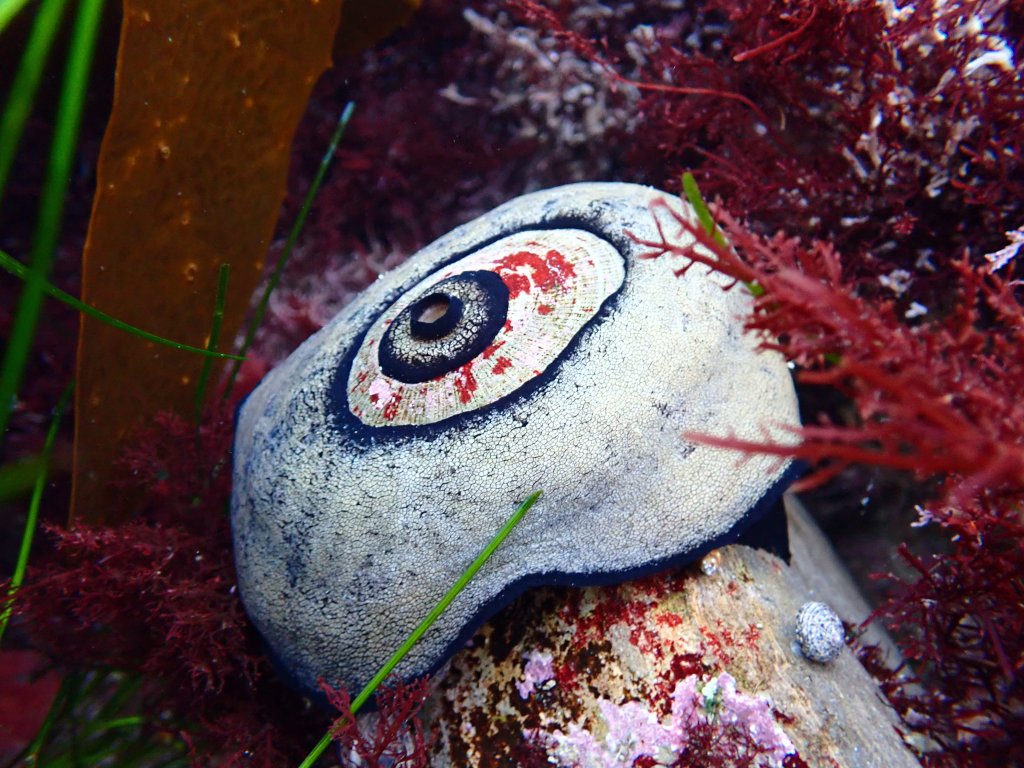
The largest of the keyhole limpets, the giant key-hole limpet can grow up to 6 inches in length and always has the classic mini-volcano in the center of its shell. Unlike many true limpets, the giant key-hole limpet has a tough, fleshly mantle that covers most of its shell. The shells brown, light green, or light pink in color while their mantles vary in coloration from splotched brown and cream, to almost white, to jet black. If the animal is moving, you might see two small, protruding tentacles from the head that are sensory organs.
On the underside of their shell is a large and muscly foot that anchors the animal firmly to the rock. Their cone shaped shells provide strong protection for the animal against predators like birds and crabs while their strong foot allows them to endure wave shock. Like all marine mollusks, limpets weave their own calcium shells which grows as the animal grows.
Diet
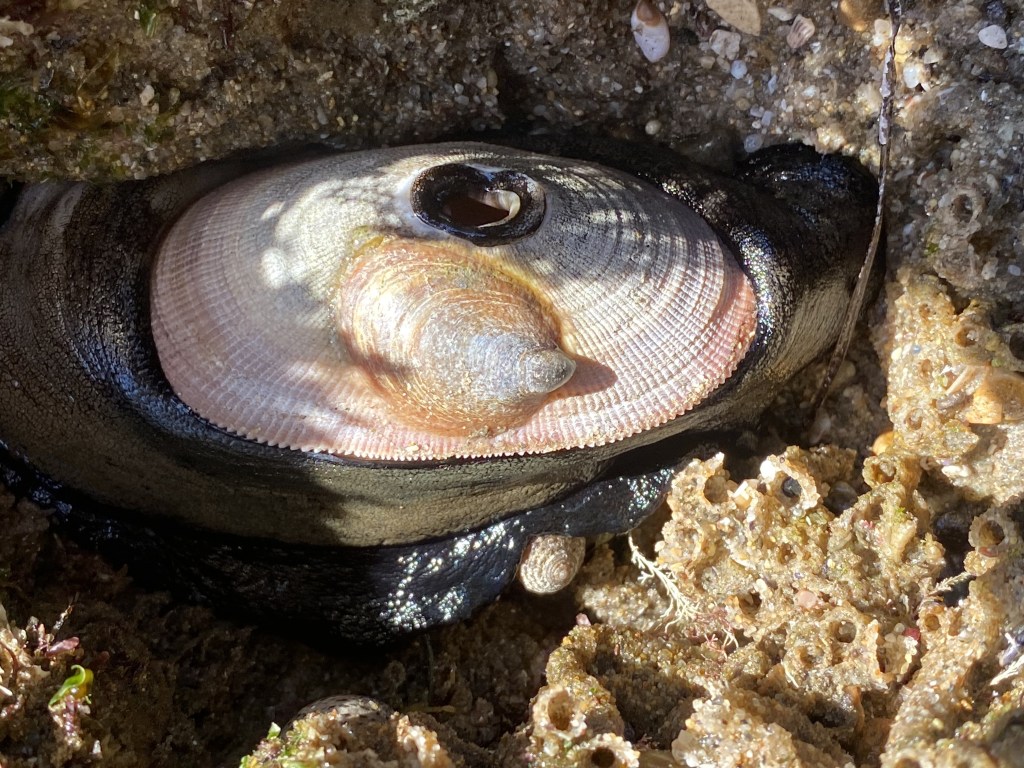
For a marine invertebrate, the giant key-hole limpet eats a very wide variety of things. It is an omnivore, eating both plant and animal matter including brown and red algae, cyanobacteria, diatoms, hydrozoans, bryozoans, nematodes, bivalves, gastropods, crustaceans, and tunicates. A grazer and scavenger, these limpets do not actively hunt.
Habitat and Range
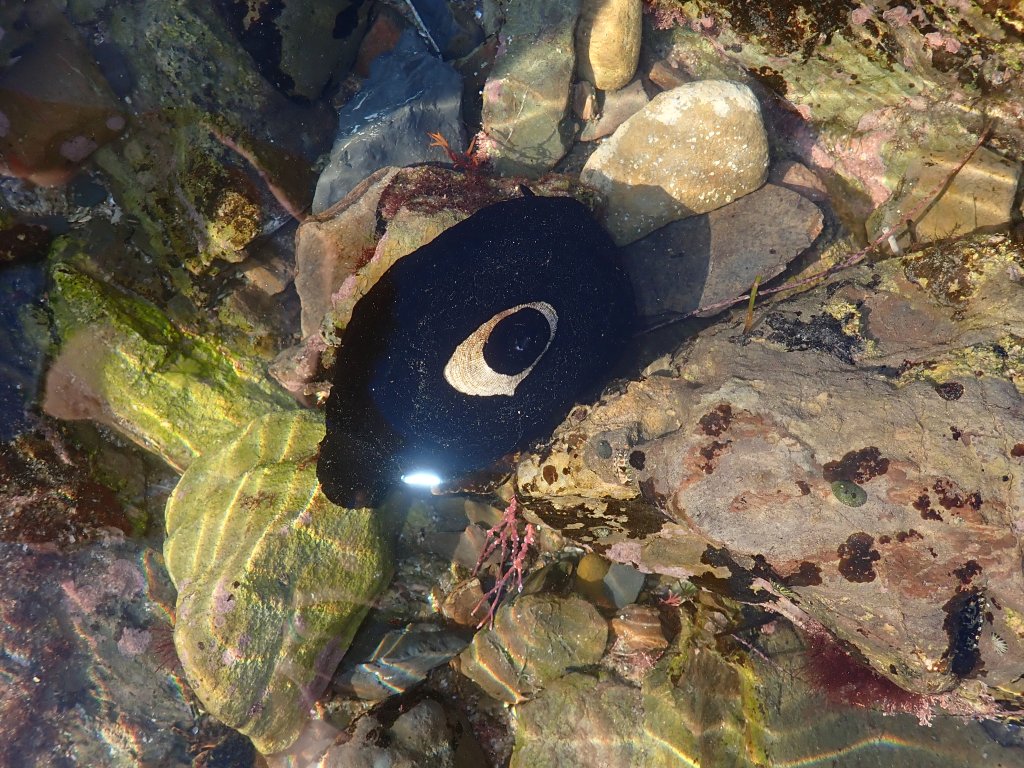
Giant key-hole limpets prefer rocky habitat from the intertidal to depths of nearly 100 feet. They can survive on moderately exposed coasts but prefer more protected areas and are can found in the mid to low intertidal.
The giant key hole limpet has a smaller range than many of the other Pacific coast invertebrates, as it isn’t found north of central California or south of Baja California.
Behavior
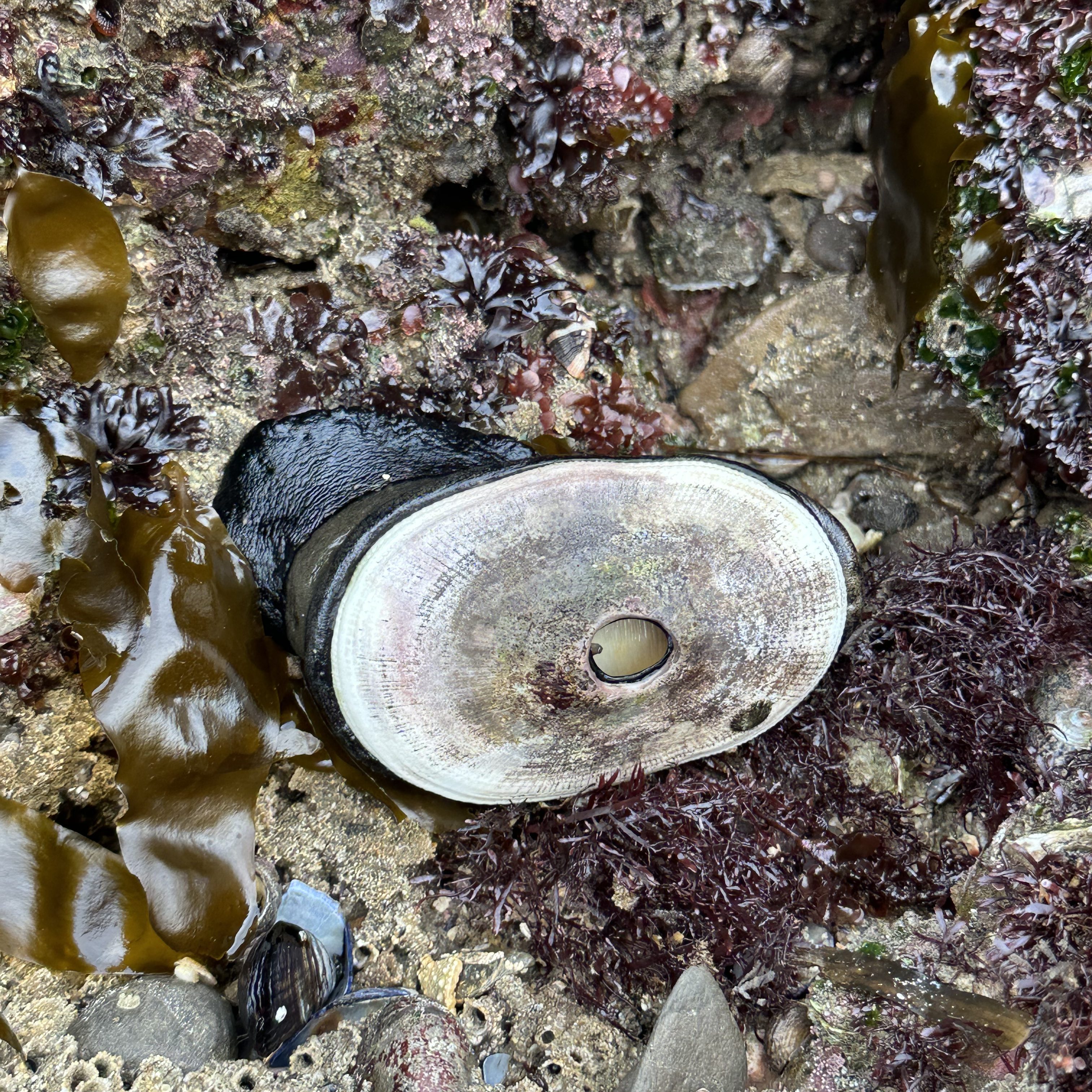
The giant key hole limpet is primarily nocturnal, scavenging and foraging mostly by night. During the day, they can be found nestled in between rocks, quite often out of the water, waiting for the tide to return again.
Although they cannot detect any light more complex than light and dark, these limpet are rather sensitive to chemical changes and can follow their own slime trail back to a favorite grazing or sleeping spot. On consecutive visits to the tide pools during a low tide cycle, I have observed the same individual journey out from and then back to a spot protected from the waves.
Reproduction takes place through spawning and, like most mollusks, larvae have a pelagic stage before settling on the ocean floor to mature into adults.
Although not nearly as famous as the horse show crab whose blue blood gets more publicity, the giant key hole limpet has also played a part in making vaccines and fighting cancer. Much like human’s blood contain hemoglobin for the transport of oxygen, the giant keyhole limpet’s blood contains hemocyanin (KLH), that also carries oxygen and is being used as an important protein in various new cancer treatments. Aqua culturing of these animals is being considered to aid conservation and environmental impacts as the limpet’s blood is harvested without killing the animal.
Resources
Dibble, Sandra and Bradley Fikes, “Limpets that aid cancer fight to be grown in Baja,” The San Diego Union-Tribune. https://www.sandiegouniontribune.com/business/biotech/sdut-keyhole-limpet-hemocyanin-2015jul28-story.html. Accessed December 5, 2023
“Giant keyhole limpet, Megathura crenulata,” Biodiversity Atlas of LA, UC Regents. https://biodiversityla.org/species/iconic/giant-keyhole-limpet/. Accessed December 5, 2023.
“Giant Key Hole Limpet,” iNaturalist, iNaturalist. https://www.inaturalist.org/observations?place_id=any&taxon_id=48645. Accessed December 5, 2023.
“Giant Keyhole Limpet (Megathura crenulata),” CNM VIP Voice, National Parks’ Service. https://cnmvipvoice.org/keyhole-limpet/. Accessed December 5, 2023.

Categories
tags
Subscribe to the blog
Sign up to receive weekly emails with tide pooling information and guides so you never miss a post!
 The Tide Is Out
Leave a comment