
What do Nudibranchs Eat?

With their brilliant colors and intricate body shapes, some might assume that nudibranchs are all show and have little functionality. These same people are often surprised to find out that nudibranchs are voracious predators
What nudibranchs eat has been studied extensively, and yet there is still much to learn. Sea slugs generally eat a variety of other things including both plants and animals. Many slugs in the sap-sucking family feed on exclusive varieties of algae, but before digesting their food, they “steal” chloroplasts from they food and transfer them to the own bodies. This allows theses plant cells to continue to perform photosynthesis and provide food for the slug. These animals are aptly nicknamed “solar-powered slugs.”
All true nudibranchs, however, are carnivores, eating other animals. A variety of sessile animals, fish, crustaceans, and even other slugs and their eggs fall prey to nudibranchs. There is still much to learn about nudibranchs and what they feed on. Due to their size, it is sometimes difficult to tell if a nudibranch is feeding on the sponge it’s crawling on or on tiny organisms that are also on the sponge. However, many prey species are known and these are what we will go over in this article. This is by no means an exhaustive, or even particularly specific, list, but is meant to give you a general idea of what kinds of animals nudibranchs prey on.
What do Nudibranchs Eat?
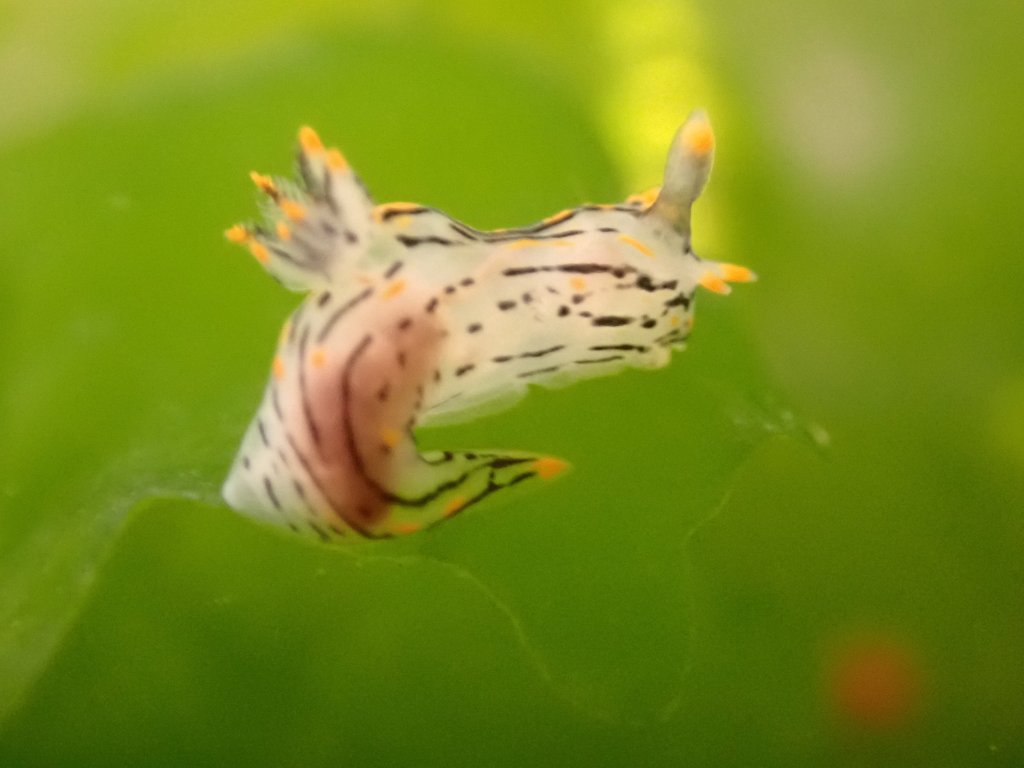
Before we jump into the list, one final comment. While some nudibranchs are opportunistic hunters, most are incredibly picky, usually only preying on one species. This is one common strategy for finding nudibranchs. Find their food source; chances are very high they’ll be there too.
1. Sponges
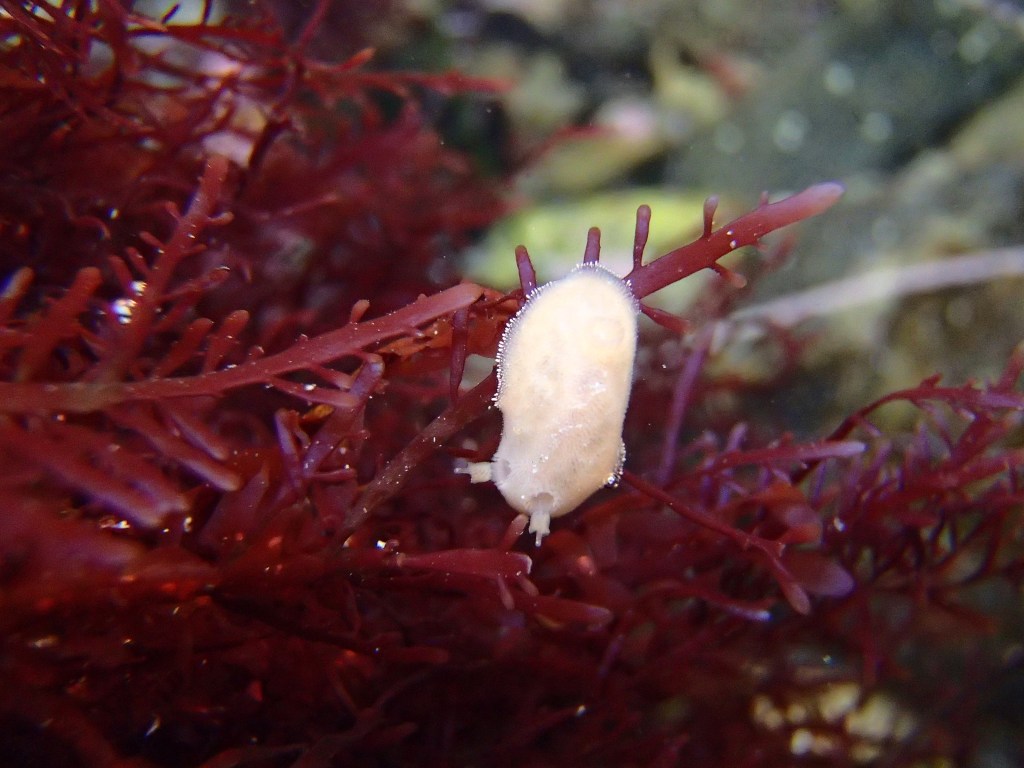
Some of the simplest sessile animals on the planet, many sponges are the prime prey for a specific nudibranch species. Most sponges lack a nervous system and much structure at all as they encrust over rocks or other substrate. However, some do grow in definite forms, usually forming tubes that syphon water through and filter out their microscopic food. In our chilly California waters, the red sponge dorid (shown above) is the best example of a sponge nudibranch. It’s coloration is exactly that of its prey, as long as it has the prey available. This red sponge dorid fooled me for while as I saw it when I was just getting into avid tide pooling. A helpful friend pointed out the distinctive features of this species despite its lack of typical coloration. This individual must have been young, starving, or subsisting on another food source.
2. Hydroids
Hydroids (or hydrozoans) are a group of cnidarians, typically small, often single poly sessile animals. They are almost always predatory and have a “crown” of tentacles that deliver a sting like most cnidarians can. Several species of nudibranchs, including one of the most striking in California, the Spanish shawl, feed on these animals, occasionally gathering their stinging nematocysts to store in their own cerata for protection against their own predators.
3. Sea Jellies
Some nudibranchs defy the typical slug status quo as benthic (animals that live on the ocean floor) and are pelagic (animals that inhabit the water column. The famous blue dragon nudibranch is pelagic as well as the feather aeolid pictured here. Several species of pelagic sea slugs feed on sea jellies or, in the case of the blue dragon, the Portugueses man-o-war, a close relative of sea jellies. Don’t touch this slug if you see it; it is as toxic as its food source.
4. Anemones

Another cnidarian food source for nudibranchs are anemones. Our very common opalescent nudibranch is an opportunistic hunter preying on several species (which is unusual among sea slugs), but has a favorite prey of anemones from which it steals stinging nematocysts much like many aeolids.
5. Soft Corals
In tropical seas, some nudibranchs have taken to eating soft corals which are close relatives of anemones and hydroids. While none of these species inhabit California’s chilly waters, I have encountered some zoanthid eating nudibranchs while working in the aquarium industry that are pests on expensive coral.
6. Bryozoan
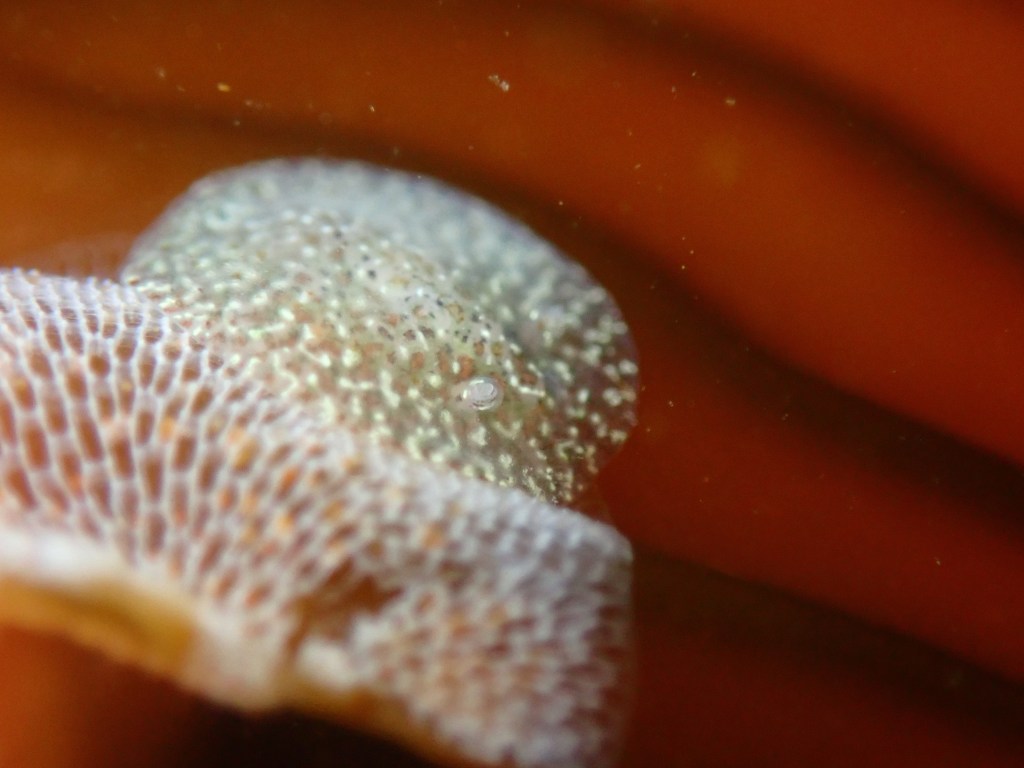
Tiny, colonial, encrusted organisms with a taxonomical phylum all to themselves are bryozoan. Many nudibranchs feed on these sessile animals whose colonies can number in the millions. Our own Hopkins rose nudibranch and both species of corambe feed on varieties of bryozoan. You can see a small colony of kelp lace bryozoan in the foreground of the photo above.
7. Crustaceans and fish
Some nudibranchs are feed on animals that have to be hunted instead of simply found like sessile invertebrates. The hooded nudibranch is famous for this, casting it’s large, transparent head over unsuspecting fish and crustaceans that wander too close.
8. Other Nudibranchs
While all true nudibranchs are carnivorous, some are truly predators and prey on other sea slug species, sometimes even their own kind. The hooded nudibranch would eating another slug if it came to close, but our most famous example in California water is actually not a true nudibranch, but a headshield slug: the navanax. While its common name is technically the California Aglaja, most tide poolers refer to them by the Latin genus name (Navanax). These beautiful slugs are voracious hunters, tracking down other slugs by their invisible slime trails and making quick work of them with with fast “jaws.”

Categories
tags
Subscribe to the blog
Sign up to receive weekly emails with tide pooling information and guides so you never miss a post!
 The Tide Is Out
Leave a comment