
How Low Should the Tide Be for Tide Pooling?

If you’re thinking about visiting the tide pools for the first, you’ve probably wondered: what is a good low tide? How low does the tide need to be for me to see cool animals? When it is worth it to visit the tide pools?
These are super common questions but they don’t have a single answer. You can access tidal charts for almost every port in the world with a simple google search, but they won’t tell you how “good” that low is or what kind of animals will be exposed to air at that water level. In order to answer this question, you need to ask two other questions: where do you live (or are planning to tide pool) and what do you wanted to see.
Before we begin, in case you don’t read any further, a general rule for tide pooling is that negative tides are the best tides. This is when the tide below 0 ft, or the low astronomical mean water level. Basically, 0 is the average tide. Even if you aren’t an avid tide pooler, the lowest tide you can find is going to give you the most space to explore. However, negative tides during daylight hours are very well known and you’ll probably find that the rocky shores are very busy. If you want a little more peace and quiet, try a tide that is still low but not the lowest it will be in months.
Where Do You Live?


Tidal Charts for Newport Beach, CA (left) and Hansville, a port in Puget Sound, WA (right), courtesy of “Tides“
The answer to your question about how low a tide needs to be to make tide pooling worth it will largely depend on where you live. Due to land mass arrangement, coastal topography, and a variety of other factors, the tidal ranges of different areas differ quite dramatically. You can get an idea of this by scrolling through the tide charts for different ports. In the next 12 months, the tides in Newport Beach, California are at or below -1.0ft a total of 46 times, with the max low tide at -1.7ft. In contrast the low tides for the next twelve months in Seattle will be at or below -1.0ft a total of 131 times with the max low tide at -3.2. Again, this is due to a variety of reasons, one of which is that large land masses are closer together in the North Pacific than they are farther south. When the moon’s tidal bulge pulls water across the earth, it runs into land quicker in the North Pacific than it does in California, causing it to “pile up” more due to the extra force.
As you can see, where you are tide pooling makes a significant difference in determining which low tides are worth visiting. A larger tidal range also increases the length of the mid intertidal zone where animals must be able to deal with both air and sun as well as water and low temperatures. Check your local tide charts and see what typical low tides look like throughout a year. In Seattle, a -1.5ft might not be worth rearranging your schedule for, but in SoCal it certainly would be.
What do you want to see?
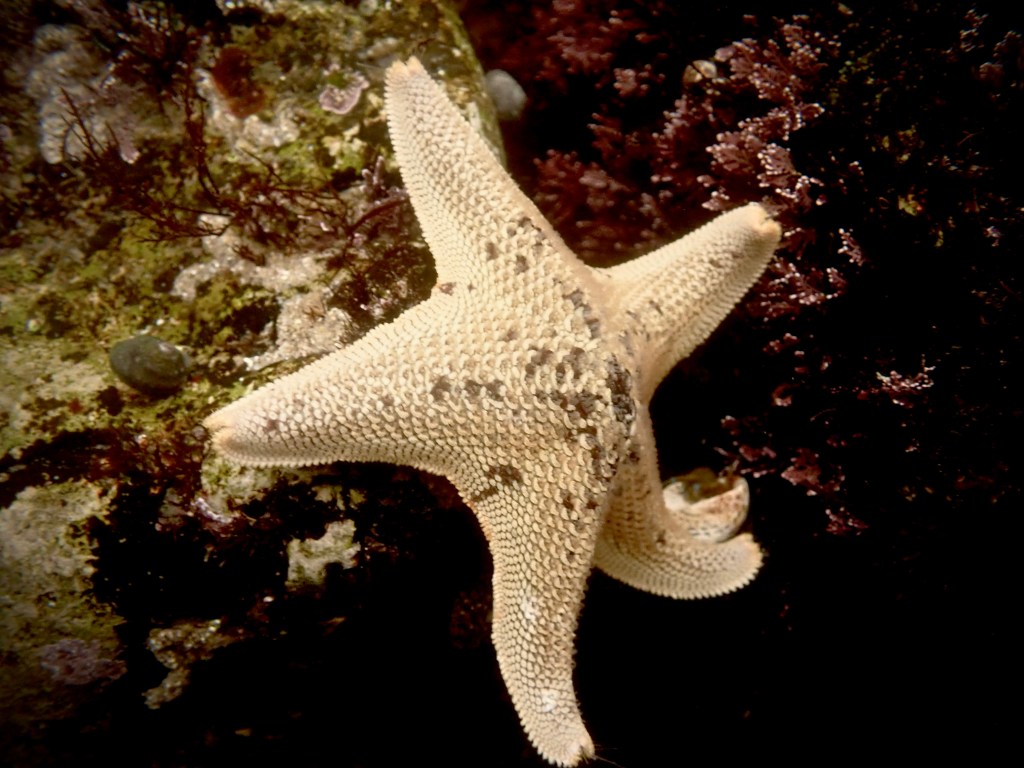
This is a much easier question to answer and doesn’t require much research. Simply stated, are you looking for the average creature you find in the tide pools every day or a low intertidal, seasonal invertebrate that has only been spotted in your area twice? If you aren’t looking for something unusual, then less than fantastic tides are probably going to show you just as much as a very low tide. You don’t need a -1.5ft tide to see anemones, sculpin, urchins, sea stars and even some sea hares. Depending on the location and beach, a -0.5ft or even a 0.5ft low tide will be just fine. Don’t limit yourself to only visiting the tide pools when there’s a king tide; that’s when everyone else will be there anyway. Anything at or below 0, perhaps even a little higher, will still afford you great opportunities to see wildlife.

Categories
tags
Subscribe to the blog
Sign up to receive weekly emails with tide pooling information and guides so you never miss a post!
 The Tide Is Out
Leave a comment