
Learn How to Find Nudibranchs: Spotting Challenge
Nudibranchs are some of the funnest animals to find at the tide pools. Not only do their bright colors and flamboyant patters make them excellent photo subjects, but their unique ecology and behavior also make them fun to watch. But let’s admit it: nudibranchs are hard to find. I’ve heard many tide poolers asking how to find these amazing creatures, and sometimes they elude me as well.
If you haven’t already, check out my article about tips for finding nudibranchs. In this post, we are going to put some of those skills to the test. While most nudibranch photography makes these animals look huge and easy to spot, even the most brightly colored slugs can be difficult to spot in reality due to their small size. I’ve taken some photos that show nudibranchs as they might look as you are searching for them in the tide pools to help you understand what you looking for. If your eye doesn’t know what to draw to your attention, you’ll never notice these beautiful animals, no matter how hard you look.
Challenge 1: Patterns
Let’s start with an easy one: recognizing patterns. The tide pools often look like a busy photograph with lots of textures, colors, and patterns all intermingling. You’ll need to be able to pick out the patterns of nudibranchs in order to spot them among all the algae and other invertebrates.
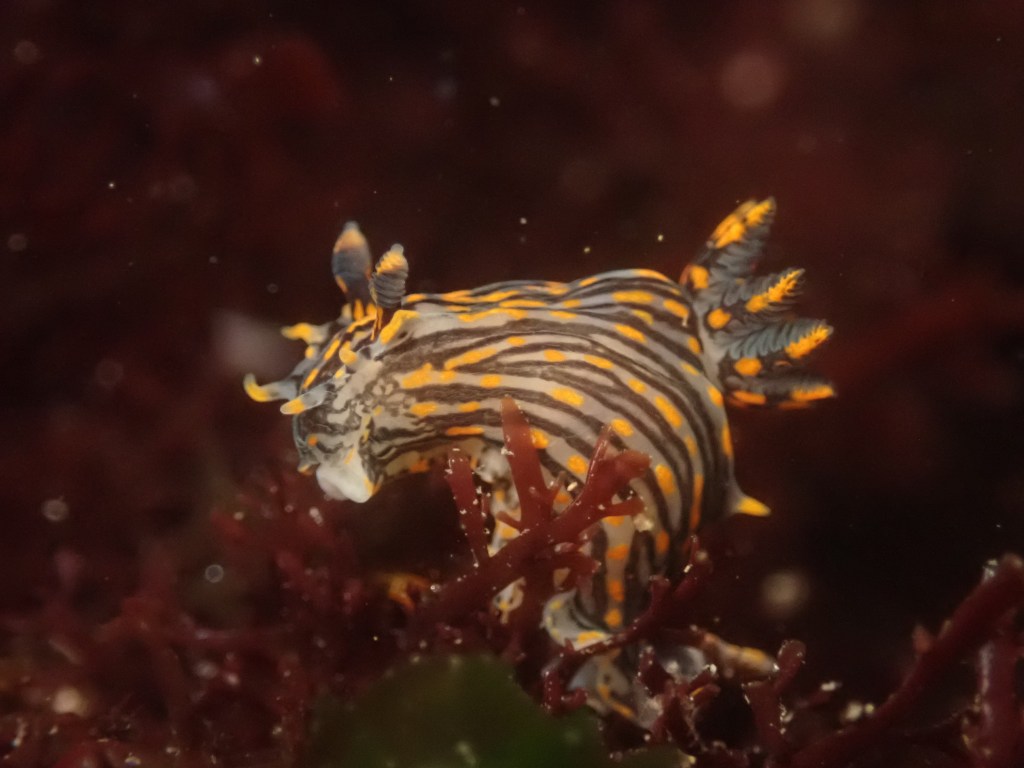
Find the sorcerer’s dorid (Polycera atra) in this photo, taken with my phone about a foot above the water. This slug was a fair size for a tide pool specimen, about 2 centimeters in length.

Can’t find him? The first image in this article is this same species. If you didn’t recognize it before, you will now that you know what pattern to look for.
Challenge 2: Bright Colors
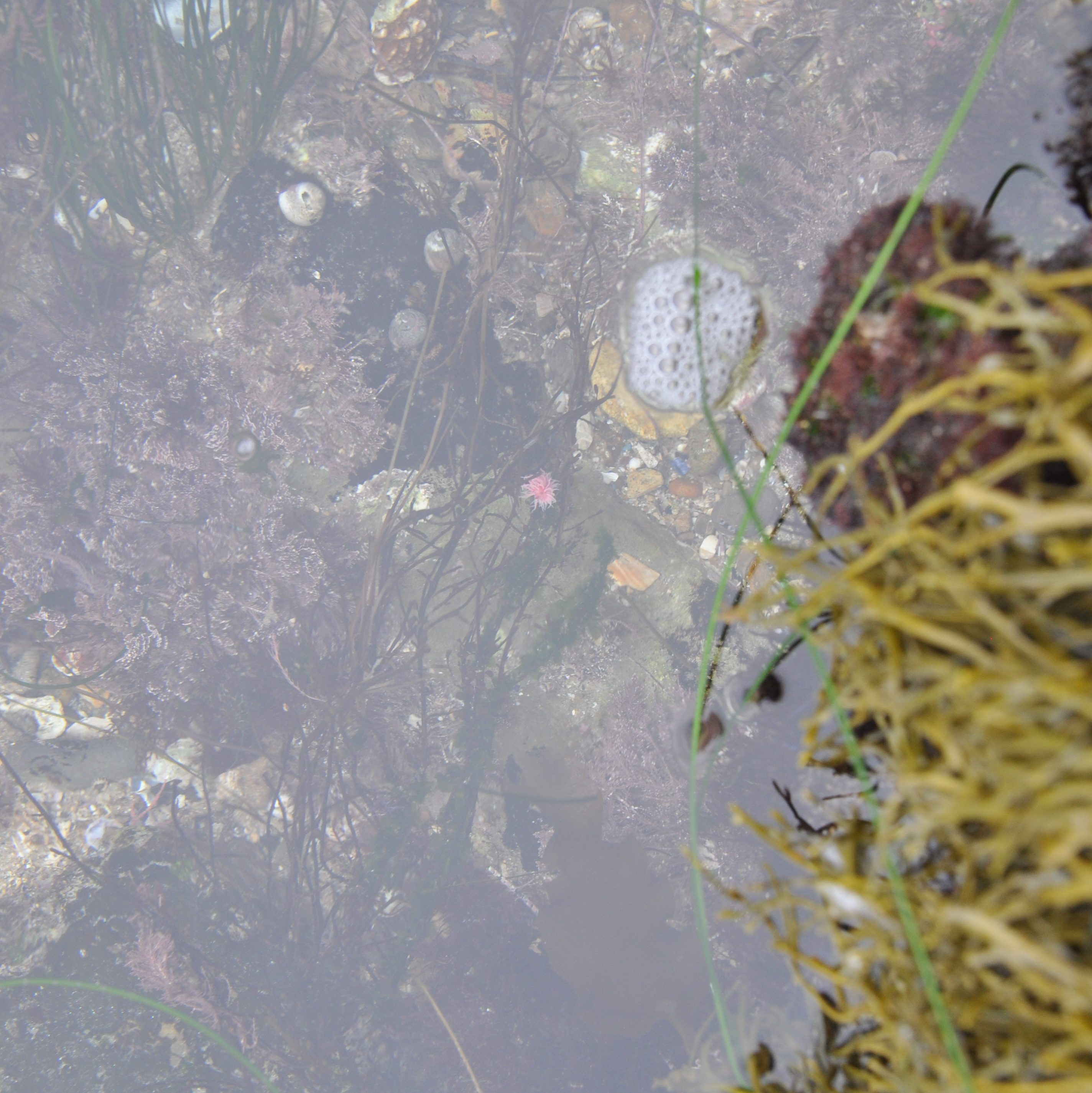
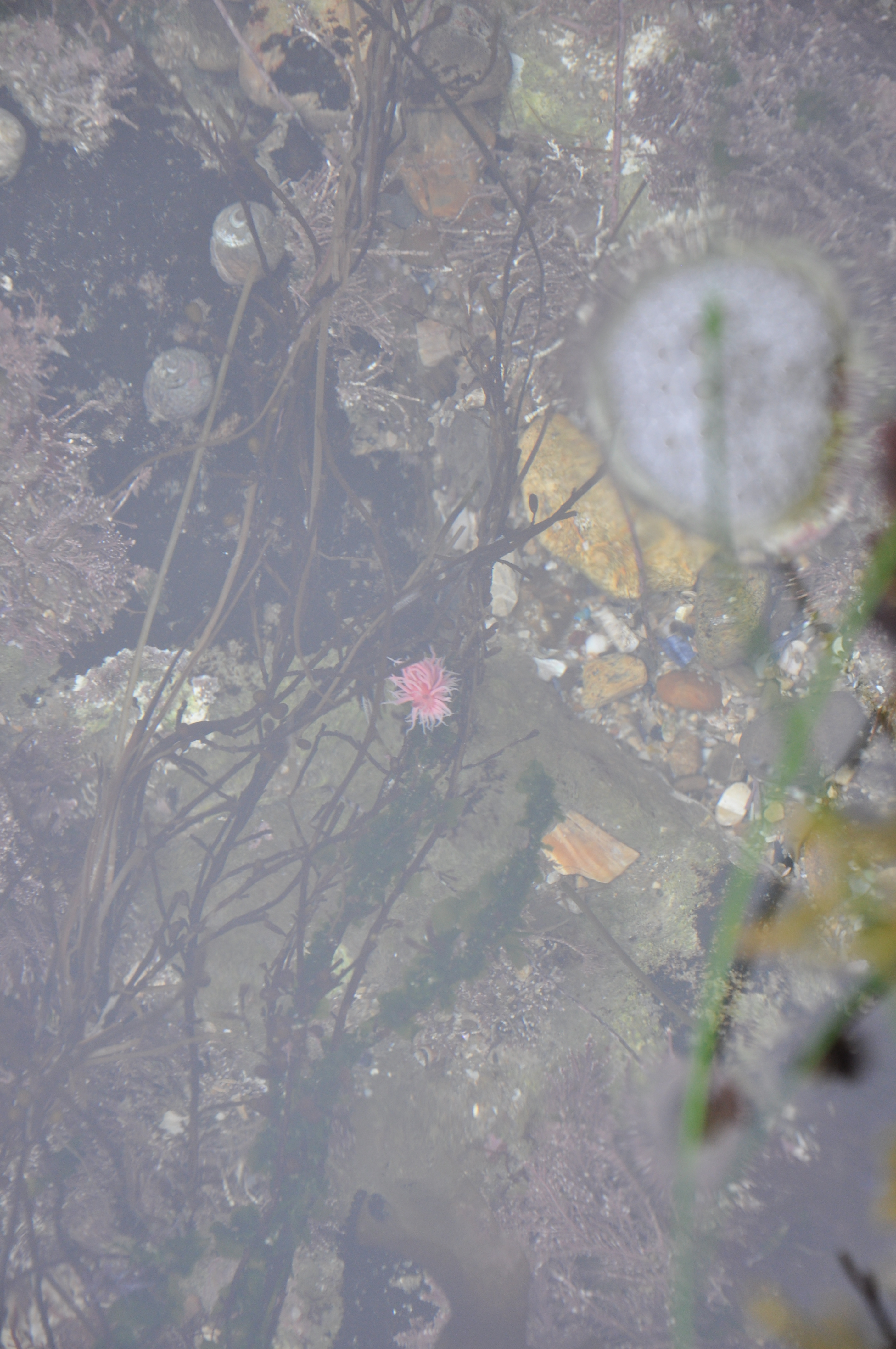
Now let’s think about colors. The Hopkins rose nudibranch (Okenia rosacea) is a favorite of mine for its bright pink coloration. You’d think it would be easy to spot this sea slug; think again. See if you can find it in the first image before moving on to the closer ones.

Closer Photos

Answer
Challenge 3: Dull Colors
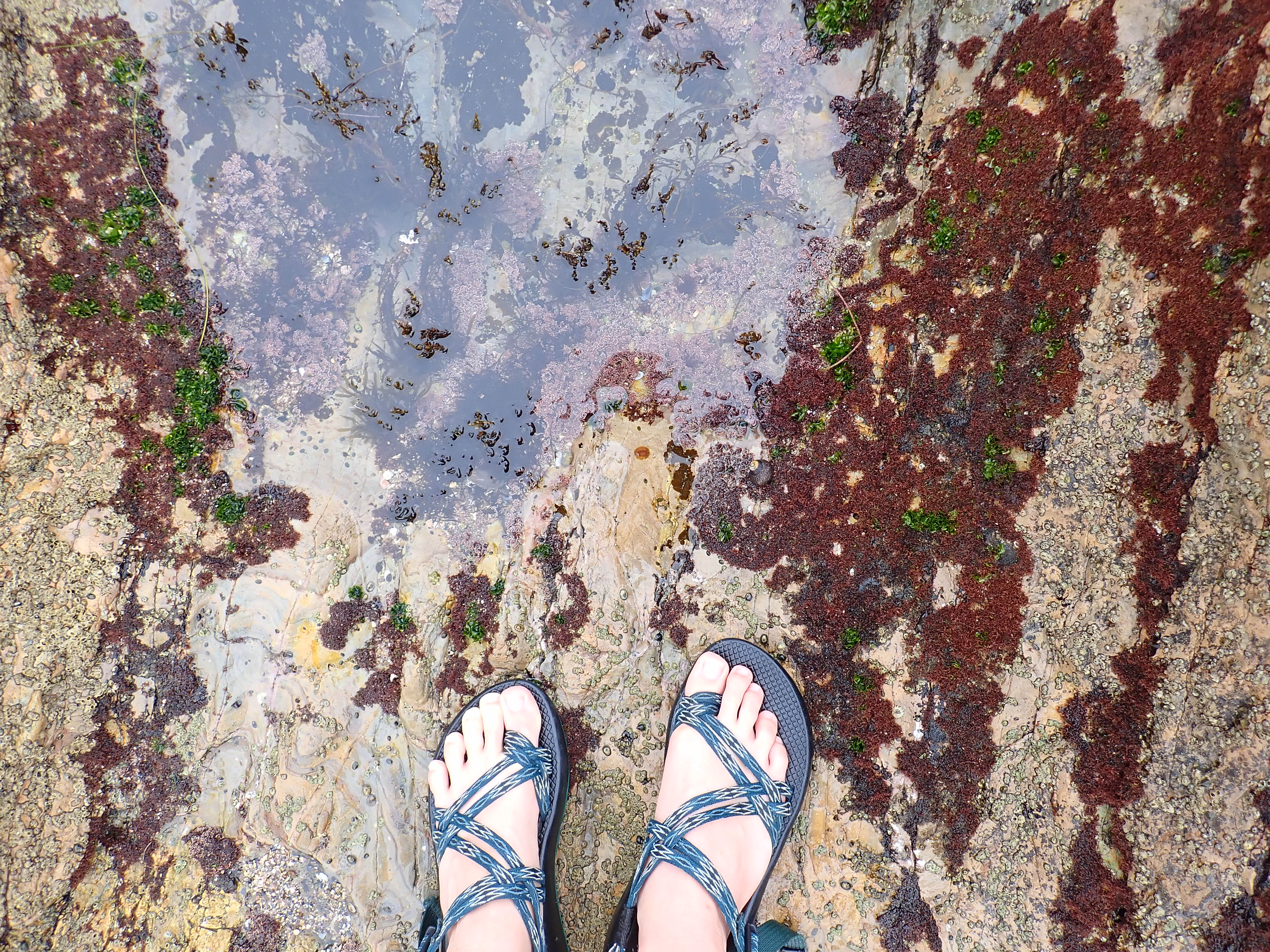
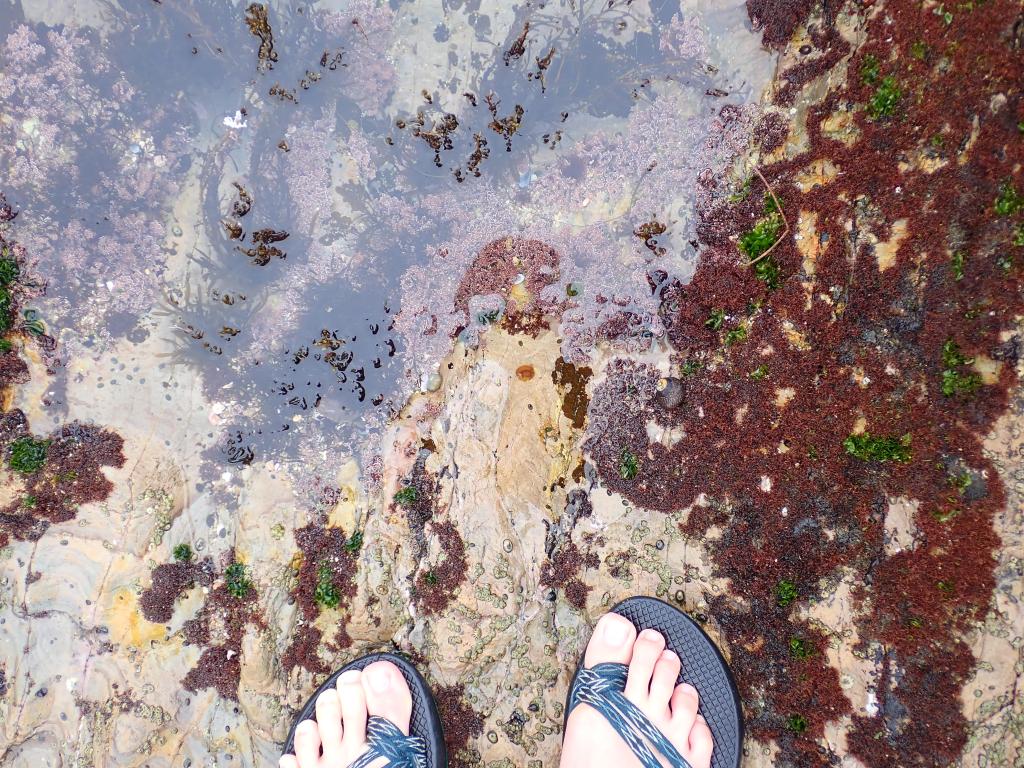
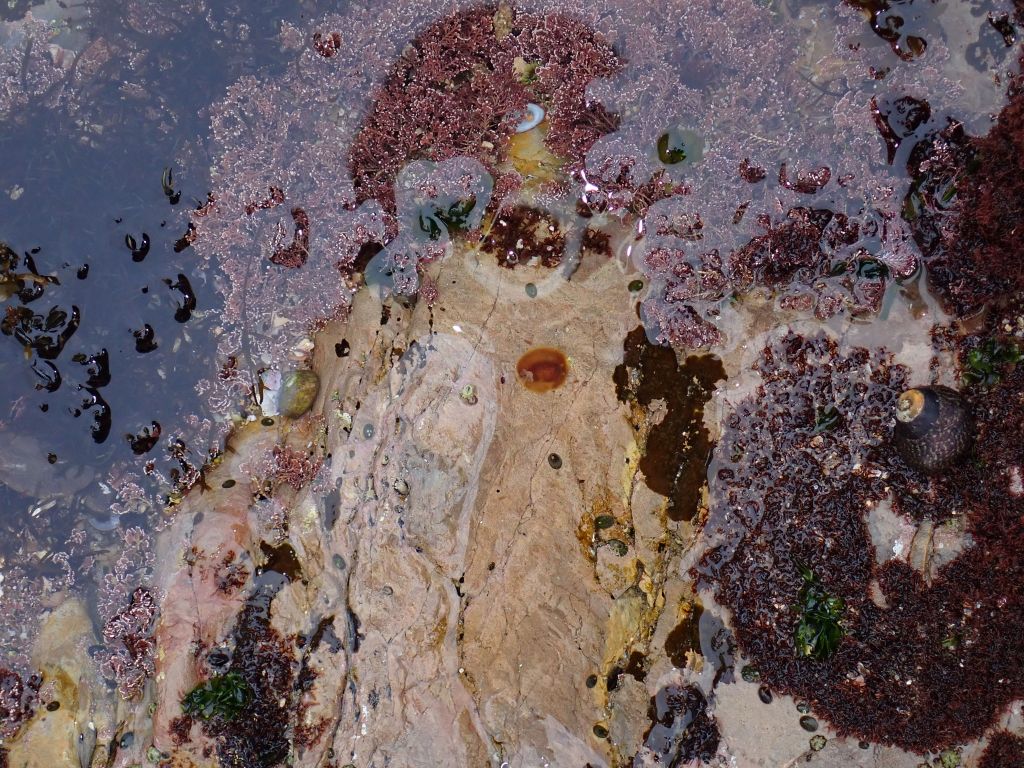
Some nudibranchs blend in more than others with colors that aren’t so out of the ordinary as pink. The white spotted sea goddess (Doriopsilla albopunctata) in the image below is mostly burnt orange in color. I took this image while standing up. Again, look closely at the first image before moving on to the closer ones to see if you would have spotted this sea slug if you had seen it at the tide pools.
Closer Photos
Answer

Challenge 4: Camouflage
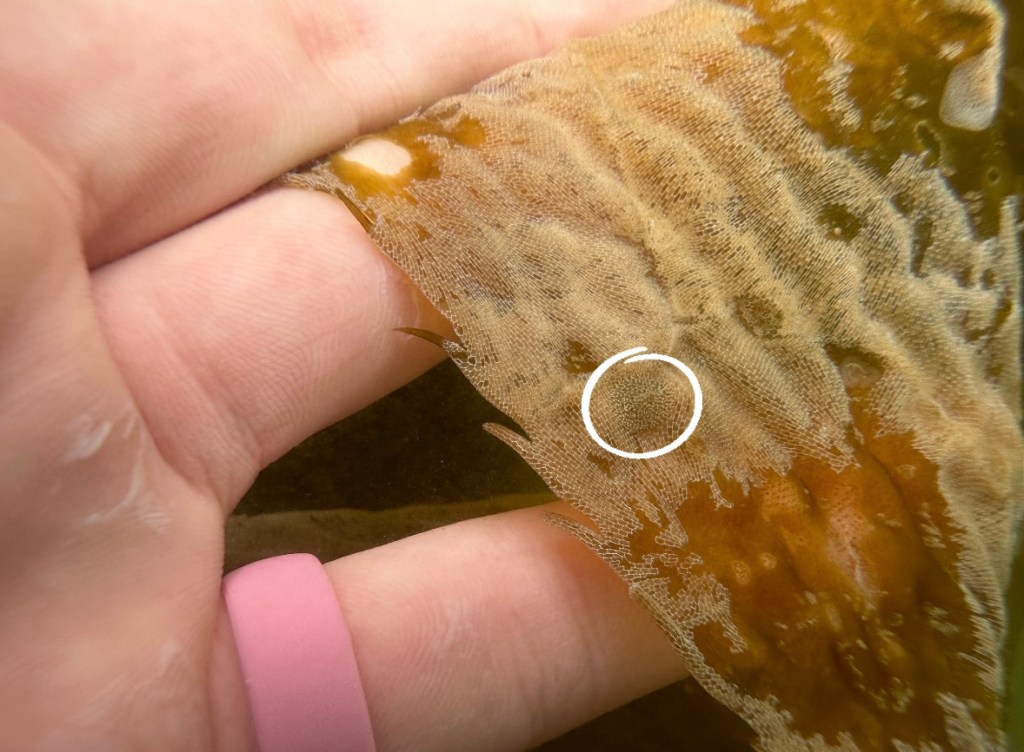
Some nudibranchs do everything they can to stay out of sight. The Pacific corambe’s (Corambe pacifica) pattern and coloration so perfectly match its food source of kelp lace bryozoan that they are nearly invisible if you don’t know what to look for. Check out this article for more about this species.
This image was taken only inches away from the kelp; see my hand and silicon ring for scale. Can you find the pacific corambe? See here for images of this species if you can’t find it.

Answer
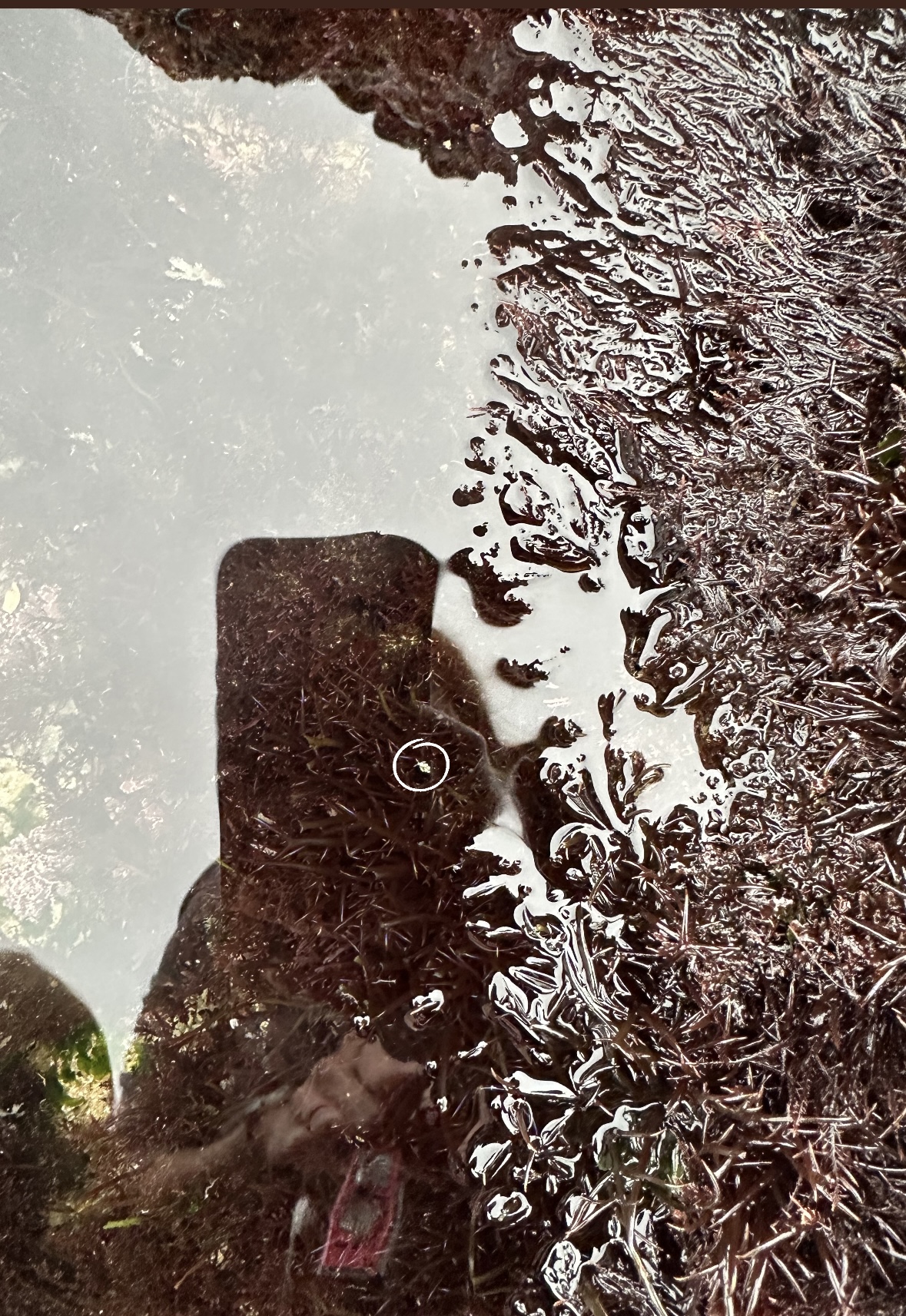
Challenge 5: Tiny Nudibranchs
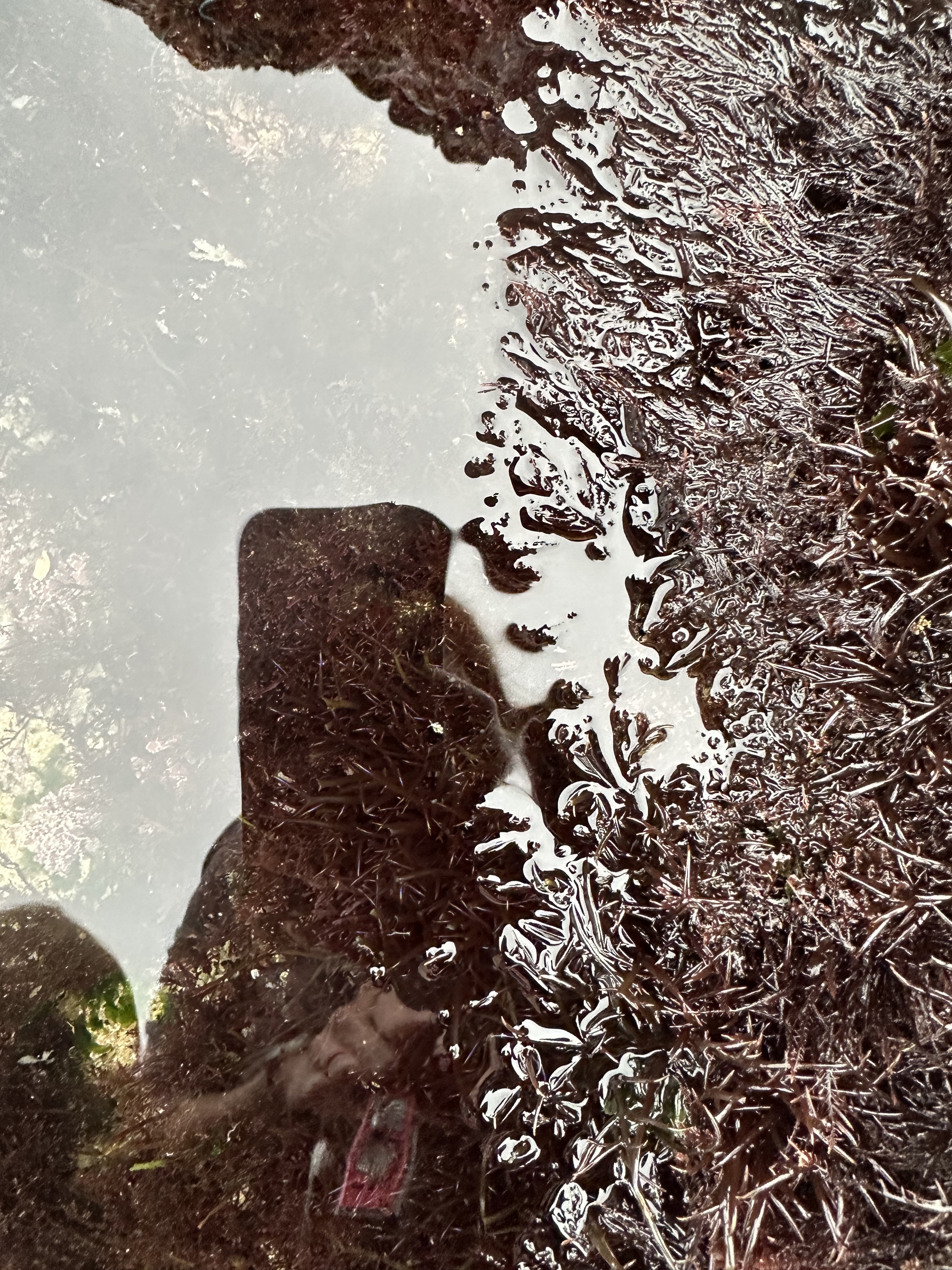
Nudibranchs are tiny, especially ones that live in the tide pools. If you don’t look closely, you’ll never notice them. The white crusted aeolid (Trinchesia albocrusta) in the image below was barely 4 millimeters long. This image was taken just inches away from the water. Can you spot it?
Answer
Challenge 6: Nudibranchs Out of Water
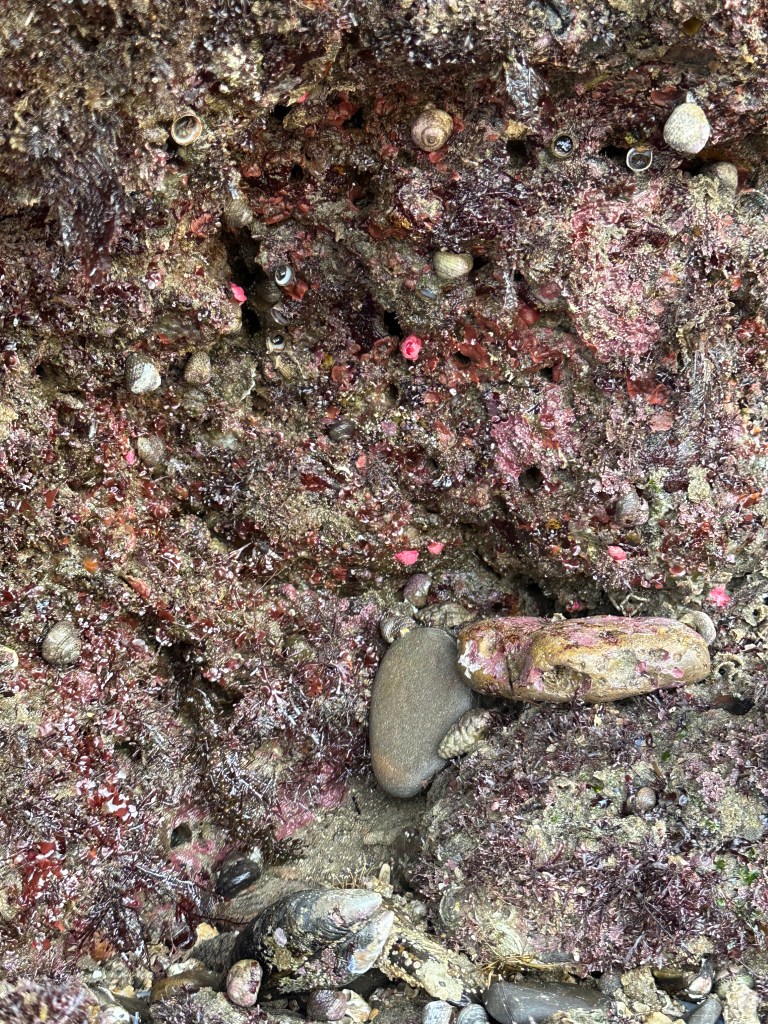
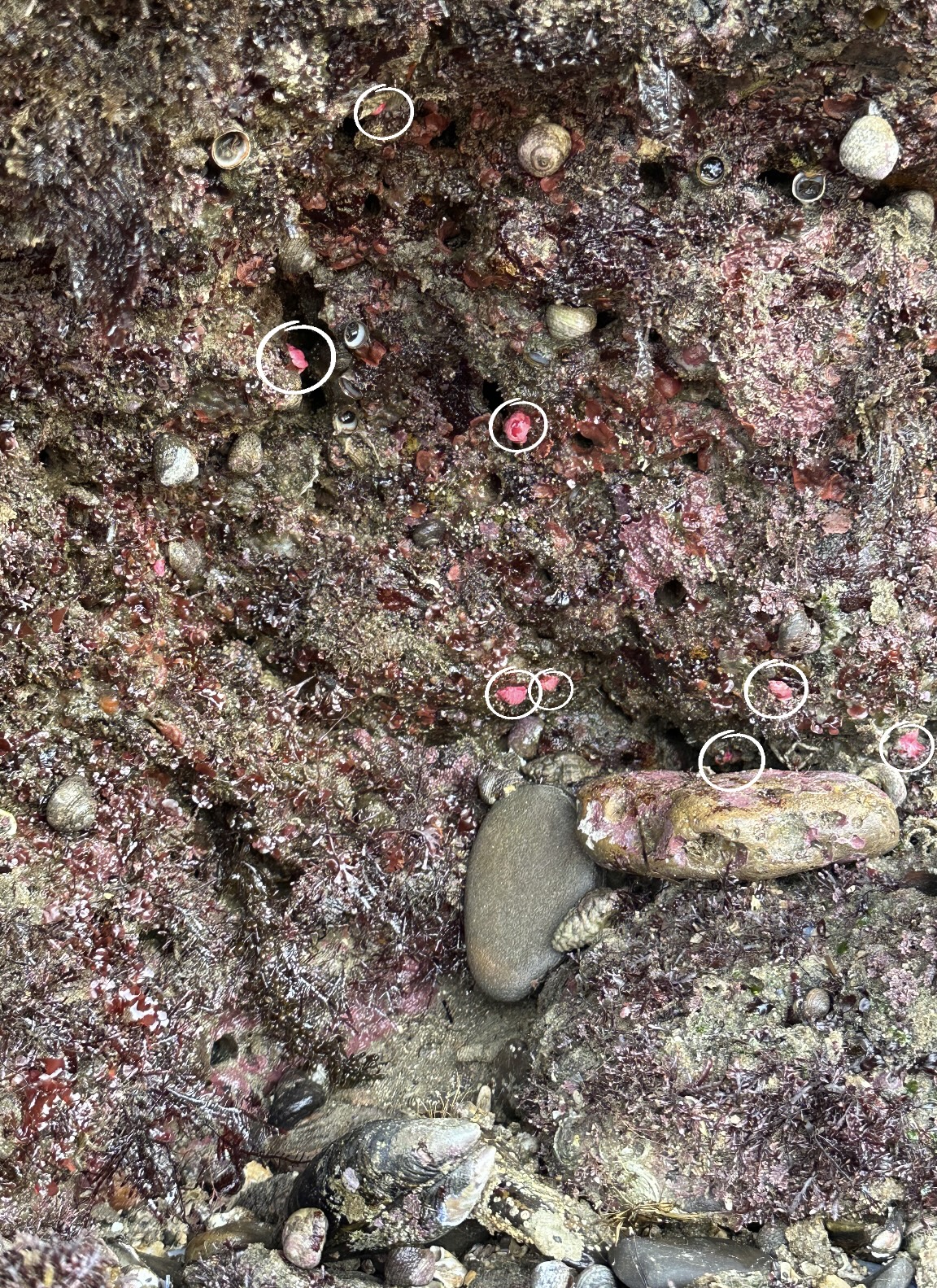
Every once in a while, you’ll spy a nudibranch out of the water. Sea slugs intentionally or unintentionally find themselves out of water and turn into undefined blogs as their cerrata go all limp. Seeing these creatures when they’re out of the water can be challenging, even if it is a species you are familiar with. The first image here is a close up of a Hopkins rose nudibranch (Okenia rosacea) out of the water. In the second image, there are at least eight of these nudibranchs out of the water. How many can you spot?

Answer

Categories
tags
Subscribe to the blog
Sign up to receive weekly emails with tide pooling information and guides so you never miss a post!
 The Tide Is Out
Leave a comment