
Opalescent Nudibranch: California’s Most Common Sea Slug
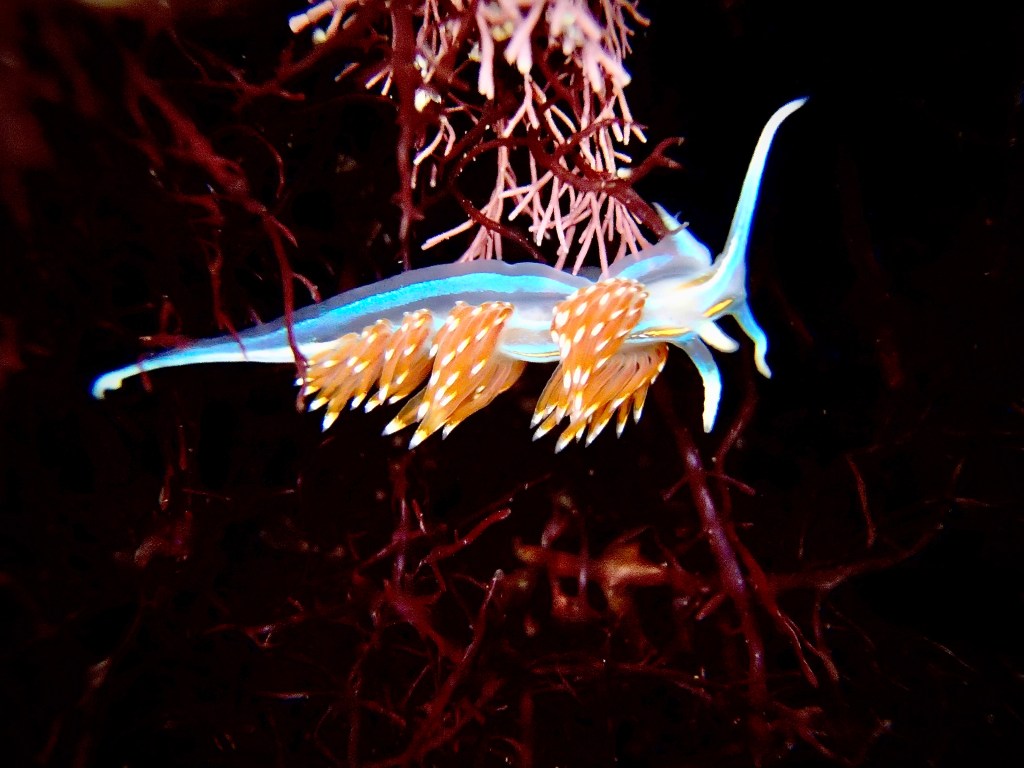
With a name like opalescent meaning having the colors and fire of an opal, the opalescent nudibranch has some big expectations of beauty to live up to, but it doesn’t disappoint. Despite being incredibly common, this sea slug is brilliantly colored with orange and yellow tipped cerrata and vivid, iridescent aqua blue racing stripes down its sides. On the citizen science platform iNaturalist, the opalescent nudibranch is the most commonly observed heterobranch (including marine and land slugs) in California besides the garden snail (Cornu aspersum)
One of the easiest nudibranchs to find, its brilliant colors and active behavior makes it a favorite among those getting into avid tide pooling. Read on to learn more about this fascinating creature.
Quick Facts:
- Often used as a model animal in studies about memory, associative learning, and classical conditioning.
- Inhabits almost all of California’s coastline.
- Distribution overlaps with the very similar species Hermissenda crassicornis, the horned nudibranch,
- It is an opportunistic eater and feeds on hydroids, anemones, and bryozoan, unlike most nudibranchs that are picky eaters.
Appearance
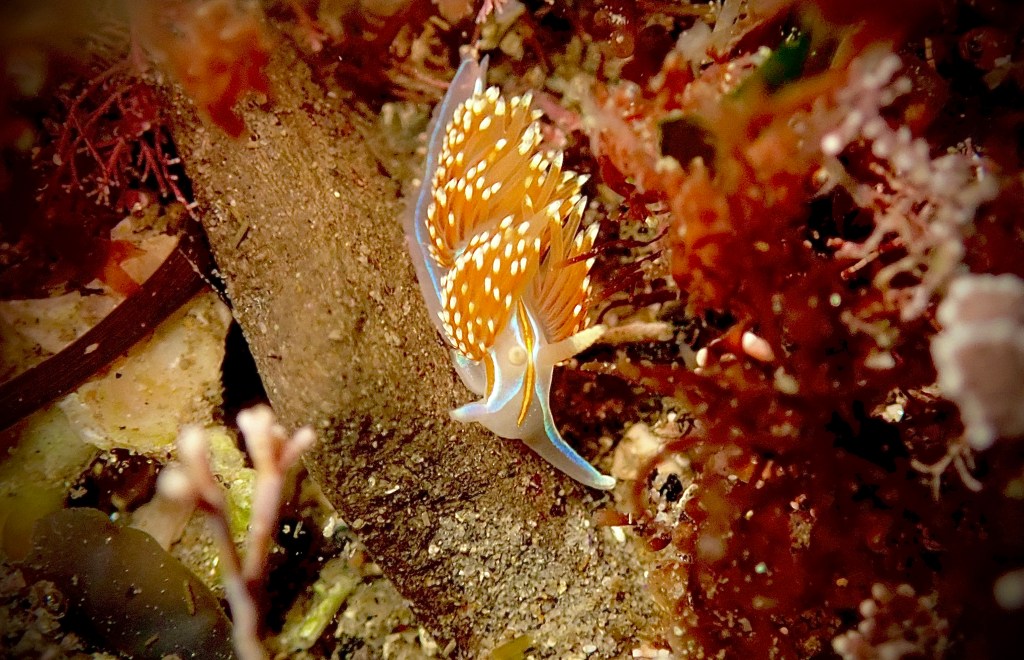
The opalescent nudibranch is characterized by its iridescent and fiery colors. The body is somewhat translucent with light blue stripes on either side and one running along the back. This last strip extends into the oral tentacles and is punctuated with a bright orange stripe that sometimes reaches between the rhinophores. As an aeolid, the slugs boasts many cerrata, typically burnt orange in color but ending in white or yellow tips. Variation is rather marketed in this species with individuals differing greatly in vibrance and color.

The opalescent nudibranch ranges in size from just a few millimeters to about 3 inches, although I’ve never seen a tide pool specimen over an inch long. The oral tentacles of this species are quite long and the rhinophores are annulate, possessing a series of rings around the stalk. They are typically tipped in the same white or yellow of the cerrata. In contrast to dorid nudibranchs, aeolids, like the opalescent nudibranch, lack specialized gill structures used to respirate, but instead absorb oxygen through their many cerrata.
Diet
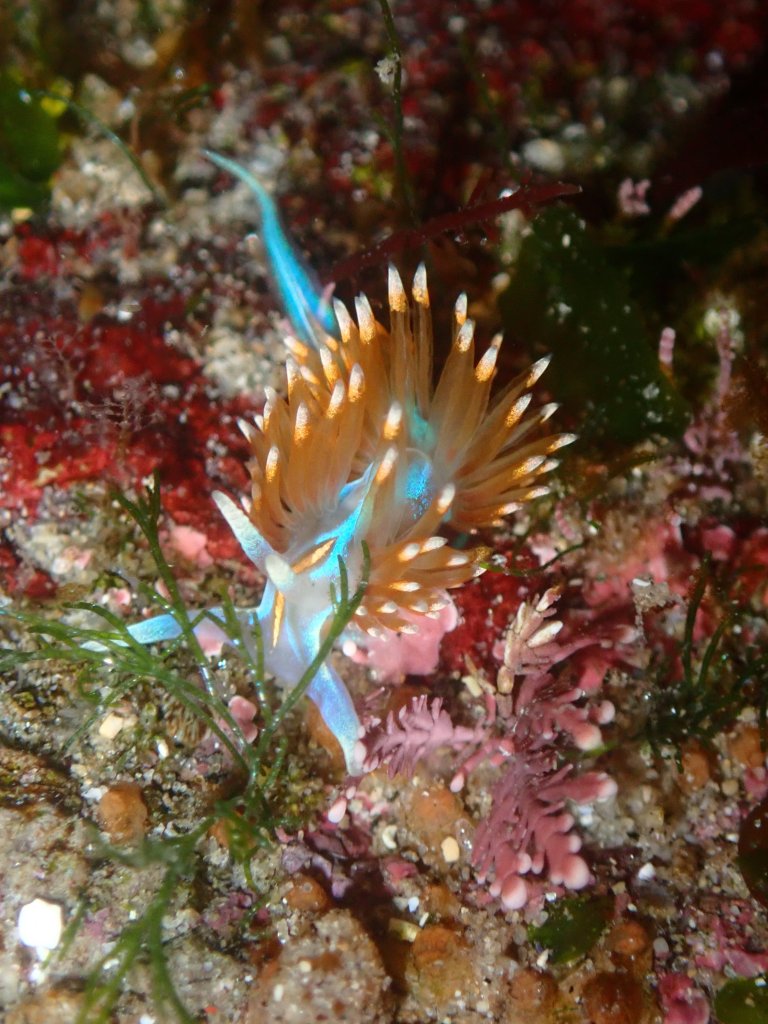
Unlike many other nudibranchs that are incredibly picky eaters, the opalescent nudibranch feeds on quite a large variety of organisms. It prefers hydroids, tiny cnidarians related to anemones, but also will enjoy anemones, bryozoans, tunicates (sea squirts), and even sometimes small sea jellies or polyps, if available.
The stinging cells of hydroids and anemones do not harm the opalescent nudibranch, but instead it incorporates some of the functioning stinging nematocysts into its own body and uses them for defense against predators. The ability to incorporate functioning cells from prey is not unique to the opalescent nudibranch; many other aeolids perform similar functions with cnidarians and certain sap sucking slugs even preserve functioning chloroplasts and use them to produce food through photosynthesis while inside the slug.
Habitat and Range
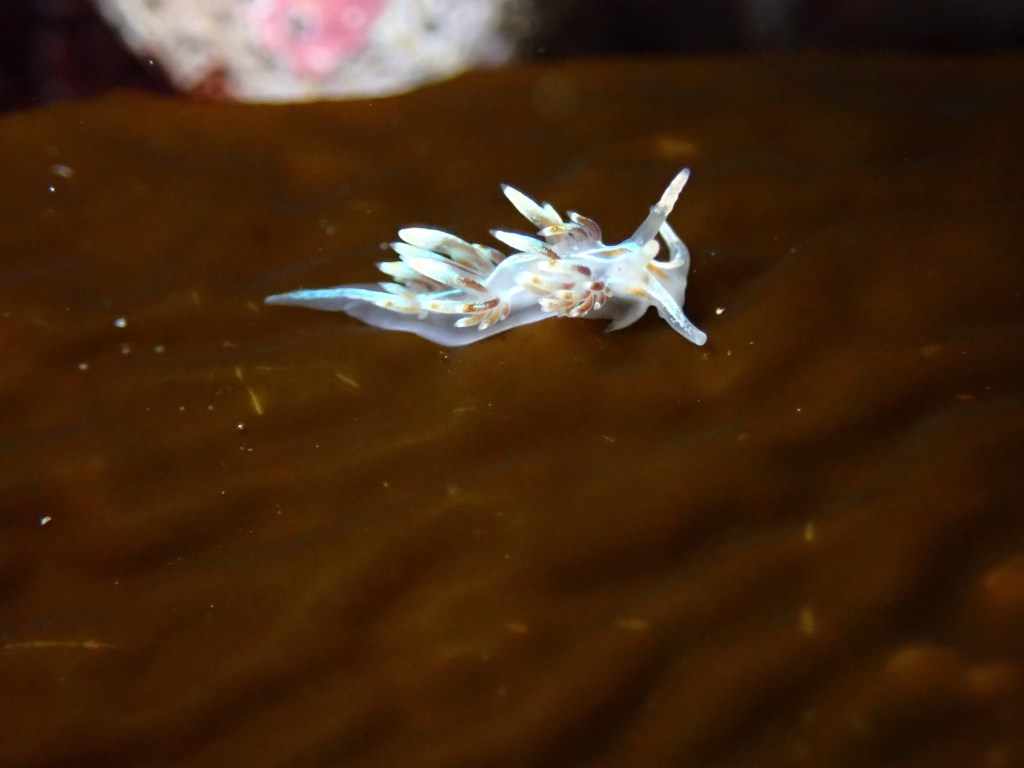
The opalescent nudibranch can be found from Punta Eugenia, Mexico, to Northern California. They thrive in the intertidal to a depth of about 120 ft but are also hardy enough to live in bays and estuaries where the salinity is lower and the water is much less nutrient rich than the crashing waves on the coast. They are often seen in large numbers on docks, especially in the spring and/or at dusk.
The northern range of the opalescent nudibranch overlaps with a very similar species, the horned nudibranch (Hermissenda crassicornis), which can be found as far north as Alaska. These two species were treated as one for nearly 100 years, but have now been classified individually. While they were very similar, you can usually tell them apart by location, as most opalescent nudibranchs will give way to horned nudibranchs once you are north of the Bay Area. It is only the area around San Francisco and San Jose that boast large communities of both species.
The opalescent nudibranch is found in a variety of locations in the tide pools from algae to rocky substrate. Unlike other nudibranch species that might only ever been found on their food source like the Pacific corambe, opalescent nudibranchs can be found all over the tide pools as long as the coast is somewhat protected from rough surf.
Behavior
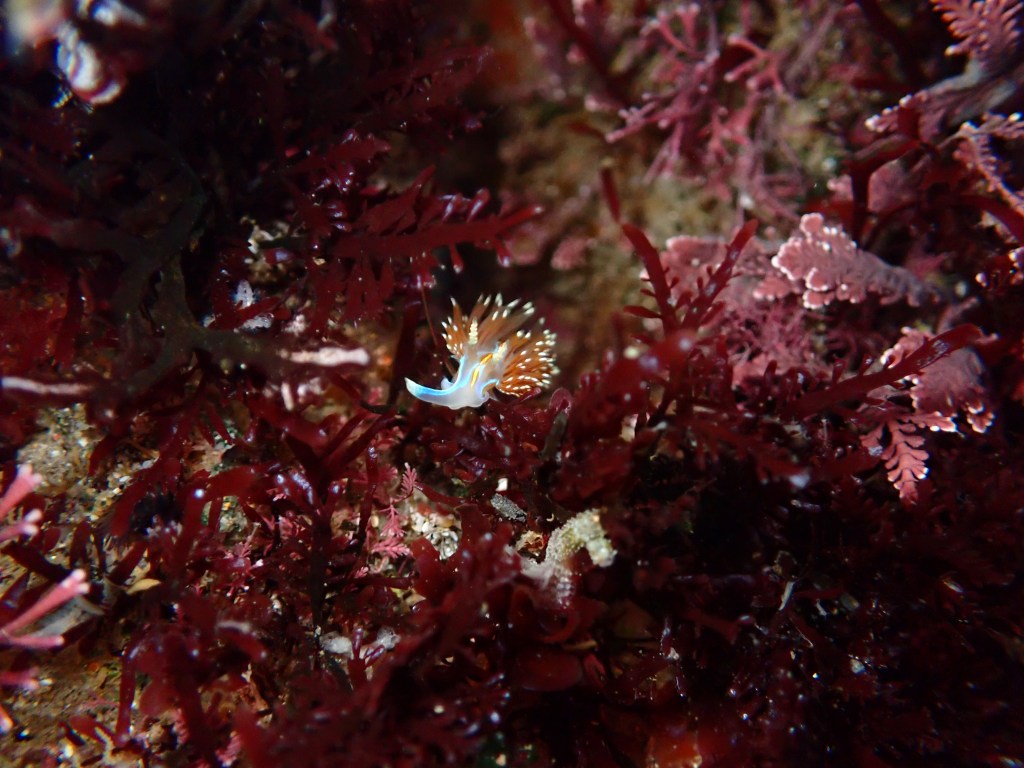
The opalescent nudibranch shares many characteristics with other aeolids, not the least of which is the aforementioned theft of stinging nematocyst cells from its prey. This behavior is common among aeolids and serves as a defense mechanism. There have been documented occurrences of fish spitting out nudibranchs after taking them in their mouths.
The opalescent nudibranch is also known for often exhibiting a behavior that many sea slugs possess: surface crawling. While these animals are benthic (they spend most of their lives on the sea floor), crawling is not a very fast mode of locomotion, so some sea slugs crawl on the underside of the water’s surface instead and are pushed by the current. If you see a slug “stuck” floating upside down, don’t “save” it; it’s only surface crawling. Opalescent nudibranchs seem to be particularly fond of this, or else it is just that they are more common and thus are seen surface crawling more often. This behavior gives underwater photographers an amazing opportunity to capture reflection shots as the slug crawls upside on the water’s surface.
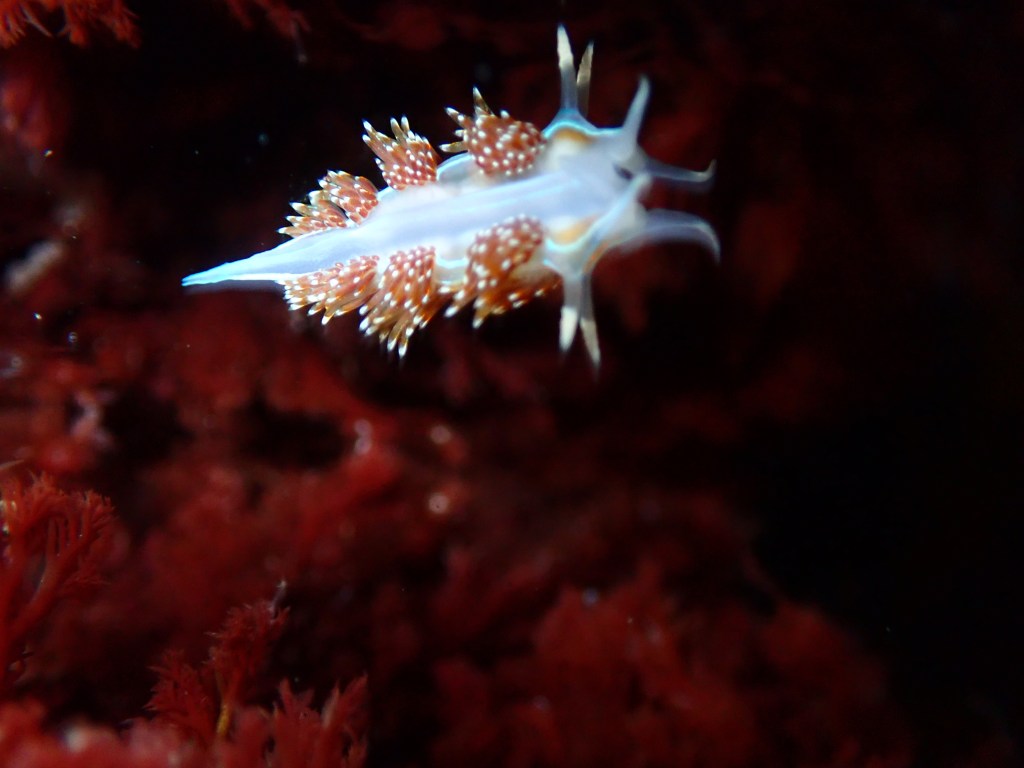
Opalescent nudibranchs tend to be more active at night than during the day. On one particular visit to the tide pools, I was searching for invertebrates for about an hour before sunset. While I did find some, I wasn’t having much luck for nudibranchs. But after the sun had set and it began to grow dark, the opalescent nudibranchs came out in droves; I think I saw about 20 that night.

Categories
tags
Subscribe to the blog
Sign up to receive weekly emails with tide pooling information and guides so you never miss a post!
 The Tide Is Out
Leave a comment