
7 Tide Pool Animals Larger than 6 Inches
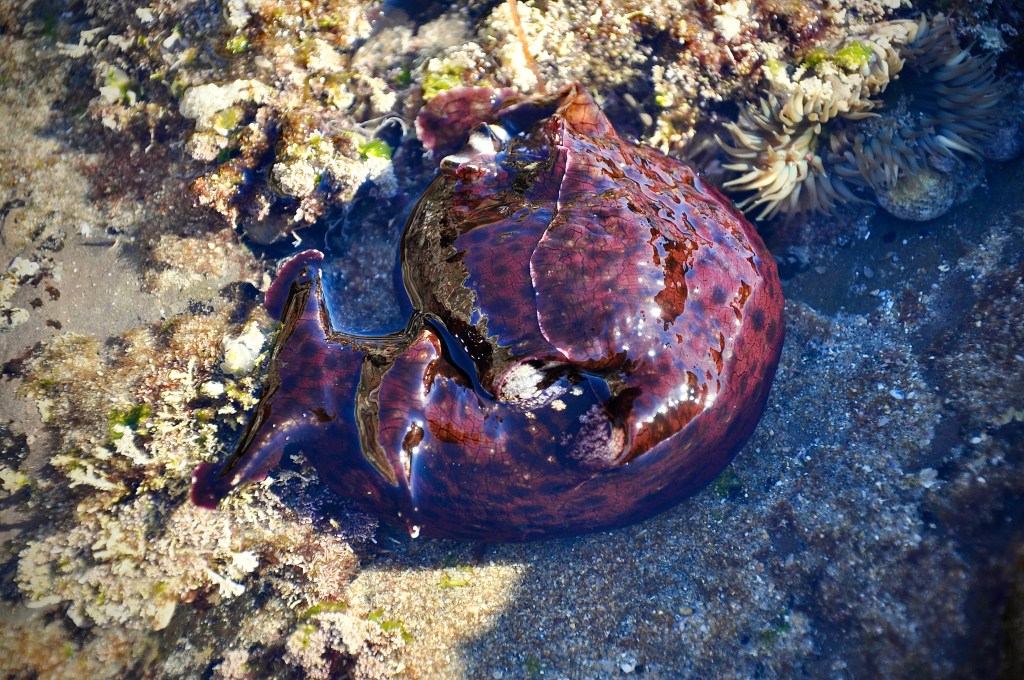
If you’ve spent much time on this blog before, you’re probably aware that lots of the animals in the tide pools are very, very small. Often requiring the use of a macro camera for identification, these tiny organisms excite avid tide poolers and marine scientists, but don’t usually do much to hold the attention of kids. While the tiny animals are indeed fascinating, sometimes you need something big and cool to look at.
In this spirit, here are 7 animals you can find at the tide pools that are more than 6 inches long and will undoubtedly hold the attention of kids and adults alike
- 1. Sea hares
- 2. Sea stars
- 3. Eels
- 4. Octopus
- 5. Giant Keyhole Limpet
- 6. Kelp Crabs
- 7. Aggregating Anemone
1. Sea hares
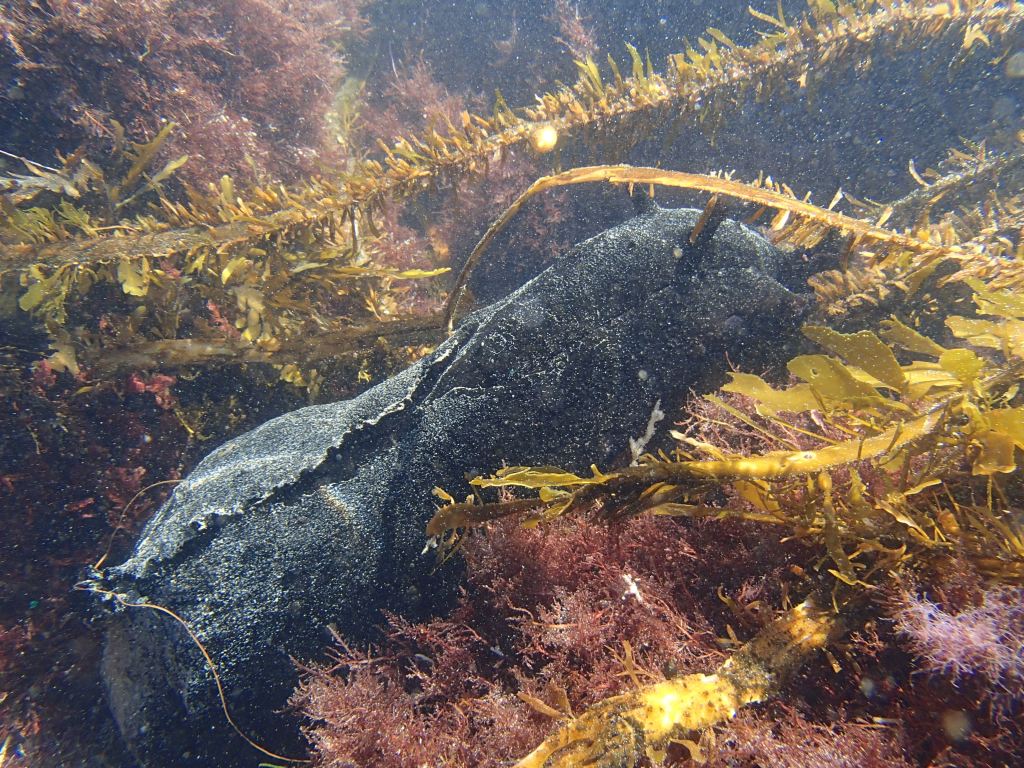
We have two resident sea hare species in California: the California sea hare (Aplysia californica) and the black sea hare (Aplysia vaccaria). These large sea slugs are easy to spot, safe to touch (gently), and are usually rather large. The black sea hare is the largest sea slug in the world and can grow up to 3 ft in length. The ones you will see in the tide pools will be closer to 6-12 inches long, but this is still plenty big to generate interest.
2. Sea stars
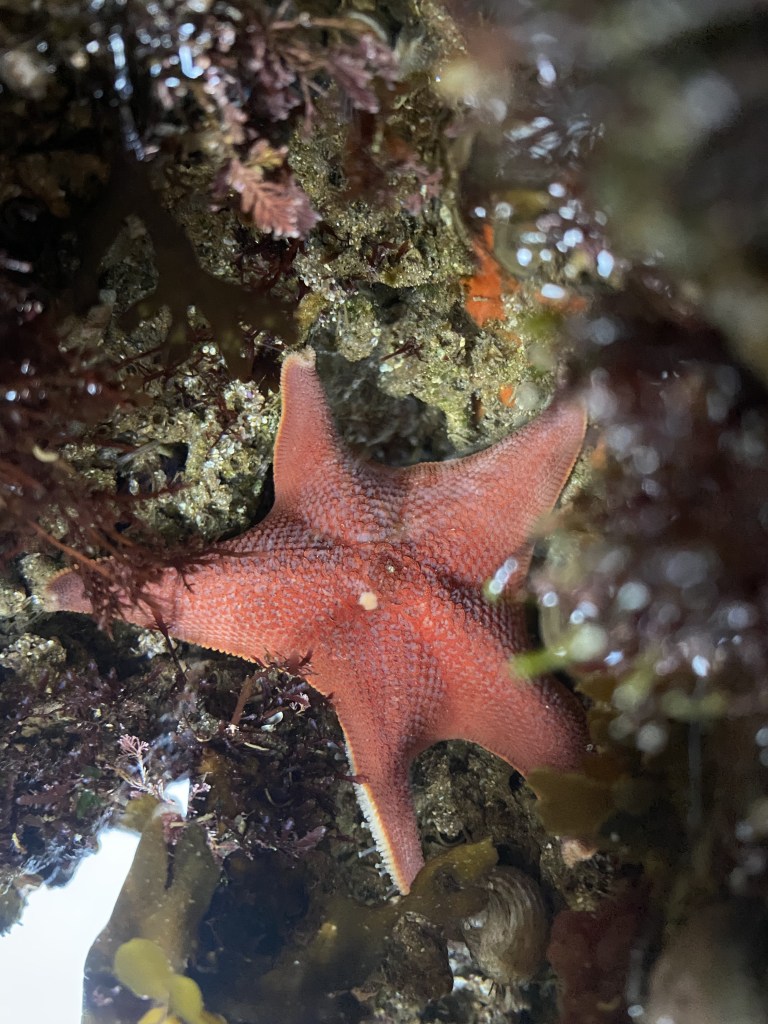

The eastern Pacific is home to many varieties of sea stars, some large and some not. The larger ones you will see in the tide pools of Southern California are often ochre stars (Pisaster ochraceus) and bat stars (Patiria miniata), the former of which can reach about a foot long. With their bright colors and relatively hard exterior (that also makes them safe to gently touch), these animals are a favorite of many beginner tide poolers to find.
3. Eels
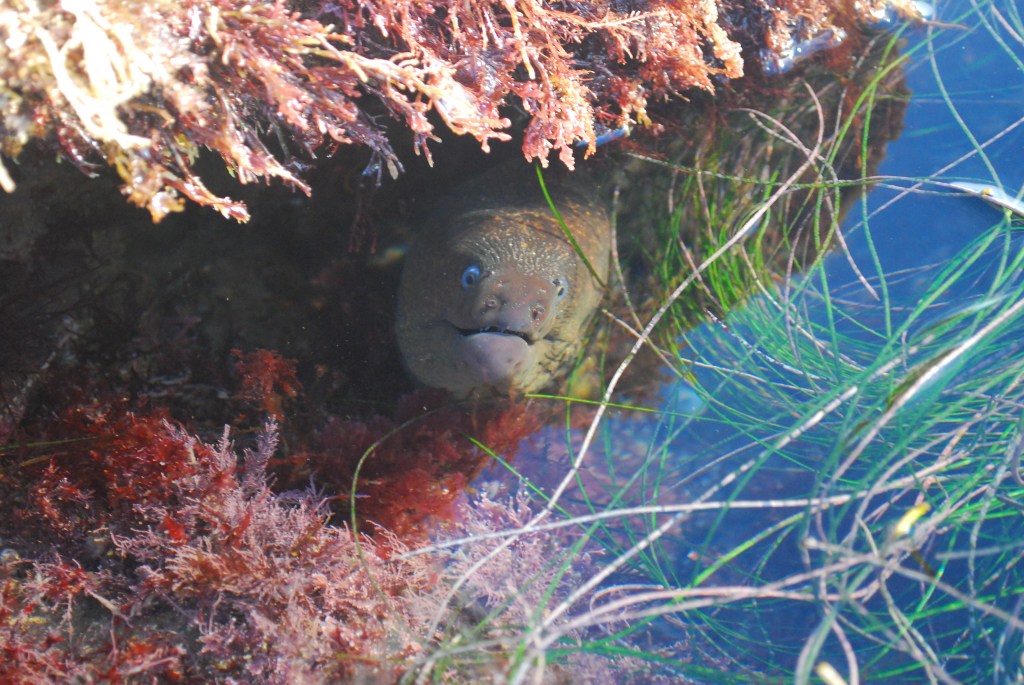
You may not have known that you can find eels in SoCal tide pools, but you can. The California Moray (Gymnothorax mordax) occasionally visits the intertidal and can grow up to five feet in length. These snakelike fish are a treat to see at any size, but make sure not to touch or disturb this animal as it can bite.
4. Octopus
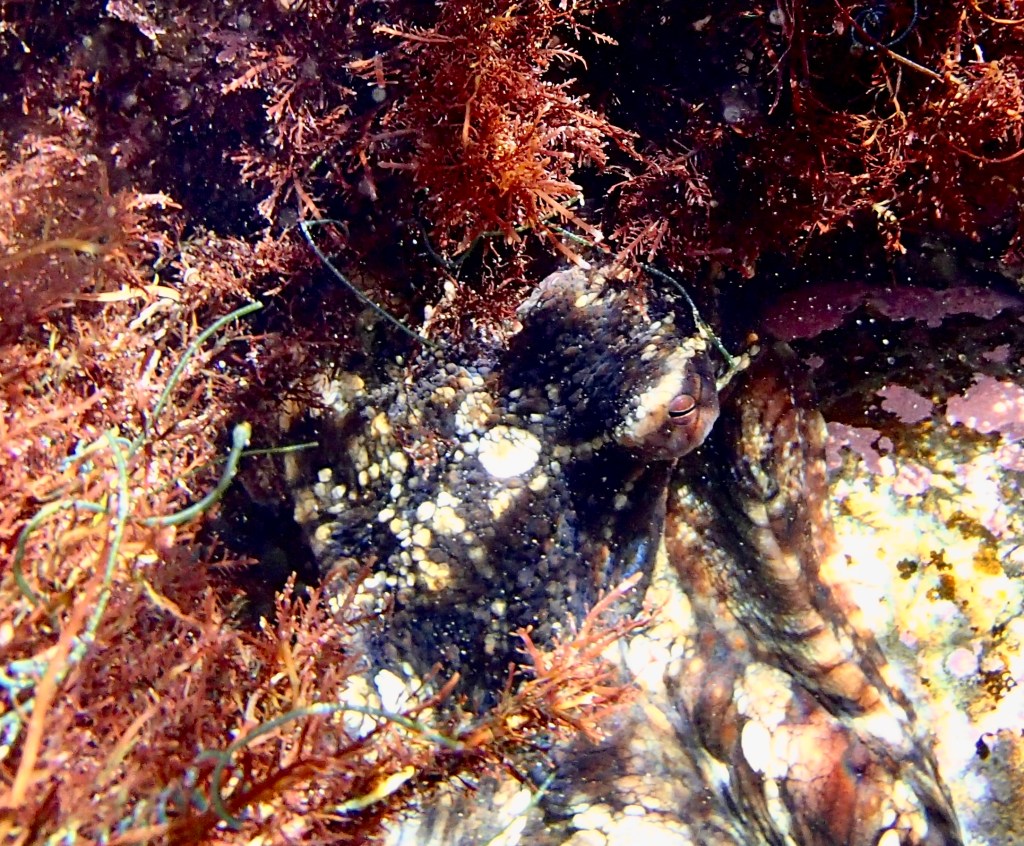
Finding an octopus was the crowning achievement at the tide pools when I was a kid. Among the smartest invertebrates in the world, the lesser two spot octopus (Octopus bimaculoides) is the most commonly seen species in SoCal tide pools and can get up to about two feet in length. No matter how big an octopus is, their highly intelligent behavior and suction cup tentacles made for a fascinating find.
5. Giant Keyhole Limpet
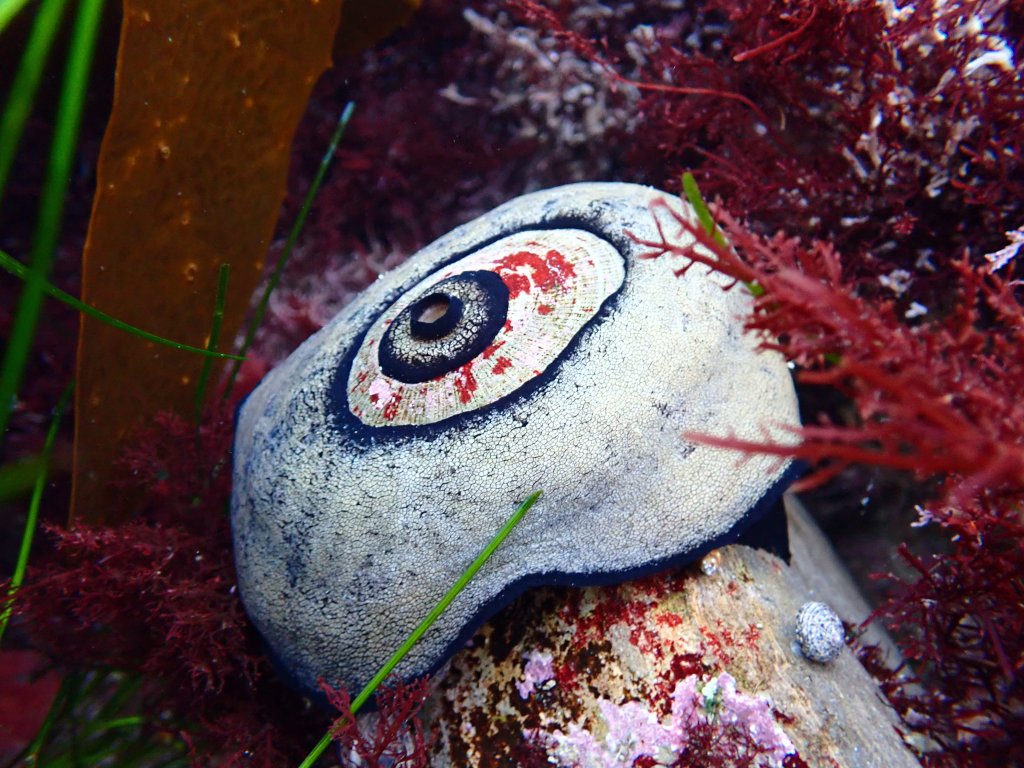
This mollusk is the largest of all keyhole limpets; the largest one I’ve ever seen was probably about 6 inches long. Safe to touch and often displaying wide color variation, this commonly seen animal won’t swim away or hide beneath a rock when you come up to it. The large size makes the mantle covered part of its shell all the more interesting.
6. Kelp Crabs
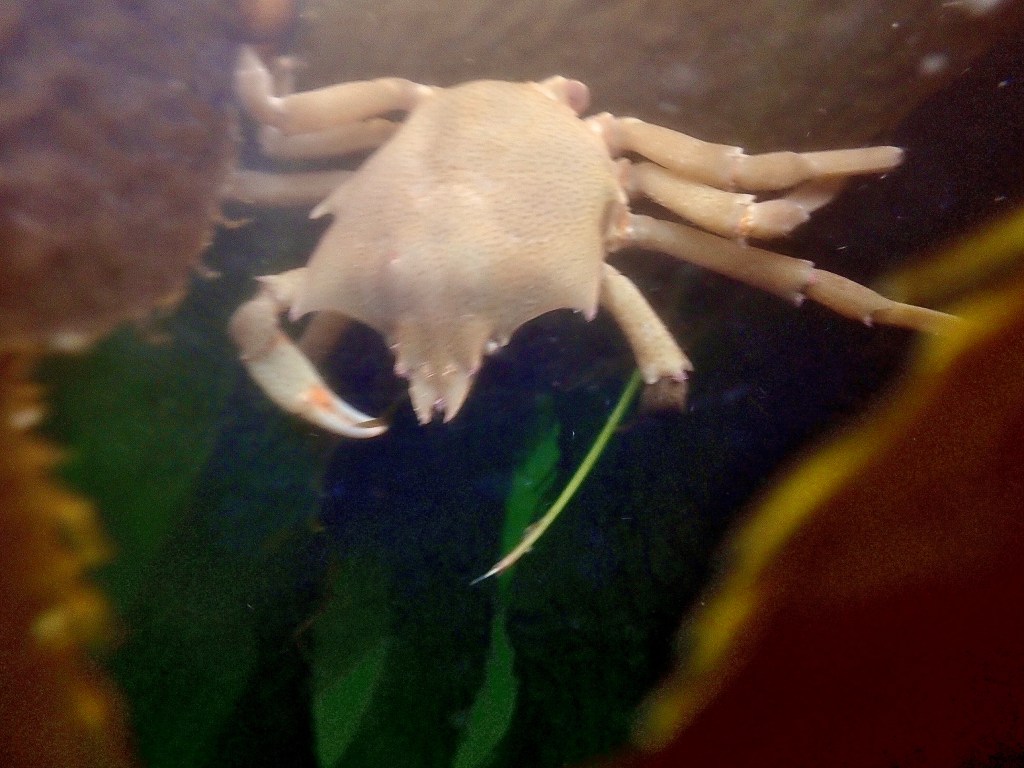
There are a variety of large crabs that you might see in the tide pools, but the most common one is the northern kelp crab (Pugettia productus). These crustaceans can reach about 8 inches from leg tip to opposite leg tip. Striped shore crabs and lobsters can also reach large lengths, although the former is typically smaller and the latter is seldom seen in the tide pools. See this article for other crustaceans, large and small, you might see at the tide pools.
7. Aggregating Anemone
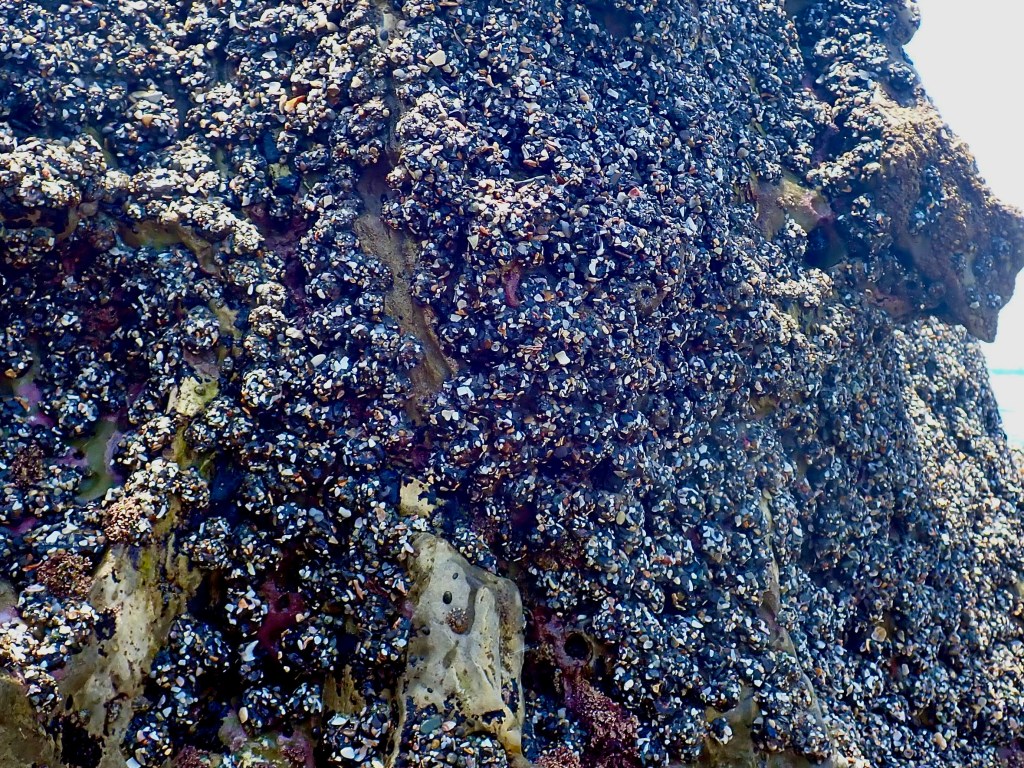

Some anemones in the tide pools can be quite large, but arguably none so large as the aggregating anemone (Anthopleura elegantissima), although not in the way you might think. Individual polyps of this species are usually no more than an inch or two in diameter, but they often grow in large swaths across rocks, smothering the entire surface as is shown in the image on the left. All of these polyps are genetically identical, as each polyp can split itself in two to make two new polyps. Whether this is a form of asexual reproduction or simply a form of growth with in the same individual is open for debate, but either way these giant colonies of anemones are certainly worth a second look.

Categories
tags
Subscribe to the blog
Sign up to receive weekly emails with tide pooling information and guides so you never miss a post!
 The Tide Is Out
Leave a comment