
How Big Are Nudibranchs?
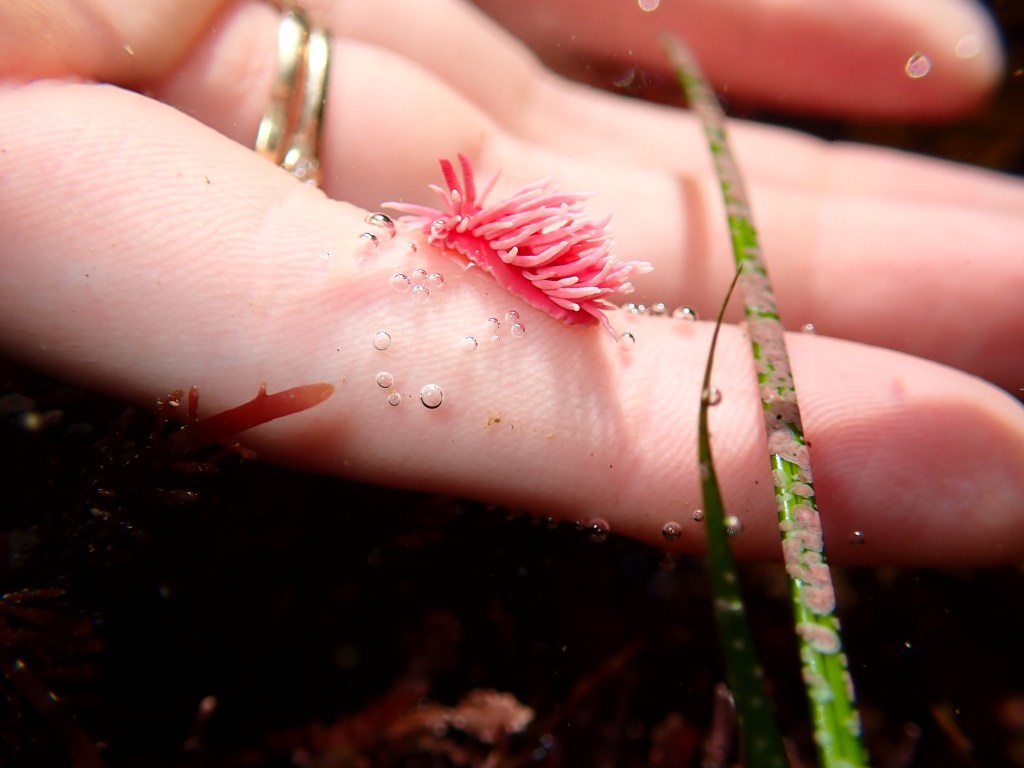
Usually, not very big.
Asking how big nudibranchs are is like asking how big cats are. Obviously, some are bigger than others. Nudibranchs have a whole taxonomical order all to themselves. This is the same taxonomical level as carnivores (mammals that eat meat), so technically, nudibranchs have even more diversity (and thus probably more sizes) than cats, which only have a taxonomical family to themselves.
Despite all of this, it is safe to say that nudibranchs are usually small, ranging anywhere from a few millimeters to a couple inches in length. The advent of macro cameras, some of which have the power of a microscope, has made nudibranchs seem bigger than they are. When you see a stunning, blown up print of a nudibranch with every detail in focus, it’s easy to believe the slug was a foot long.

However, answering this question really depends on where you are looking and what animals you are talking about. Let’s look at a flow chart to make things easier.

What’s your definition of nudibranch?
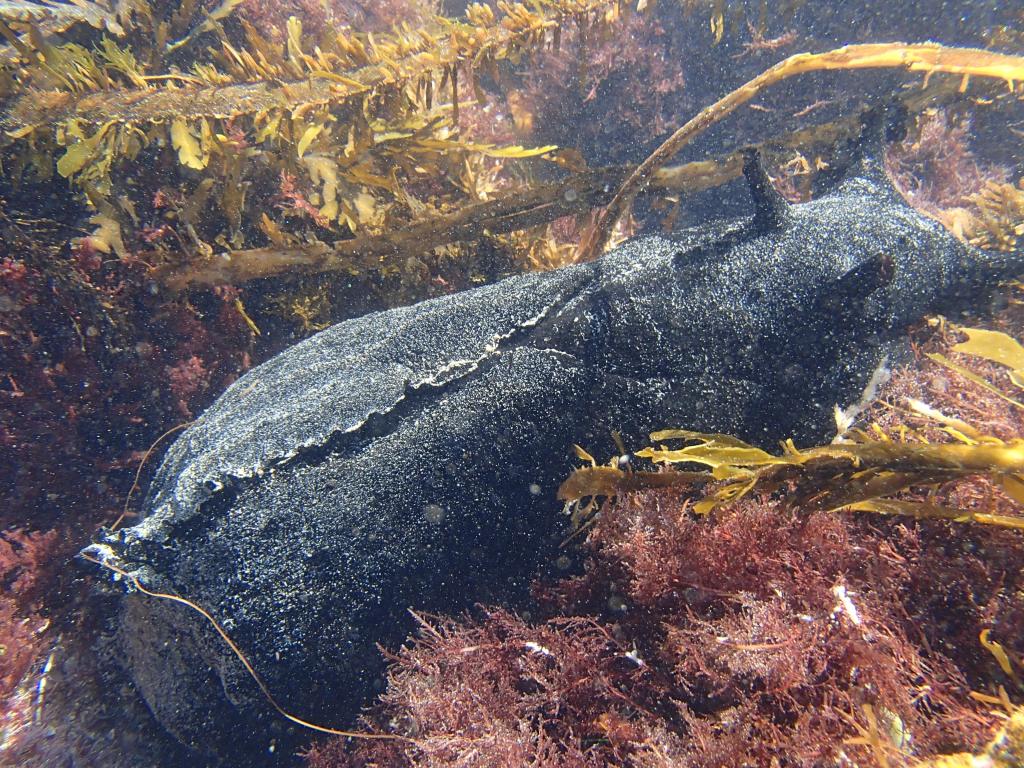
The first question in the flow chart asks you to define what you mean by nudibranchs. The term nudibranch has been used by scientists and enthusiasts alike to refer to all shell-less, marine mollusks (sea slugs) instead of only true nudibranchs. Check out this article to learn more about the differences. In our discussion here, if you include all sea slugs in your question about nudibranchs, then you are going to have slugs with widely different sizes, ranging a few millimeters to three feet in length. Sea slugs are incredibly diverse and thus represent a large range of sizes. Even in the tide pools, I have seen sea slugs 18- 20 inches long, probably weighing up to 15 pounds like this black sea hare below.
Where are you looking?
Let’s assume we are only talking about true nudibranchs in our question and aren’t including all sea slugs. The next question we need to ask is where you are looking. Nudibranchs that live in open water or on coral reefs have more room to grow and more opportunity to find food. Nudibranchs that live in the tide pools, on the other hand, are often constricted to small spaces and have to compete with more animals for food. This means that nudibranchs that live in the tide pools will be much smaller than those that live in open water, much like a fish housed in a small tank won’t grow bigger until moved to a larger one.
If we then further assume that you are looking for nudibranchs in the tide pools, then our flow chart answer shows that they are often very small. Since this blog is about tide pooling, I’ll focus on this answer for the rest of this post.
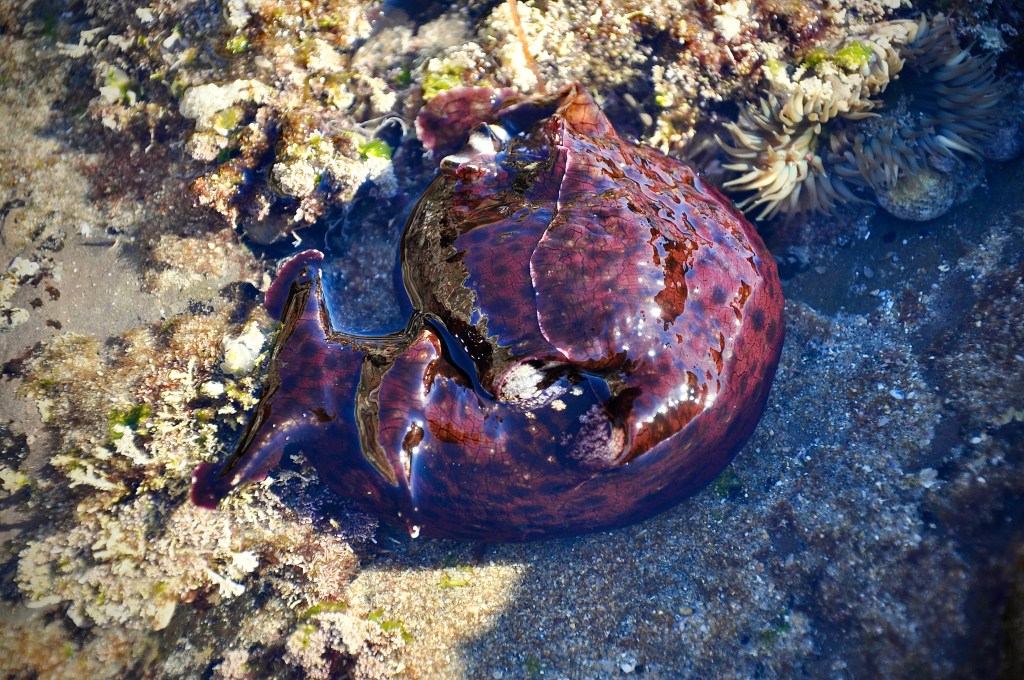
Sea slugs that you find in the tide pools are likely going to be the only large slugs you’ll see. California sea hares (pictured below) can grow quite large, often to around 10 inches, and the black sea hare is the largest mollusk in the world, growing up to 3 feet in length. The largest I’ve seen in the tide pools is about 18 inches.
Nudibranchs, however, are much smaller. The average nudibranch I’ve seen in the tide pools probably comes in around a single centimeter. This is the main reason these animals are so difficult to find: because people don’t realize how small they are and don’t train their eyes to pick out the specks amongst the algae.
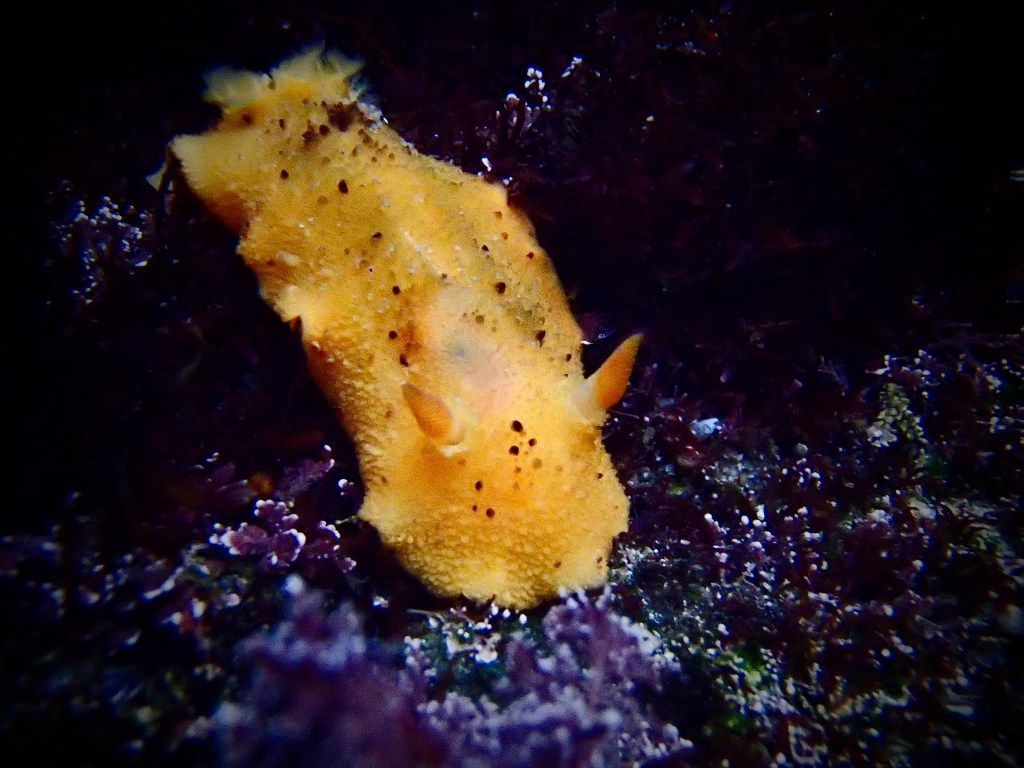
If you search the web, you can find large specimens of Spanish dancers or hooded nudibranchs, but I’ve never been lucky enough to see any of the giants. The largest nudibranch I’ve ever seen is a Monterey dorid (below, left) that was around 4 inches long. Next to it is a salt and pepper dorid (below, right), measuring about a centimeter in length. Can you see the difference in size just by the photos?
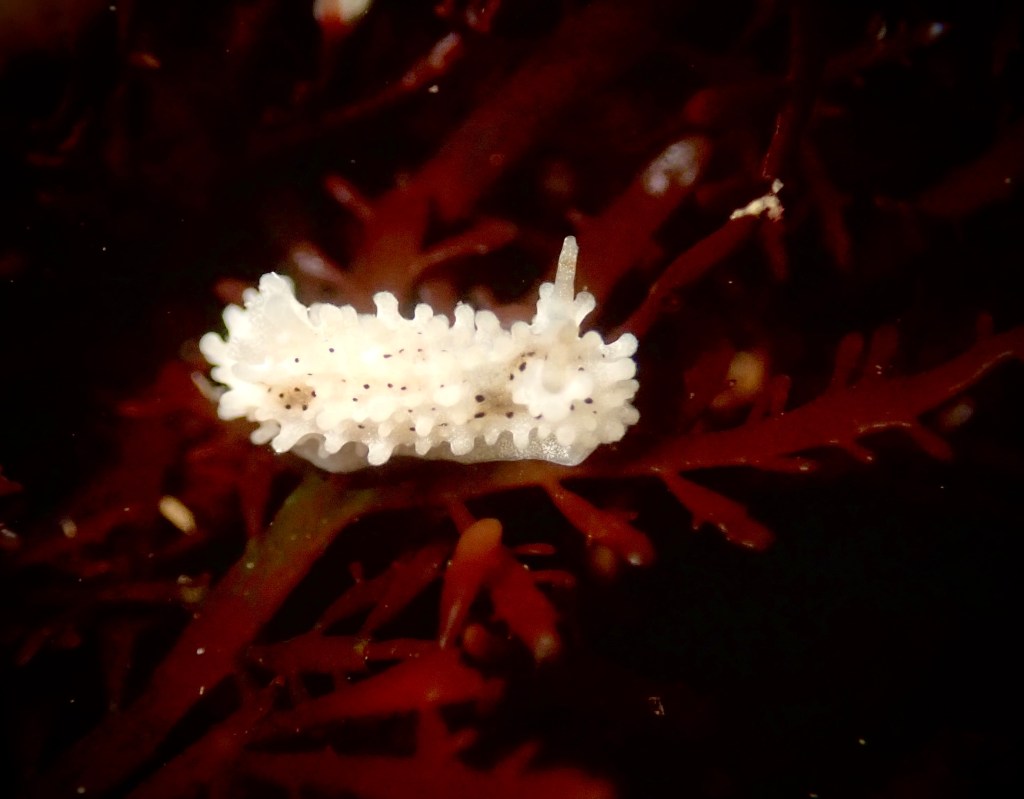
If you can’t, don’t worry; most people can’t.
Of all the nudibranchs I regularly see, the Hopkins rose nudibranch is one of the largest in the tide pools; it’s odd to see one less than a centimeter and a half. Spanish shawls also tend to be larger, usually around 2 centimeters. These two species are easier to spot because of this and are commonly seen. Opalescent nudibranchs can also be on the larger end, sometimes as long as 2 centimeters, but smaller individuals of this species are also common. This opalescent nudibranch below was one of the smallest I’ve seen. The squares on this sheet are 5 mm by 5mm, making this slug about 7-8 mm long.

On the other hand, many species of nudibranch top out around 5-7 millimeters, sometimes smaller. You can see from the image below that this three lined aeolid is only 6-7 millimeters in length and could easily fit on my thumb nail that is holding the algae.

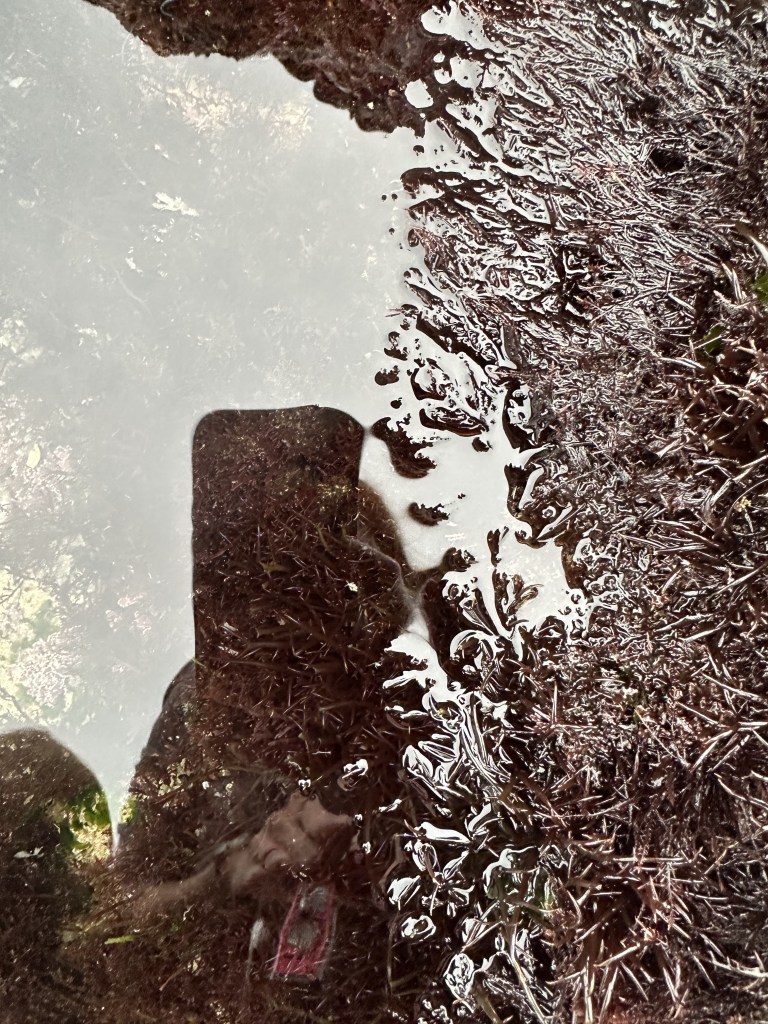
This white crusted aeolid below might take the trophy for the smallest nudibranch I’ve ever seen. Only about 3 millimeters in length, this little guy was barely a speck when I spied him out. The second photo was taken only a foot or two from the water while I was kneeling down. It is the tiny white speck, in nearly the center of the photo. You can imagine how small it would look if I were standing up.
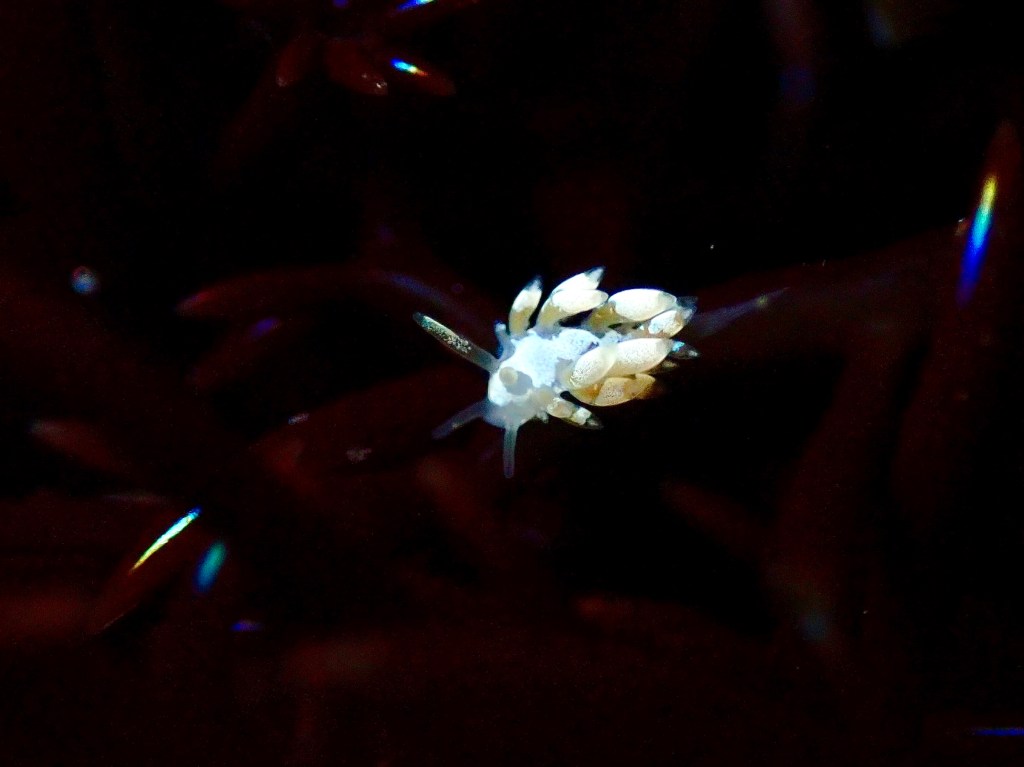
These species and many others remain smaller for a variety of reasons, not the least of which is simply because they are a smaller species, in the same way house cats do not grow to the size of lions.
Hopefully this helps you better understand the diversity of these animals and their varying sizes. If you’re looking to find a specific nudibranch at the tide pools or while diving, it’s very helpful to find out how big that species usually gets so that you can better focus your efforts.

Categories
tags
Subscribe to the blog
Sign up to receive weekly emails with tide pooling information and guides so you never miss a post!
 The Tide Is Out
Leave a comment