
Christmas Tree Worms: Tropical Residents in the Tide Pools

In the minds of many people, worms are shapeless, nearly colorless, slimy creatures that might help fertilize your garden but that you hope to never encounter above the soil. But in the tide pools, worms are some of the most intricate, colorful, and beautiful creatures you might see. While they are often associated with warmer tropical waters and coral reefs, Christmas tree worms can be seen in the California tide pools, much to the delight of those searching for them.
Look below for everything you need to know about these creatures and how you might go about finding Christmas tree worms at your local tide pools.
Quick Facts
- Found throughout the world’s oceans, typically on coral reefs
- Local species in Southern California is the Panamic Christmas Tree Worm (Spirobranchus spinosus)
- Most of the worm is hidden inside it’s tube and will never be seen
- External appendages of Christmas tree worms come in a range of colors from red, blue, white, orange, purple, and yellow.
- It won’t eat your Christmas tree; the name comes from appearance, not diet
Appearance

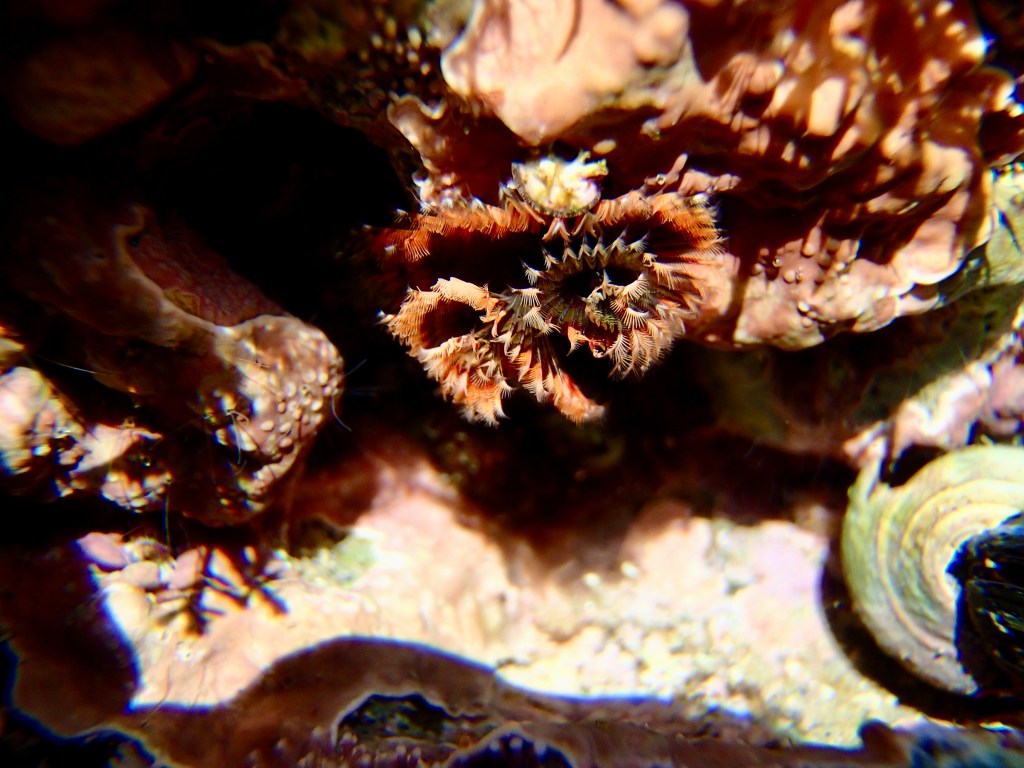
Christmas tree worms are well known for their Christmas tree shaped crowns that are visible outside their burrows. Each worm has two crowns that are visible simultaneously. These crowns are spiraled with radioles, feather-like appendages that respirate (pull oxygen from the water) and function as gills. Radioles also contain cillia, tinier hair like appendages that capture food particles drifting along the current. While they look similar to anemones, Christmas tree worms are true polychaete worms and not stinging cnidarians. Instead of their crowns containing stinging cells like the tentacles of an anemones or sea jelly, their function is more akin to the gills of a nudibranch that respirate.
Christmas tree worm crowns come in nearly every color imaginable ranging from blue, red, orange, yellow, purple, pink, white, black, and brown. The images below represent individuals seen in the tide pools of California, the Caribbean Sea, and Hawaiian waters.
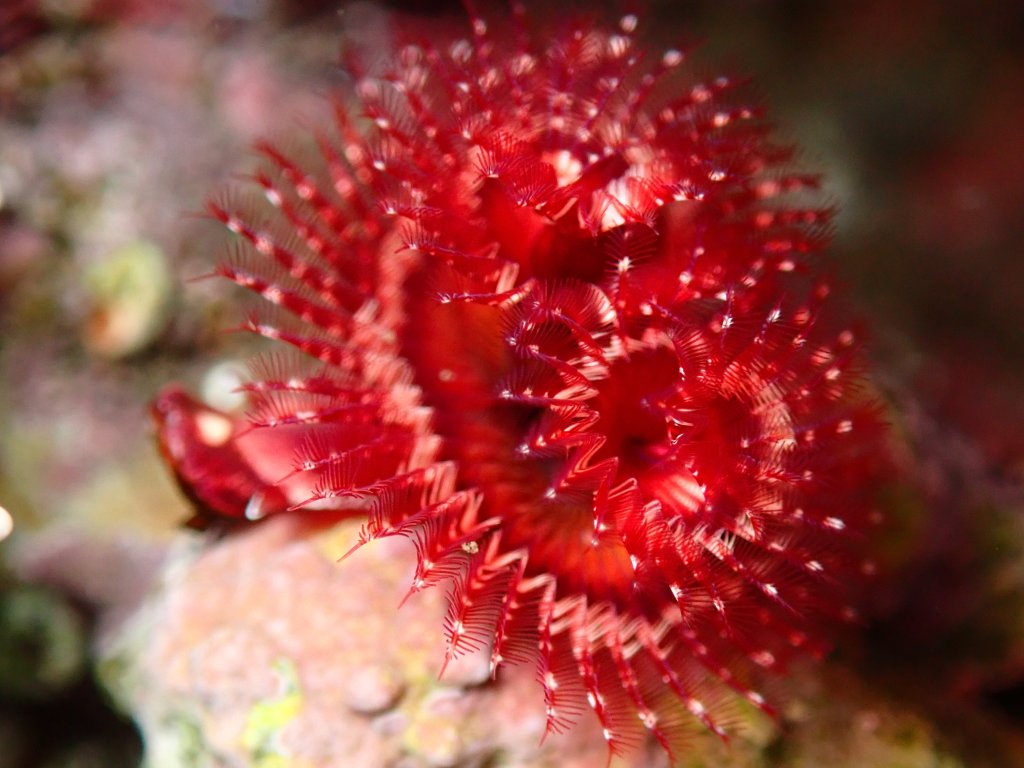
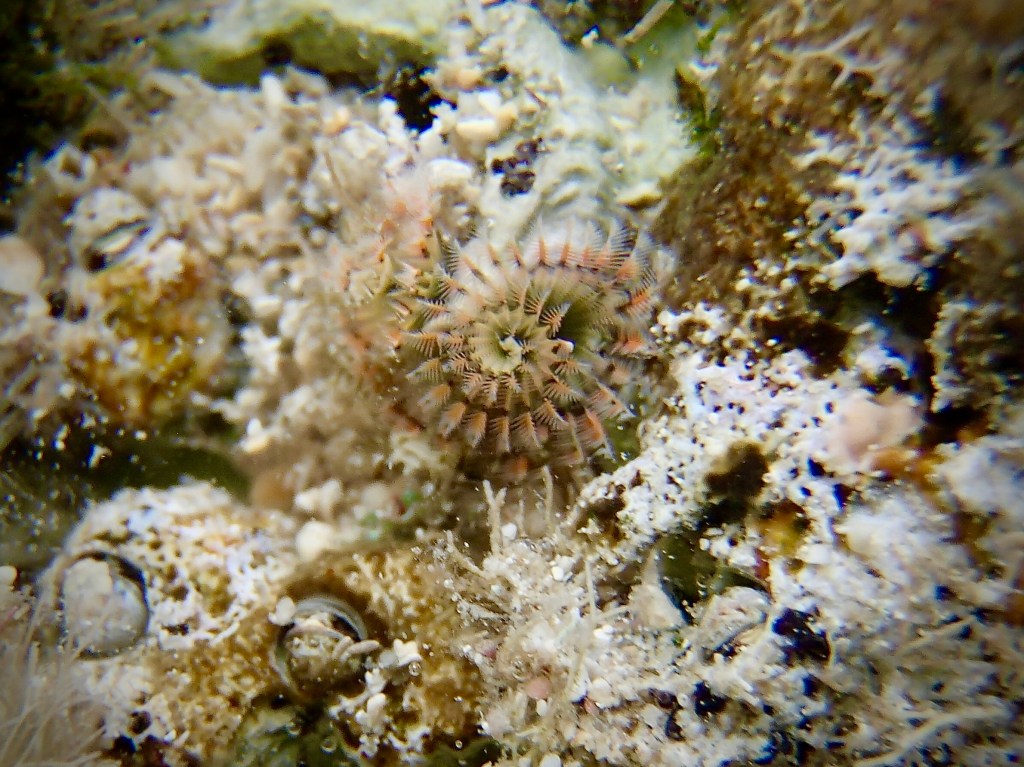
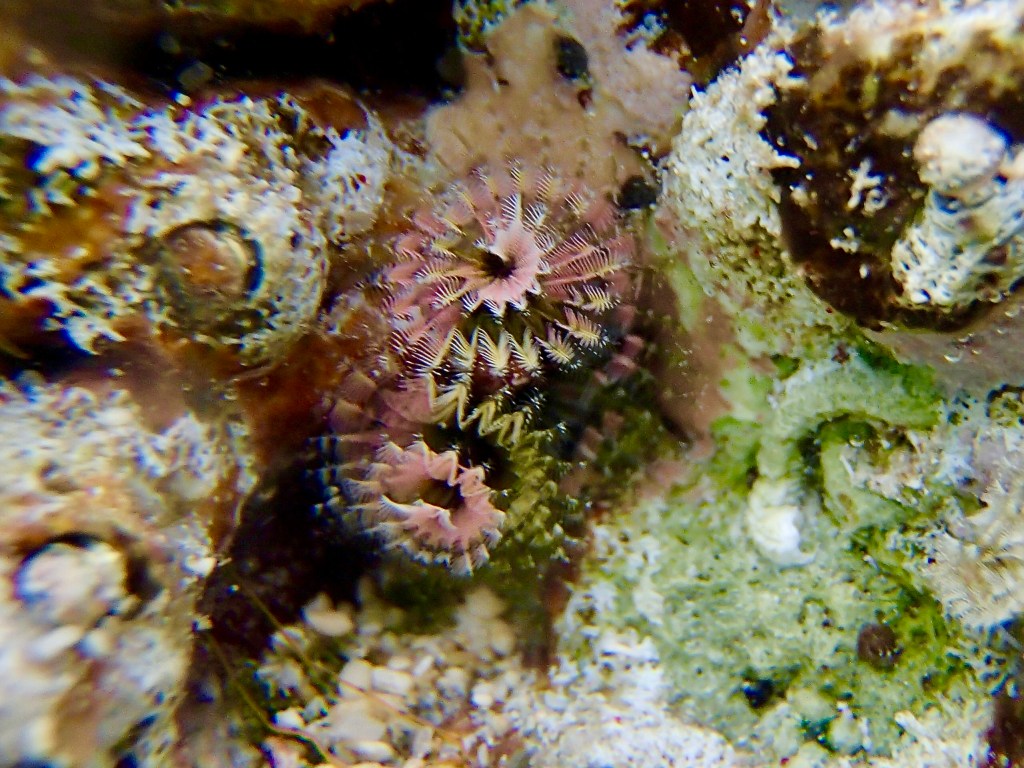
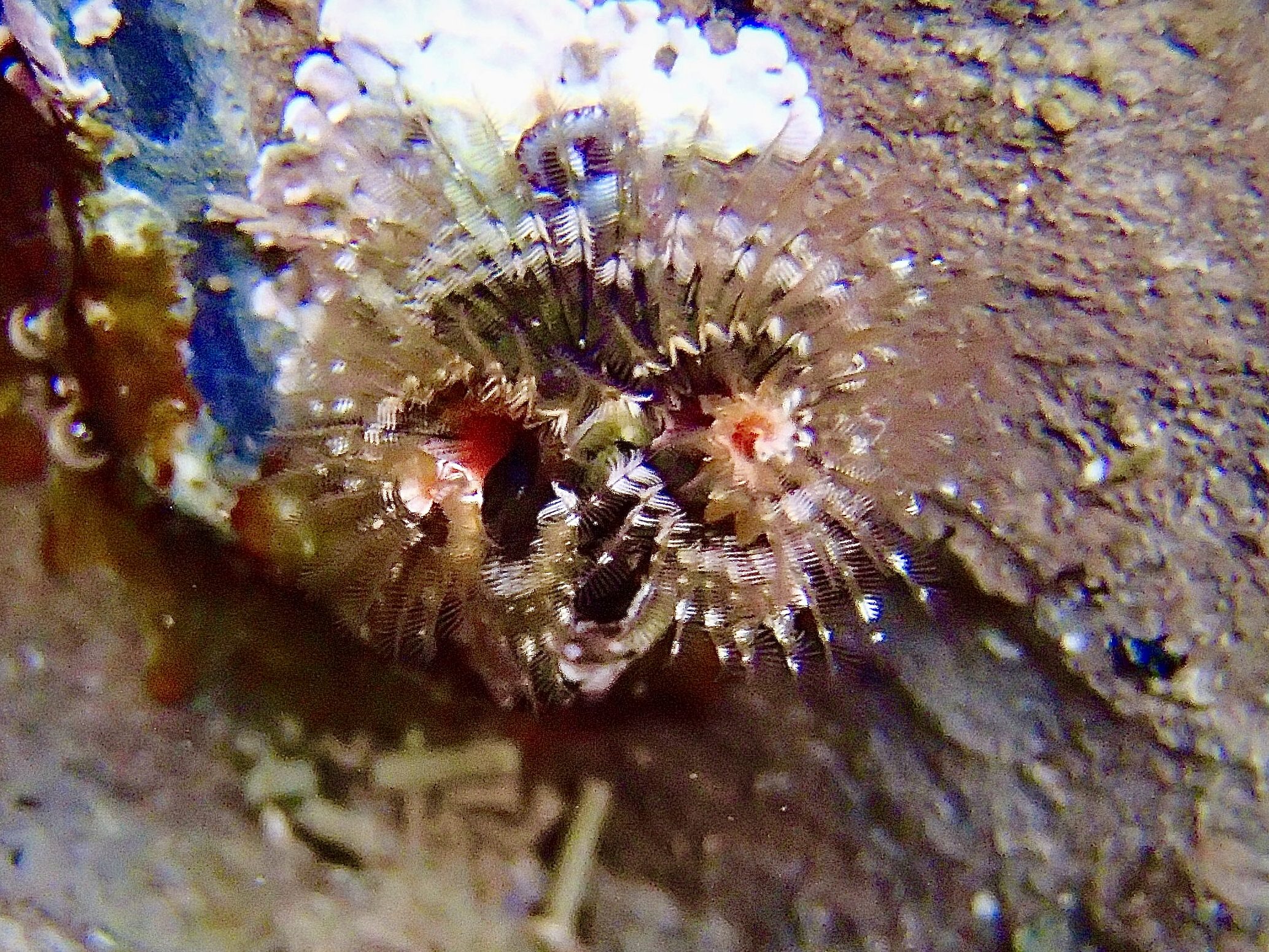
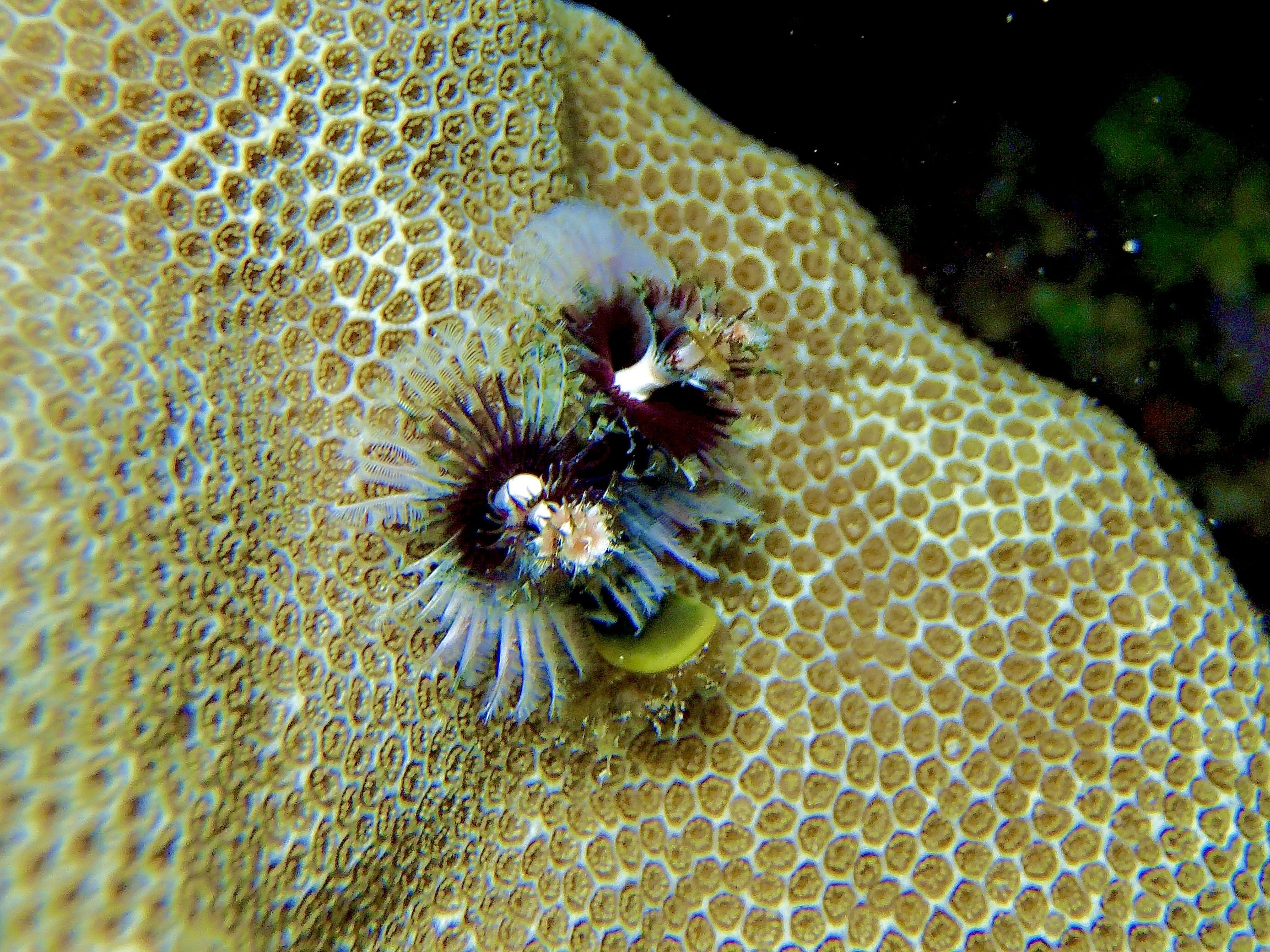
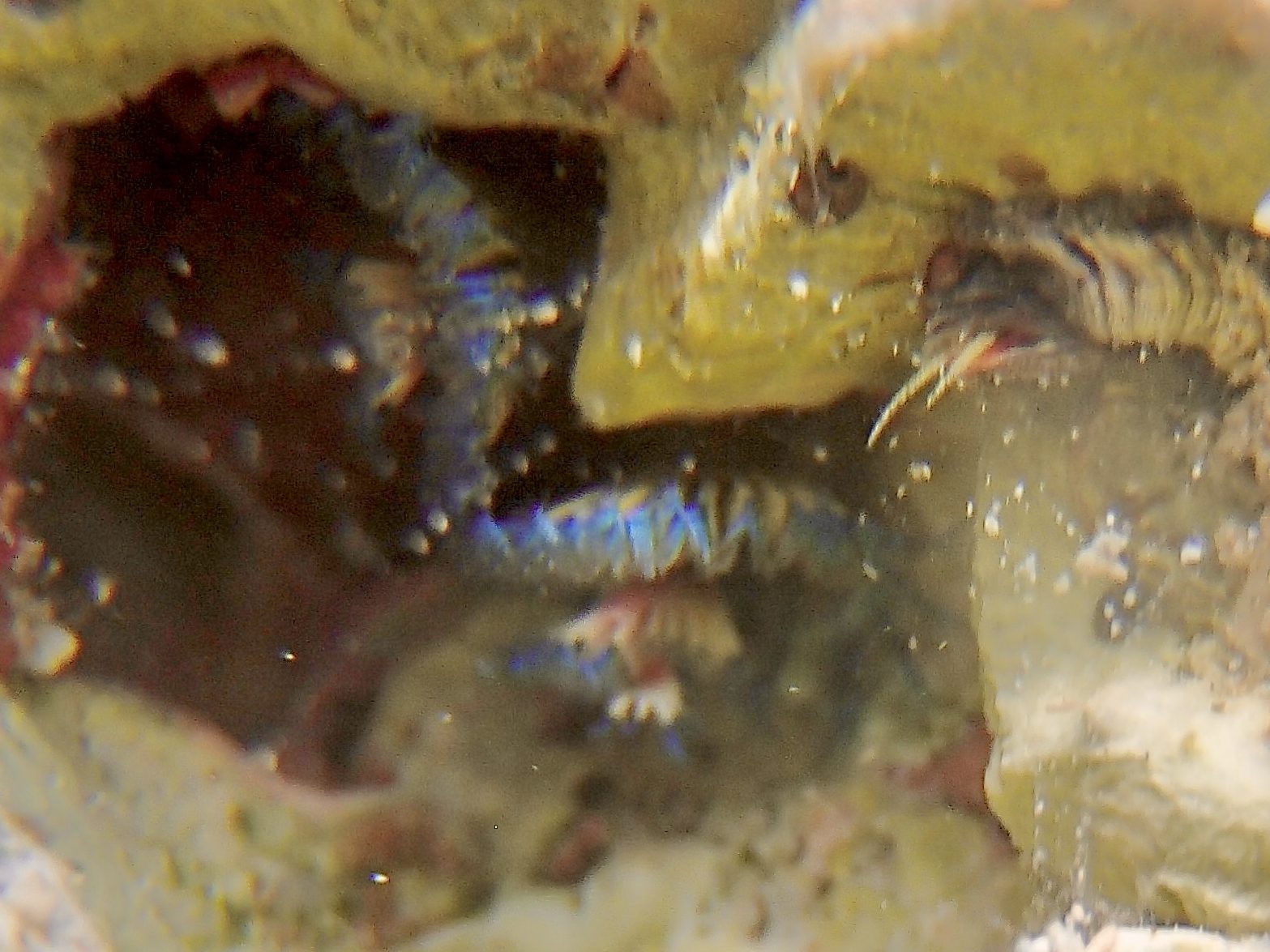
Beside the crown, the rest of the worm’s body, the parapodia (legs) and chaetae (bristles), are found within the tube of the warm and are very seldom seen. The worms are sessile and almost never leave their constructed home: a calcareous tube secreted from the worm’s body, much like a snail builds its own shell. The image below shows this tube right beneath the two crowns. Christmas tree worms can retract completely into their tubs and even have a special radiole called a operculum that seals the opening and creates a cap for the tube.
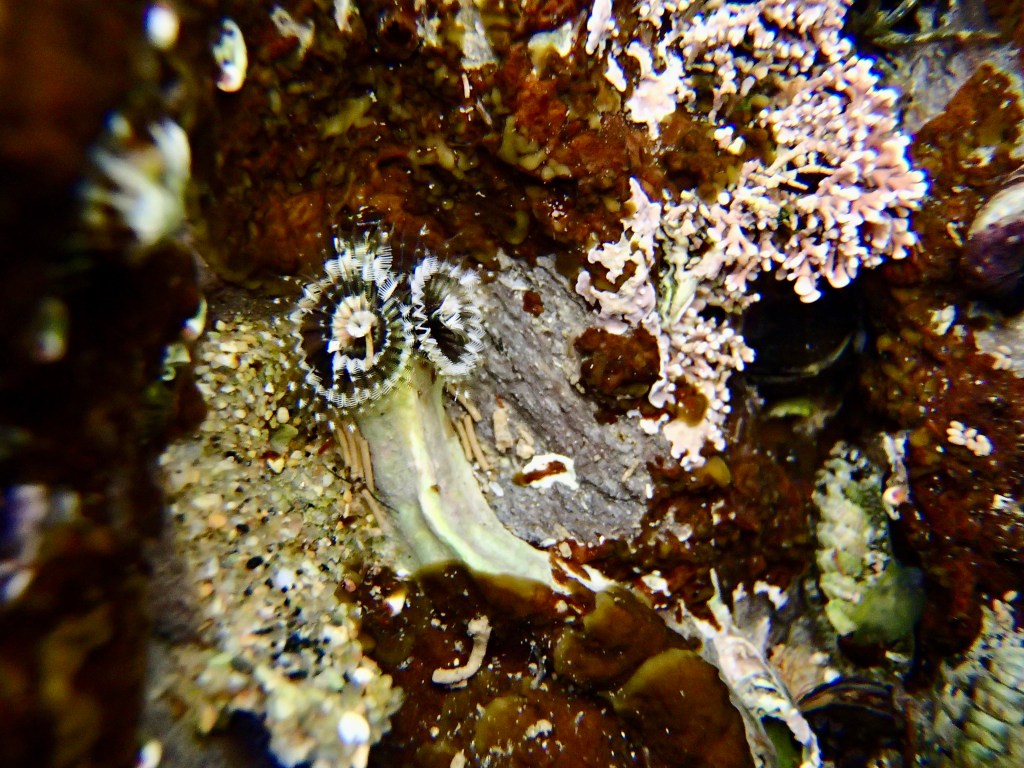
On coral reefs, Christmas tree worms can reach to about 1.5 inches in height, but individuals in the tide pools are much smaller, sometimes measuring only several millimeters or a centimeter long. Their colors, however, are no less varied or spectacular and tide pooling often yields Christmas tree worms with remarkable beauty.
Diet
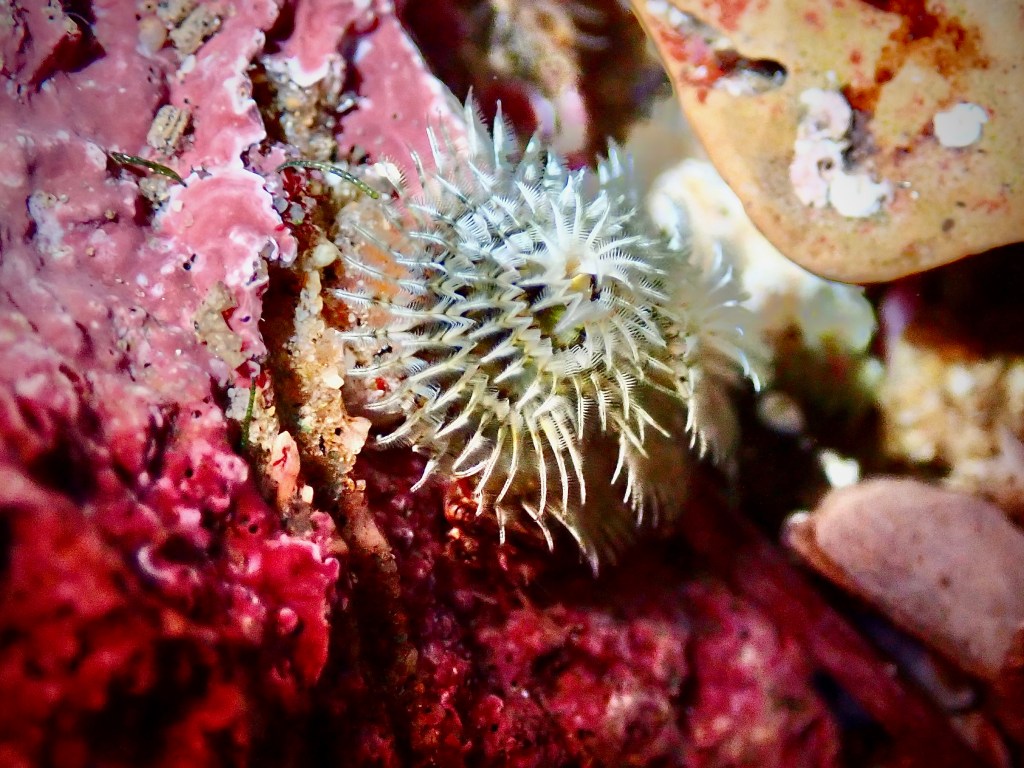
Christmas tree worms are filter feeders, using their radioles to catch tiny plants and animals, known as phytoplankton and zooplankton, drifting in the water. The radioles then bring the food particles to the mouth of the worm for digestion. In the tide pools, this filtering helps keep the water clean when natural circulation of water is cut off by the low tide. When the tide returns, it brings colder water with fresh nutrients for the Christmas tree worms and other animals to feed on.
Not many animals eat Christmas tree worms, but some fish (especially coral reef fish), crabs and urchins feed on these animals. If the predator only eats the crown of the worm, it is possible for the missing section to grow back within a few weeks. See this article for more information about predation and threats to Christmas tree worms.
Habitat and Range
Christmas tree worms are most famous for living in coral reefs, particularly on hard coral which they bore into to create their tubes. iNaturalist shows the range of animals in the genus Spirobranchus, which includes all varieties of Christmas tree worms, to be found across the world, mostly in warm waters but reaching as far north as the Pacific North West United States and as far south as New Zealand.
Panamic Christmas tree worms can only be found along the Pacific coast as they are the Pacific counterpart to Caribbean Christmas tree worms that live in the Atlantic. They can be found as far north as the Bay Area around San Jose and San Francisco, but are more common in the warmer, southern waters.
Despite not having coral reefs for them to live in, Christmas tree worms has adopted rocky shorelines and shallow waters instead. In the tide pools, individuals typically inhabit the mid to low intertidal zones. They appear to be more common in pools with less algae and more bare rock, but this my be a perceived habitat preference because it is harder to find them among marine plant life.
Behavior
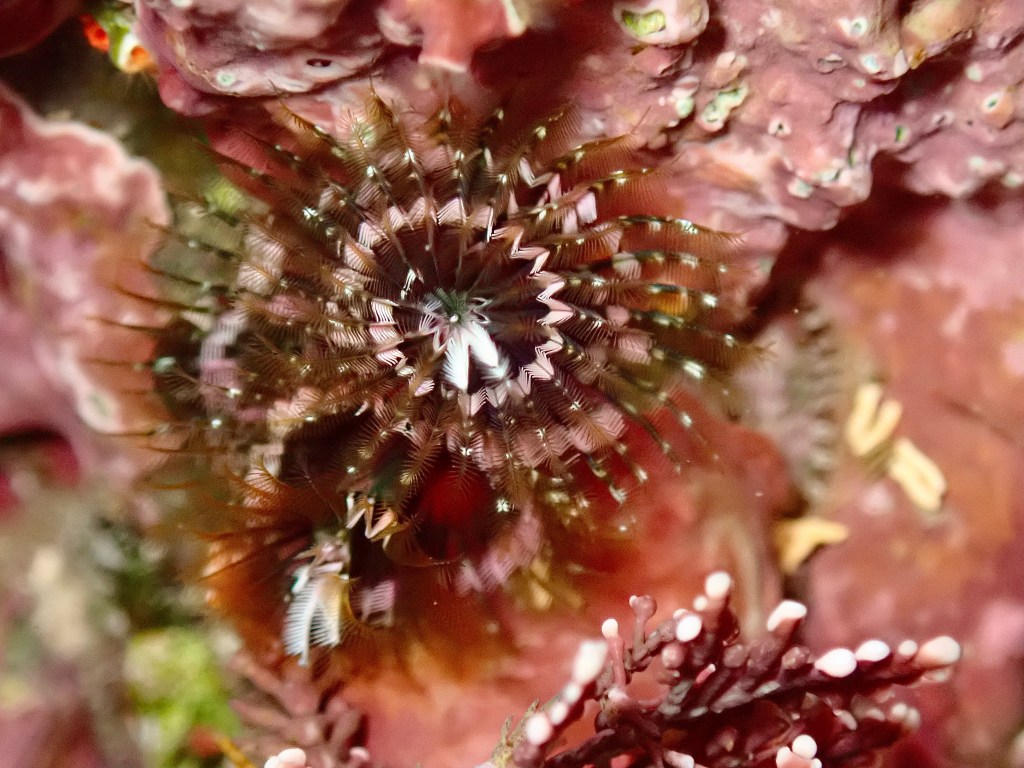
As we said above, Christmas tree worms are sessile animals, meaning they do not move once attached to the substrate while larvae. To escape predators or when they feel threatened, they can retract their crowns completely into their tube and seal the opening with their operculum. Once retracted, the worm will wait until it thinks danger has passed before opening their crowns to continue feeding. This is one of their most beautiful displays as their crowns branch out until fully extending in spirals of color.
I have found through personal observation that Christmas tree worms appear to have “personalities,” as some are more willing to re-emerge from their homes quicker than other. Some worms will retract when I put my camera into the water of their pool while others will remain open with my camera looming millimeters from their crowns. Similarly, “shyer” worms might remain hiding for a minute or more while others will come back out within a few seconds. It’s possible that this behavior is due to factors such as size of the pool, temperature of the water, abundance of food or not, or even previous experience.
Christmas tree worms are “broadcast spawners.” Much like coral, females release eggs and males release sperm in spawning events. The gametes then meet (hopefully) while drifting, are fertilized, and eventually settle on substrate where they mature into adults.
Because of their reactive nature, Christmas worms have some senses that aid in their survival. They are sensitive to light, motion in the water, and touch.

Categories
tags
Subscribe to the blog
Sign up to receive weekly emails with tide pooling information and guides so you never miss a post!
 The Tide Is Out
Leave a comment