
Sea Slugs Vs. Nudibranchs: What’s the Difference?

If you have any interest in the world of sea slugs, you have probably heard the terms “sea slug” and “nudibranch” used interchangeably by enthusiasts and scientists alike. This has contributed to confusion about the two terms and their differences. Despite what you might hear elsewhere, these terms are in fact different and designate different animals. Let’s explore the differences between the terms sea slugs and nudibranchs so we can all understand each other better.
Here’s the simple breakdown: all nudibranchs are sea slugs, but not all sea slugs are nudibranchs.
What’s a Sea Slug?
Sea slug is the broader term of the two as this term encompasses many marine animals. Read below for either a common, descriptive definition or look farther down for a taxonomical definition, if that’s your thing.

Common Definition
A sea slug is any shell-less (or near shell-less) marine gastropod. They are distinguished from terrestrial and fresh water slugs by their marine habitat and from snails mostly by their lack of shells. If they do have a shell, it is very thin and not often used for protection. The image above shows a green bubble snail. Despite the presence of a small shell and the common name snail, this is an example of a sea slug.
Taxonomical Defintion
The term sea slugs refers to all the animals that are known colloquially as Opisthobranchs previously classified under the subclass opisthobranchia, although this is no longer an accepted taxon. Heterobranchs is now the name used for all terrestrial and marine snails and slugs. Most shell-less or nearly shell-less marine heterobranchs are sea slugs, thus excluding shelled gastropods such as snails.
However, some nearly shell-less gastropods (such as side-gill slugs) are classified with sea slugs instead of with shelled gastropods such as snails because they undergo “detorison,” a 180 degree, clockwise rotation of the mantel and gills during the larval stage of development. This brings the gills to the posterior or side of the body. This is in contrast to snails and other spiral shelled gastropods which undergo torsion, a counterclockwise rotation that brings the gills to an anterior position behind the head; this is what allows many snails to retract into their shells. Because of this distinction, snails and slugs cannot be separated taxonomically merely by the presence of a shell.
What’s a Nudibranch?

Nudibranch is the simpler term to define, because it is both common and taxonomical. All nudibranchs fall under the category of sea slugs. Where as sea slugs is the common name for a subclass, nudibranchia is a taxonomical order. Thus all sea slugs that are in order nudibranchia are nudibranchs.
Nudibranchs are distinguished from other marine heterobranchs, like sea hares, by many features, some of which are not visually apparent. The word itself means “naked gill,” and it refers to the exposed gills of these slugs as opposed to other slugs whose gills are hidden under mantle flaps (like sea hares) or soft shells (like side gill slugs). Nudibranchs also tend to be much smaller than other sea slugs, although this is not always the case. The one way to tell for sure if you’re looking at a nudibranch or a sea slug that belongs to another order is to look up the species taxonomy, but generally speaking, many small slugs you see at the tide pools will be nudibranchs.
Other Orders of Sea Slugs
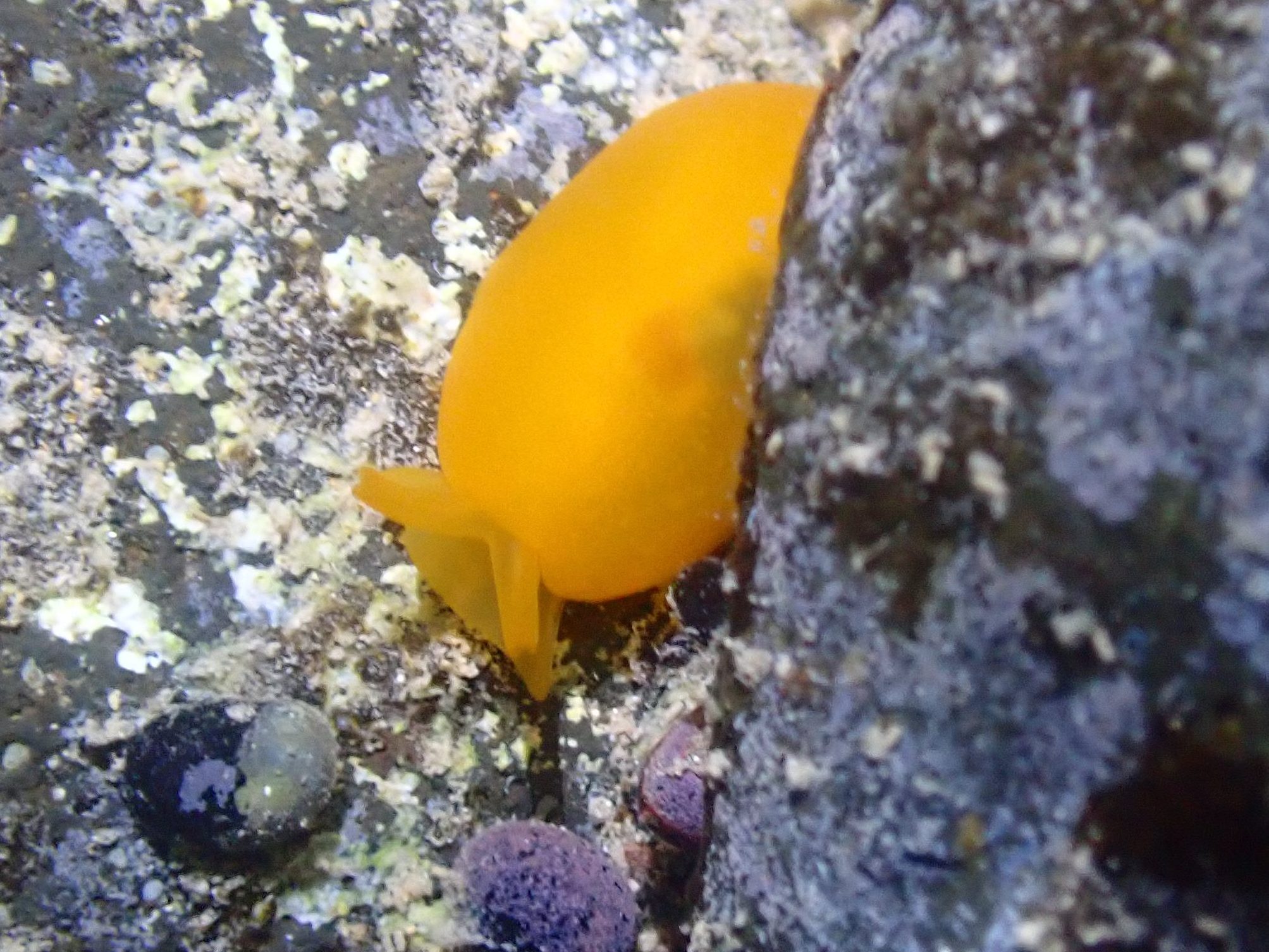


Despite the presence of many nudibranchs in the tide pools, other sea slugs that belong to different orders are also represented in our rocky shore ecosystems. Of the five orders of sea slugs, every order has representatives in the tide pools. From left to right, the above images feature a side gill slug (this one native to Hawaii), a sapsucking slug (this one native to the Caribbean Sea), a sea hare, and a headshield slug (both native to California). Each of these common names represents a taxonomical order. I’ll be posting other articles about these orders of sea slugs soon. These creatures are so fascinating that it’s well worth the time to explore the various orders. Let me know if you have any questions or want to know more about a certain type of sea slug. Happy tide pooling!

Categories
tags
Subscribe to the blog
Sign up to receive weekly emails with tide pooling information and guides so you never miss a post!
 The Tide Is Out
Leave a comment