
Woolly Sculpin: The Most Common Tide Pool Fish

Most of the animals you will see visiting the tide pools don’t move or move very slowly. But if you happen to catch a quick flash of movement out of the corner of your eye, chances are you saw a woolly sculpin fleeing the scene.
These small, bottom dwelling fish are one of —if not the— most common fish in the tide pools. But with their blotched markings and lack of movement except in quick bursts, these little fish can escape the notice of visitors exploring intertidal ecosystems.
Quick Facts
- Range from 2 to 7 inches in length
- Can change the color of their markings to match the substrate
- Can absorb oxygen through their skin and have been known to survive out of water
- Sometimes confused with tidepool sculpin, a species that has a more northern range
- Lie still on the bottom or move in quick spurts of swimming to escape predators
- Sometimes known by the incorrect spelling “wooly” sculpin
Appearance
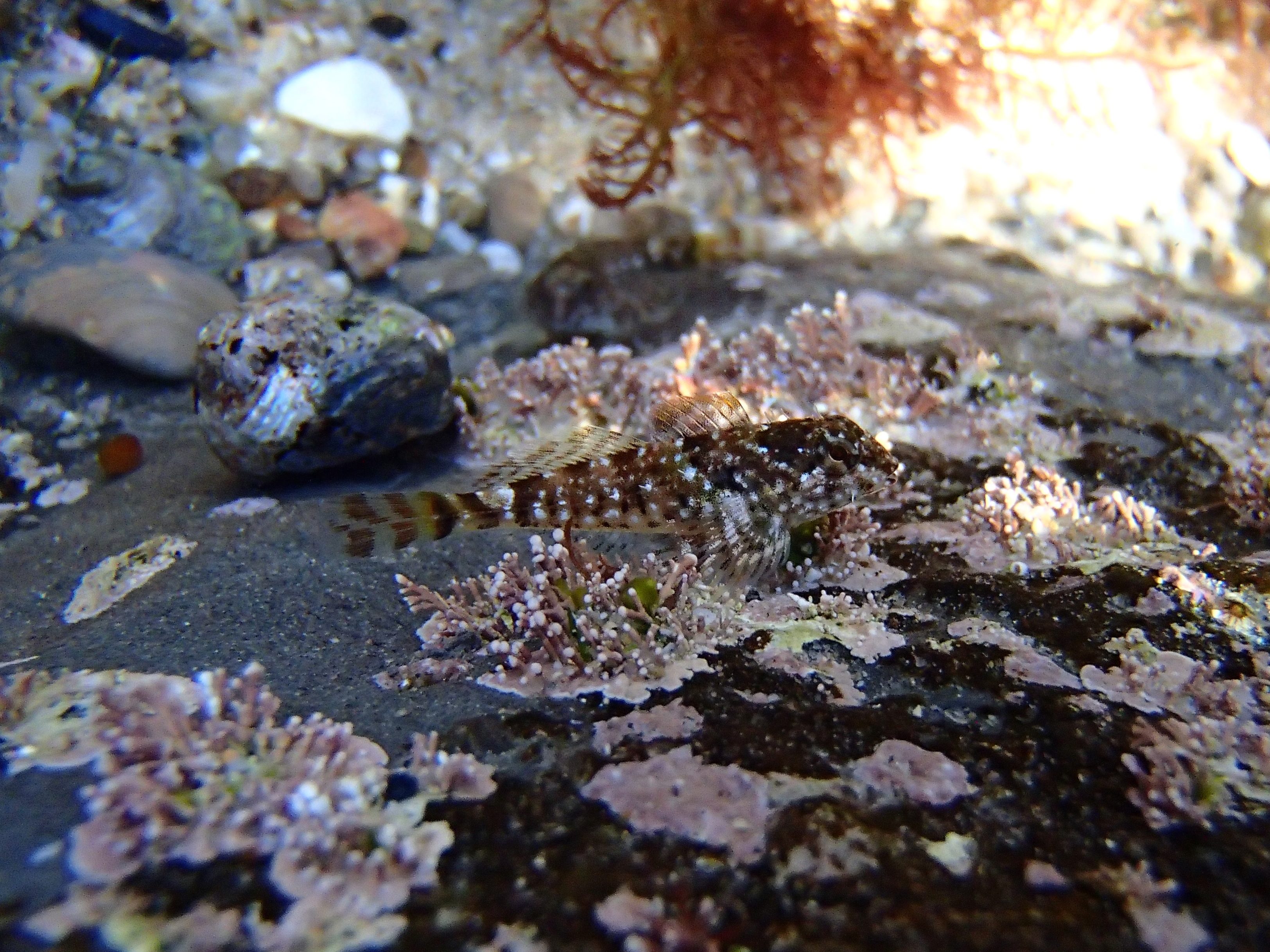
The woolly sculpin is a relatively small fish, ranging from 2 to 7 inches in length and maxing out at 1 inch in width. The body is semi-flattened, somewhere in between the tall and thin butterfly fish shape and the flat, squished shape of a flounder. The sculpin’s eyes are on top of its head instead of on either side like most fish and it has a large (compared to its body), wide mouth.
These fish don’t have scales, but instead have gills that line their backs along with sharp spines. When sitting on the bottom of a tide pool, they rest on their pectoral fins as a seal would on its flippers.
The characteristic blotched and spotted markings on woolly sculpin vary greatly and can be green, brown, tan, red, and even almost black. The markings are used for camouflage; when sitting still a sculpin can go completely unnoticed blending in with the algae and rock around it.
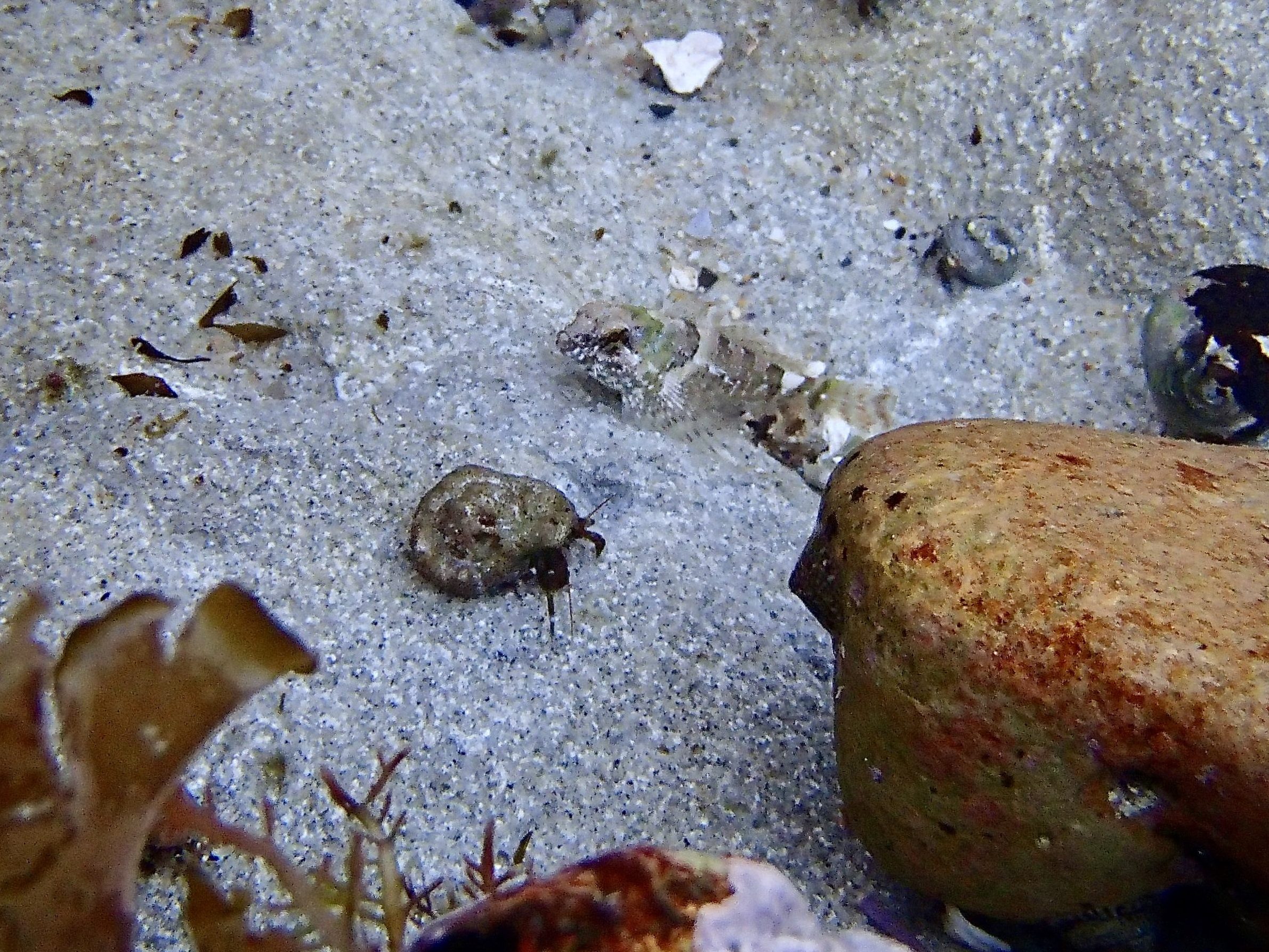

The image on the left shows a very light colored individual using its markings to camouflage against the light colored rock it’s sitting on while the image on the right is a much darker individual of the same species, also blending in with its environment.
Diet
These fish feed mainly on small crustaceans, amphipods, and other small prey like fish eggs, worms, and mollusks. They are what some call a “lurk-and-lunge” hunter, meaning the fish will wait for smaller creatures to pass by instead of seeking them out. Of course, some of their food sources, such as eggs, are found and devoured by without the need for camouflage.
Sculpin often become prey for many other animals in the tide pools. They are occasionally preyed upon by larger fish but most often fall victim to egrets, herons, and other shore birds that hunt along the rocky shore. These birds search for motion and are just as patient as any woolly sculpin. But if a fish can keep its nerve and stay still, it might not be noticed. Keep an eye out for these birds on your next tide pooling adventure and watch them hunt these small fish.

Habitat and Range
The woolly sculpin lives in the intertidal zone and in shallow waters off the coast of California from Baja to Oregon, although they typically prefer the warmer, southern waters. They are sometimes confused with their northern cousins, the tidepool sculpin that overlap in range but prefer the colder, northern waters. Woolly sculpin are seasonally abundant in spring and summer when larvae develop into adults, but their survival is not seasonal and some have been reported to live up to 8 years.
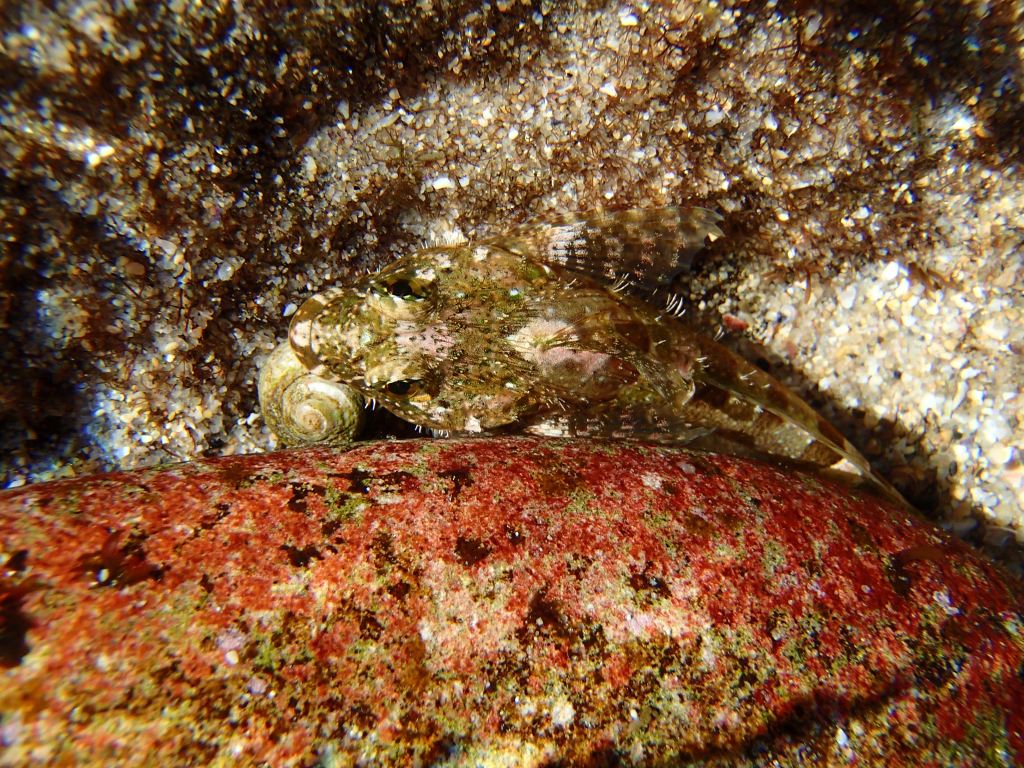
These fish are most often found on the bottom of tide pools or along the substrate in open water, hiding among the algae or on sandy bottoms. Individuals that are darker in coloration typically inhabit deeper waters while lighter colored fish often live in shallower and intertidal waters. This sculpin pictured below was leveraging the full capacity of its camouflage to hide from predators. It’s lighter color indicates that this fish probably lives most of its life in the intertidal zone.
Behavior
Woolly sculpin are known for sitting motionless on the bottom of a tide pool before darting away when you bring a camera close to them. They are notoriously skittish for bottom dwelling fish, but occasionally you’ll come across one that doesn’t dart away and allows you to get some decent pictures.
One of the most fascinating behaviors of these fish is their color changing. Although not as pronounced or vibrant as an octopus or cuttlefish, woolly sculpin can subtly change the color of their skin to match their surroundings. One moment they are easily seen and the next you have to search for them, even though they are sitting in the same spot. This sculpin below perfectly matches the shade and patterns of the rocks it is resting on.

When out of the water, these fish can absorb oxygen through their skin and have been known to survive up to 24 hours outside water, perfectly suiting them to life in the tide pools where water recedes quickly. Woolly sculpin are also incredibly hardy, able to withstand the extreme changes in temperature, salinity, and pH that tide pools are often subject to.
Because they are so common, any beginner tide pooler has a good chance of seeing one of these fish if they look closely. Perhaps the best way to see them is to watch for sudden movement and see if you can find where the fish moved to. Hope you see them out there!


Categories
tags
Subscribe to the blog
Sign up to receive weekly emails with tide pooling information and guides so you never miss a post!
 The Tide Is Out
Leave a comment