
5 Reasons Most People Don’t Know About Nudibranchs

If you are reading this article, I assume that you do, in fact, know about the colorful sea slugs called nudibranchs. (If you don’t, I’m glad you’re here to read about them). But let’s be honest, most people don’t know what a nudibranch is. Even the term sea slug only brings to mind a brown, blob like the slugs in gardens, only underwater.
To be fair, some people know about nudibranchs and the community is growing. But when it comes to children’s book about the ocean, educational programs, and those who snorkel or scuba dive as a hobby, nudibranchs are not a household name.
So why? Why don’t aquariums keep these fascinating creatures in exhibits for education? Why don’t they get more attention from kids and teens that want to study marine science? Why are nudibranchs only the fascination of underwater photographers, hard-core tidepoolers, and marine biology graduate students?
Nudibranchs aren’t boring
Some might assume that the reason people don’t know about nudibranchs is that they are boring and uninteresting. What could be so cool about tiny slugs in the ocean?
But in fact, nudibranchs aren’t boring, but far from it. Their bright colors and flamboyant patterns are enough to grab anyone’s attention who look closely enough. But nudibranchs possess other traits that make them far from uninteresting. Some nudibranchs are voracious hunters, and nearly all are carnivores. Some are “solar-powered” stealing cells from algae to make food for themselves like plants.
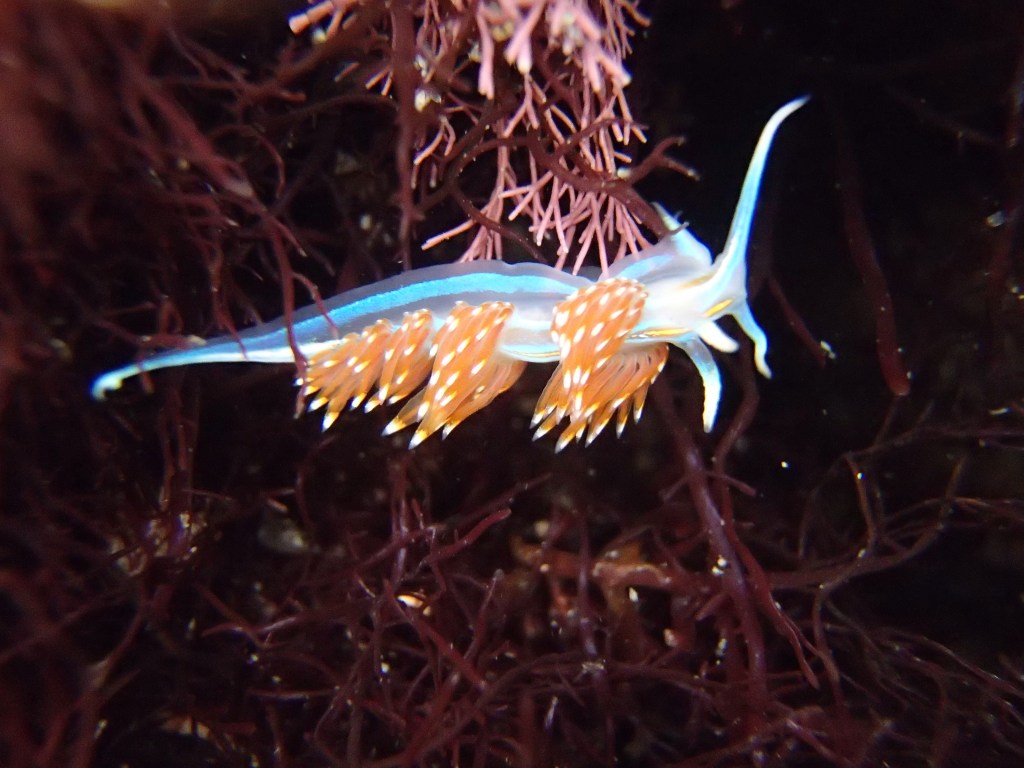
Others, like the Opalescent nudibranch shown below, prey on creatures that sting like anemones and steal the stinging cells to become poisonous themselves. Many slugs have fascinating symbiotic relationships with fish, crabs, algae, and other animals. Some species can even detach their heads and regrow new bodies!
Why People Don’t know about Nudibranchs
While there are probably many reasons why nudibranchs are not the fascination of ocean-loving children, there are a few that stand out. I’ve come up with a list of 5 reasons most people couldn’t tell you what a nudibranch is.
1. People don’t like slugs
Slimy and gross and eating your flower garden is the relationship that average people have with slugs. And granted, terrestrial slugs are typically not as colorful or diverse as sea slugs and leave a trail slime behind them, so you can’t entirely blame people for their general dislike of these shell-less mollusks.
With this in mind, it’s not hard to understand why people aren’t verty interested in what sea slugs exist in the ocean. If the ones on land are gross, why would the ones underwater be any less gross.
2. Nudibranchs are Small
Nudibranchs are not very big. While some that live in deeper waters might reach a few inches, most that you will find in the tide pools are an inch long at the most, some being measured in millimeters. Being so tiny, they are easy to overlook when tide pooling.
Nudibranchs are also not the large, intelligent animals that many children are interested in and that most of marine science research is based around. Sharks, whales, dolphins, turtles, rays, and even fish receive more love than nudibranchs because they get more publicity and are the subject of more new stories. Small, seemingly unintelligent invertebrates like nudibranchs are hard pressed to even get marine science to notice them.
3. You Can’t Keep Nudibranchs in Aquariums
That’s right, nudibranchs are nearly impossible to keep in aquariums, personal or commercial. No children get to exposed to these fascinating creatures visiting their local aquariums because they don’t keep them. This is mostly due to nudibranchs’ extremely specific diet. Many species feed only on a singular type of hydroid, sponge, or bryozoan that is very difficult to find and even harder to identify correctly. Some salesmen claim to have continual food sources for the nudibranchs they sell, but most slugs starve in any kind of aquarium.
While there are some sea slugs (although not true nudibranchs) that eat algae and can be keep in aquariums, most of these brilliantly colored sea slugs can only be seen in the wild, while snorkeling or scuba diving, or in the tide pools.
4. Nudibranchs Can Be Really Hard to Find
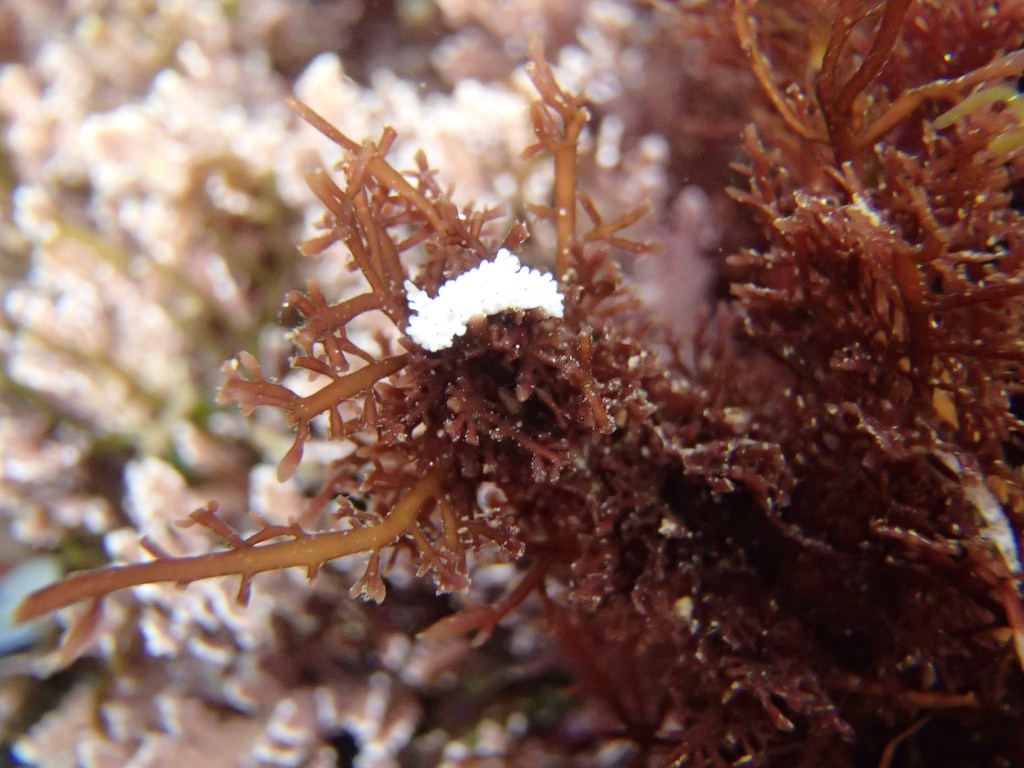
This one goes along with the fact that nudibranchs are small. Even those who enjoy the outdoors and visit the tide pools or snorkel on occasion are not likely to see a nudibranch. Besides their tiny size, many species are excellently camouflaged while others are active at night, not typically the time beach-goers are exploring tide pools.
Because nudibranchs move so slowly, our human eyes do not pick up on their movement and they often crawl right at our feet without us even noticing.
The lack of ease in finding nudibranchs makes them all the less appealing to some: they’re simply too much work to find.
This Salt and Pepper Dorid (Diaulula aurila), pictured left, is barely the size of a grain of rice and moves incredibly slowly.
5. Nudibranchs are Niche
Perhaps this is an odd description of nudibranchs, but the community around these animals is rather small and often educated, if not formally, then from years of searching for these creatures. It can be intimidating for someone who knows little or nothing about nudibranchs to google a nudibranch species and come up with nothing but a very technical paper about their feeding habits or to jump into a social media conversation full of scientific terms.
Now I haven’t met anyone in the tide pooling community who intentionally excludes people who are new to these creatures; we were all new once. But even listening to those who have in-depth knowledge about nudibranchs can be overwhelming. On top of this, there are so many undescribed and unidentified species that googling nudibranchs can quickly become daunting.
Learn about Nudibranchs
Now that we know why people don’t know about nudibranchs, what can we do to teach them? Many of those methods are outside the scope of this post, but I hope you have learned something about peoples’ and science’s attitude towards sea slugs.
Is one of these reasons keeping you from diving into the world of nudibranchs? Don’t let it! These creatures are far too fascinating to let them escape your perception for one of these reasons. Feel free to click around on this site and find more articles about them or better yet, go to your local tide pools and see if you can see them for yourself!

Categories
tags
Subscribe to the blog
Sign up to receive weekly emails with tide pooling information and guides so you never miss a post!
 The Tide Is Out
Leave a comment