
Do Sea Slugs live in the Tide pools?
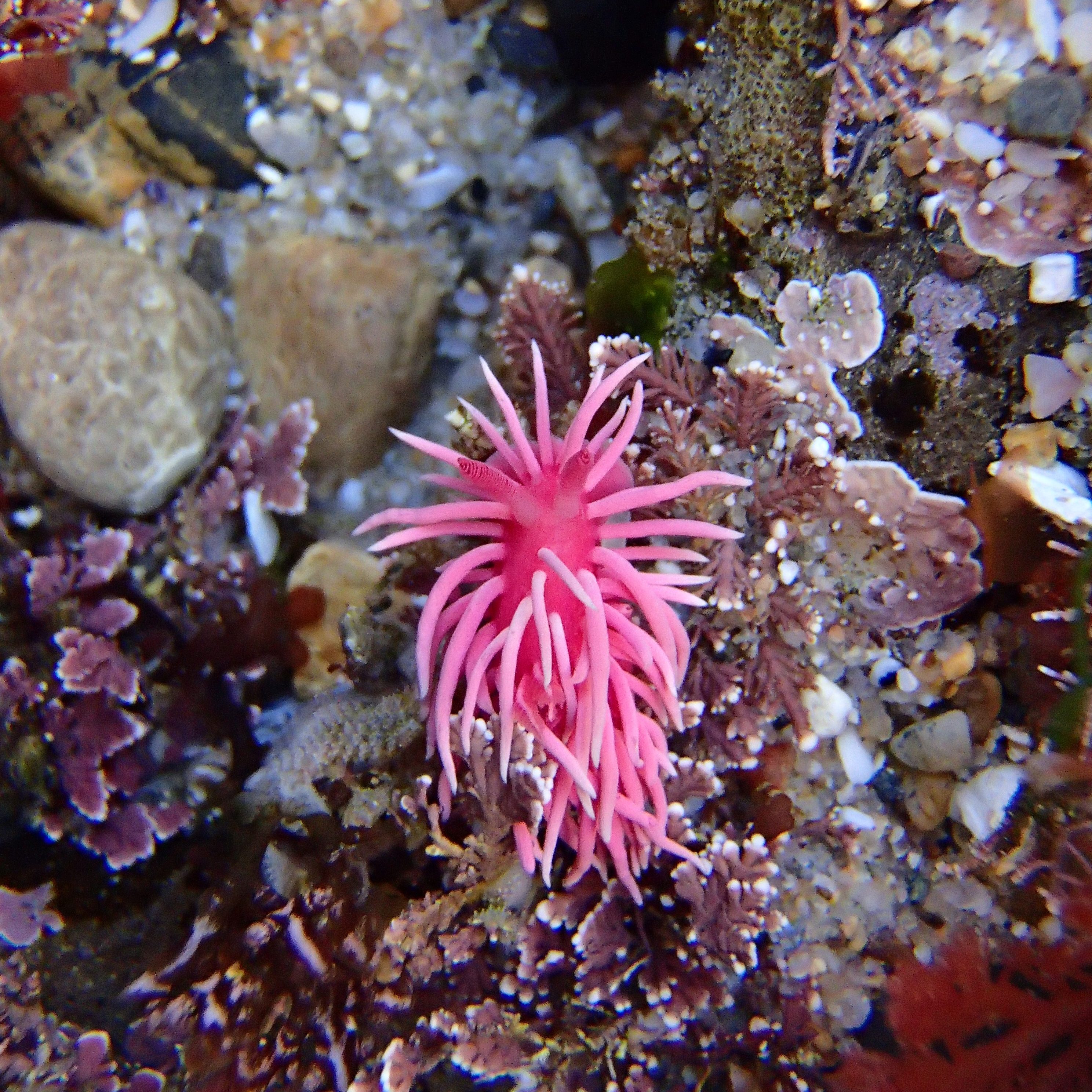
The short answer to your question is yes! Sea slugs do indeed live in the tide pools.
When most people think of the tide pools, animals like anemones, crabs, clams, and maybe fish come to mind. But the tide pools are home to many creatures— often quite small— that beach goers don’t usually see if they aren’t looking for them. Some of those creatures are sea slugs.
While the idea of seeing sea slugs might not sound all that interesting, you may be surprised at these slugs that are often brightly colored, voracious hunters, and possess weird abilities like detaching their heads and growing new bodies!
Sea slugs are often called nudibranchs (nude-ee-brank) and while they are technically different, if you see a small sea slug in the tide pools, it’s probably a nudibranch. These animals are soft bodied mollusks— like snails but without a shell. Many of the slugs that live in the tide pools are very beautiful, boasting bright colors and elaborate patterns. Others are camouflaged and are more difficult to find because they blend in so well with their surroundings.
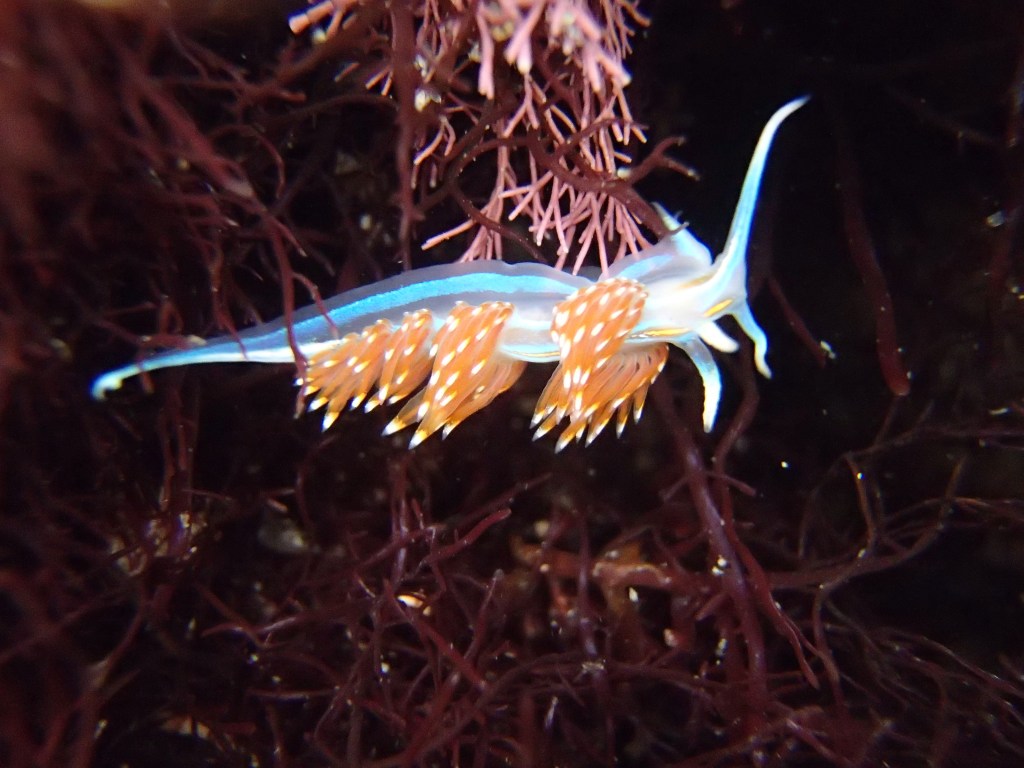
Unlike other tide pool animals like crabs or mussels that live in the splash zone, nudibranchs usually prefer to be underwater all the time, so you will have to wait for low tides if you want to see one. Even the brightly colored ones can be hard to find because they are so small, so make sure you know how to find nudibranchs before you set out to explore your local tide pools.
There are also other kinds of marine slugs that tide poolers see called sea hares, named for their rabbit like appearance. These slugs aren’t technically nudibranchs and are far bigger, but are still soft bodied. Sea hares can be anywhere from a couple inches to 18 inches long, so keep an eye out for those in the tide pools as well!
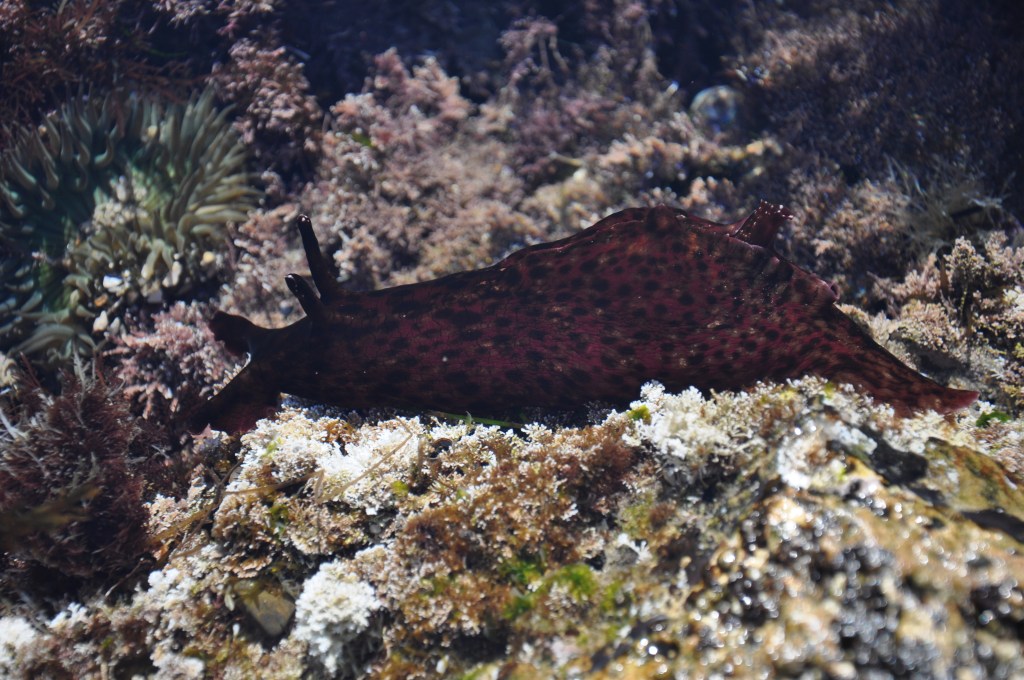
Sea hares are often easier to spot than nudibranchs that are typically only an inch long at the most, but you have a good chance of seeing both at a low tide!

Categories
tags
Subscribe to the blog
Sign up to receive weekly emails with tide pooling information and guides so you never miss a post!
 The Tide Is Out
Leave a comment